
Varying light, constantly changing colours, and compositions between chaos and order: Few types of landscape photography are as versatile and challenging as forest photography — and Germany's forests offer ideal conditions.
Landscape photographer Kilian Schönberger has explored Germany's forests with his camera for almost 20 years, and he's taking you to the 10 most beautiful photo spots — from ancient mountains and mystical low ranges to rugged coastal forests.
Here, you'll find out what subjects await you, when an excursion is particularly worthwhile, and how to best capture the magic of these places.
https://youtu.be/Q3pdJjuz2A4?rel=01. Bavarian Forest – Rustic Wilderness and Rugged Beauty
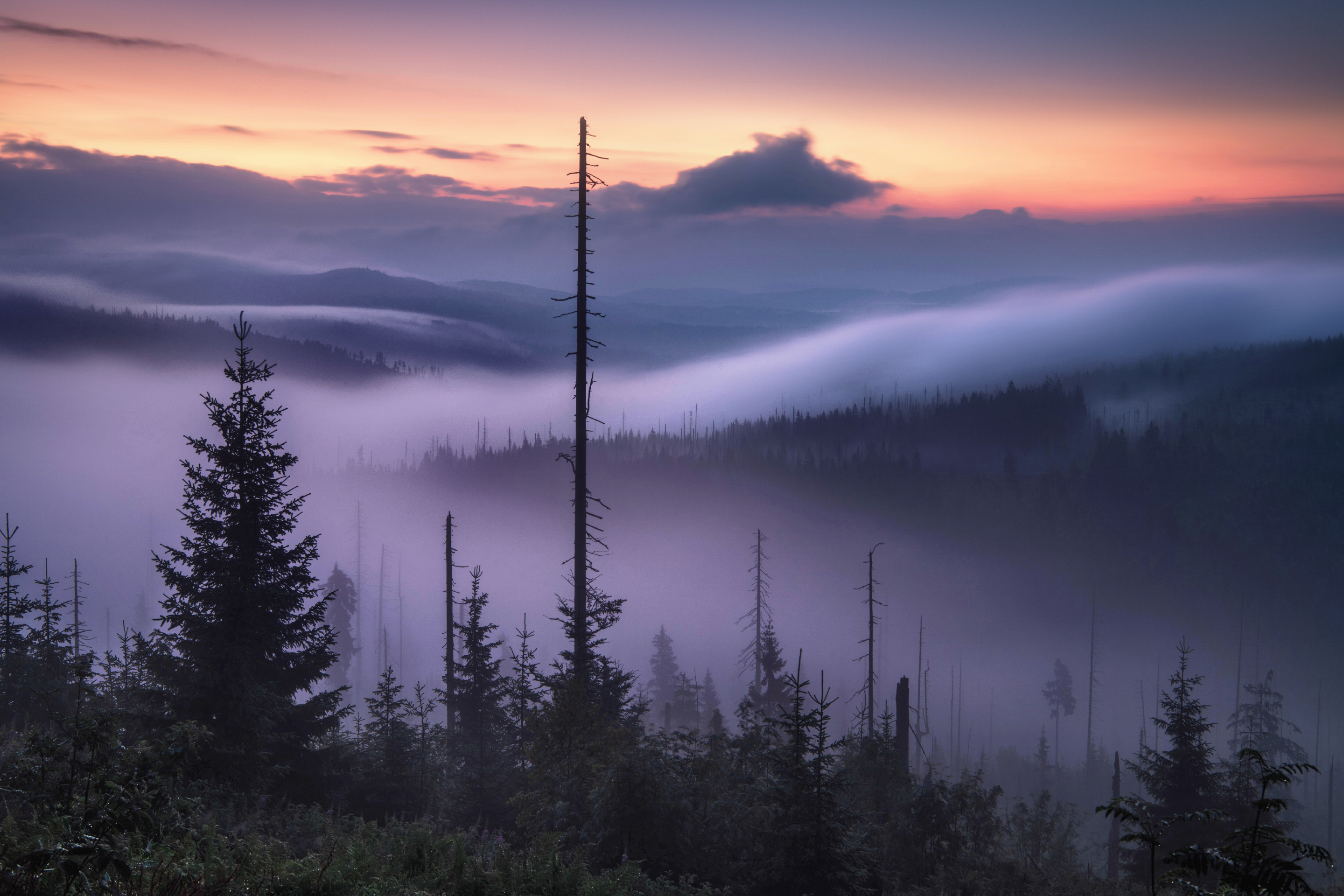
Kilian Schönberger | Nikon D850 | Nikon NIKKOR AF-S 24-70mm f/2.8E ED VR | 45mm | f/16 | 10 sec | ISO 64
The Bavarian Forest is one of the regions in Germany I know best. Right behind my parents' garden in eastern Bavaria's Upper Palatinate, an almost endless forest began, where I spent a lot of time as a child.
The national park is one of the few German forest areas where natural processes are allowed to remain visible on a large scale—and that's exactly what makes it so appealing for forest photography. Here you'll find a rare variety of abstract subjects that deliver first-class images under the right conditions. This also includes, for example, the traces left by the bark beetle here since the 1990s.
Subjects and Image Ideas
Dead mountain spruces
Exciting combinations of forest and water
Close-up shots of biological communities like mosses or club mosses.
Best Time and Conditions
Fall and winter for a mystical atmosphere (diffused light often works better than direct sun)
Summer for shorter routes to the Lusen (the hiking time is extended in winter due to road closures)
Tip
With its hiking trails and summit plateau, the Lusen offers diverse photographic opportunities — from wide-angle to telephoto shots of endless forest waves to intimate detail shots of moss-covered granite blocks.
On the way to Waldhäuser — the starting point for the Lusen hike — you'll cross the Kleine Ohe, a natural stream that's perfect for experimenting with different exposure times and compositions.
Important note: Drone photography is generally prohibited in the Bavarian Forest National Park.
2. Harz – Mystical Spruce Forests and Fog Over Rugged Rocks
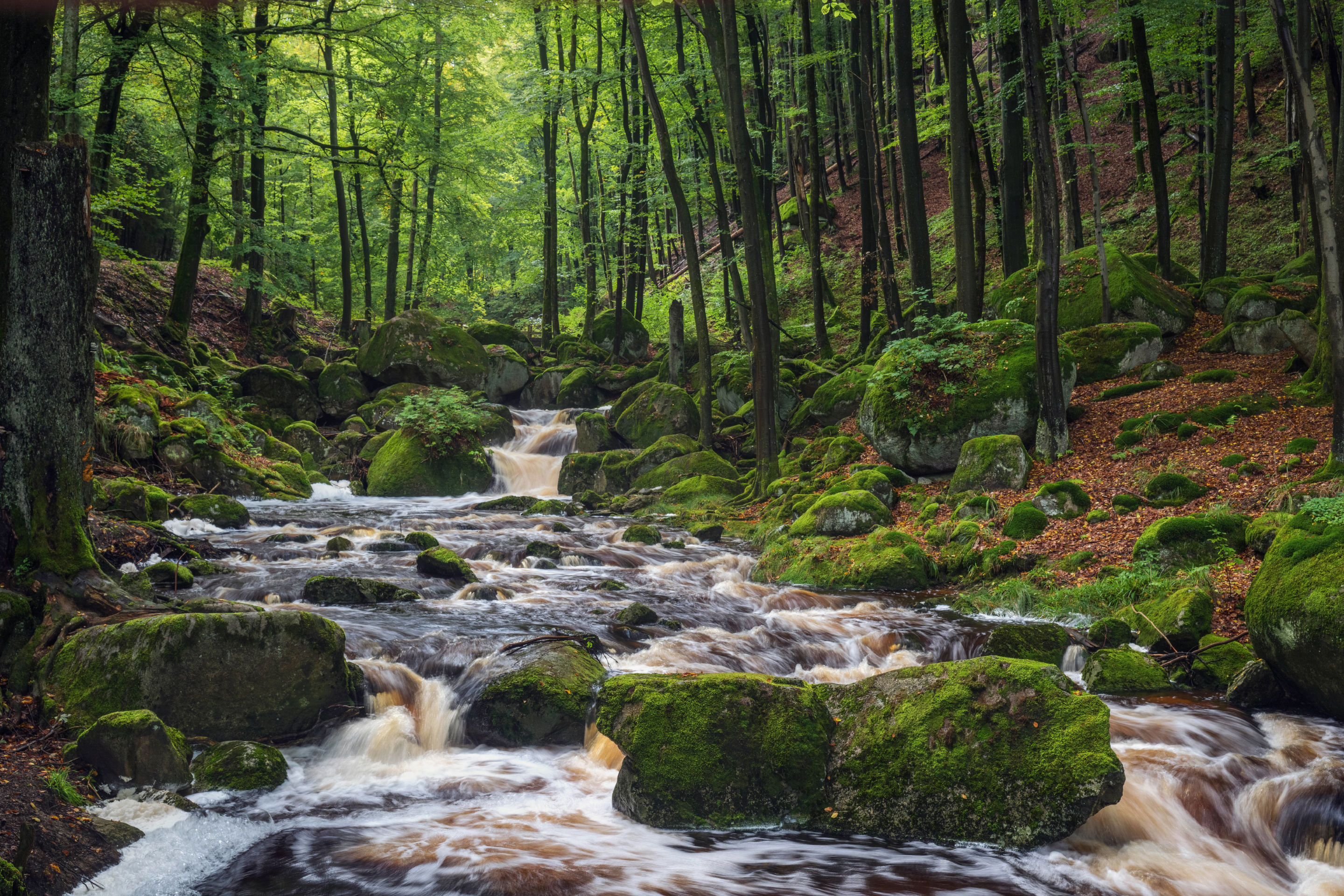
Kilian Schönberger | Nikon Z8 | Nikon NIKKOR Z 24-120mm f/4 S | 38mm | f/11 | 1/5 sec | ISO 400
The Harz is one of Germany's most mysterious low mountain ranges. It's no coincidence that the Brocken is considered the ultimate witches' dancing ground.
The area around Northern Germany's highest mountain (1141 meters) offers a diverse backdrop for forest photography with its moors, waterfall cascades, and lake-like ponds. But even here, forest dieback has spread due to drought and bark beetles. A new generation of forest is only gradually emerging.
Fog, clouds, and changing light moods really come alive, especially in higher elevations. Spruce forests, granite rocks, and open areas alternate, offering subjects from expansive landscapes to intimate forest scenes.
Subjects and Image Ideas
Foggy spruce forests in higher elevations
Silhouettes of the rock formations between Leistenklippe and Brocken
Contrasts between young deciduous trees and rugged granite surfaces
Streams, cascades, and ponds in the forest
Best Time and Conditions
Spring for fresh greenery in the beech forest along the Ilse
Summer for spectacular sunsets
Fall and winter for fog, clear structures, and mystical moods
Tip
The Leistenklippe is located at an altitude of around 900 meters and offers a good view towards the Brocken plateau. You can capture atmospheric compositions here — especially on summer evenings —as the sun sets towards the Brocken, and the silhouettes of the rock formations in between add depth to your image.
If you want to explore the Harz mountains and their diverse forest types, from the edges to the high altitudes, I recommend a hike along the Ilse River. Over approximately 800 meters of elevation gain from Ilsenburg to the river's source near the Brocken summit, you'll encounter beech forests, wild stream cascades, dead forest areas, and dense mountain spruce forests — the perfect conditions for atmospheric forest photos away from classic viewpoints.
3. Saxon Switzerland – Forests Between Mighty Sandstone Towers
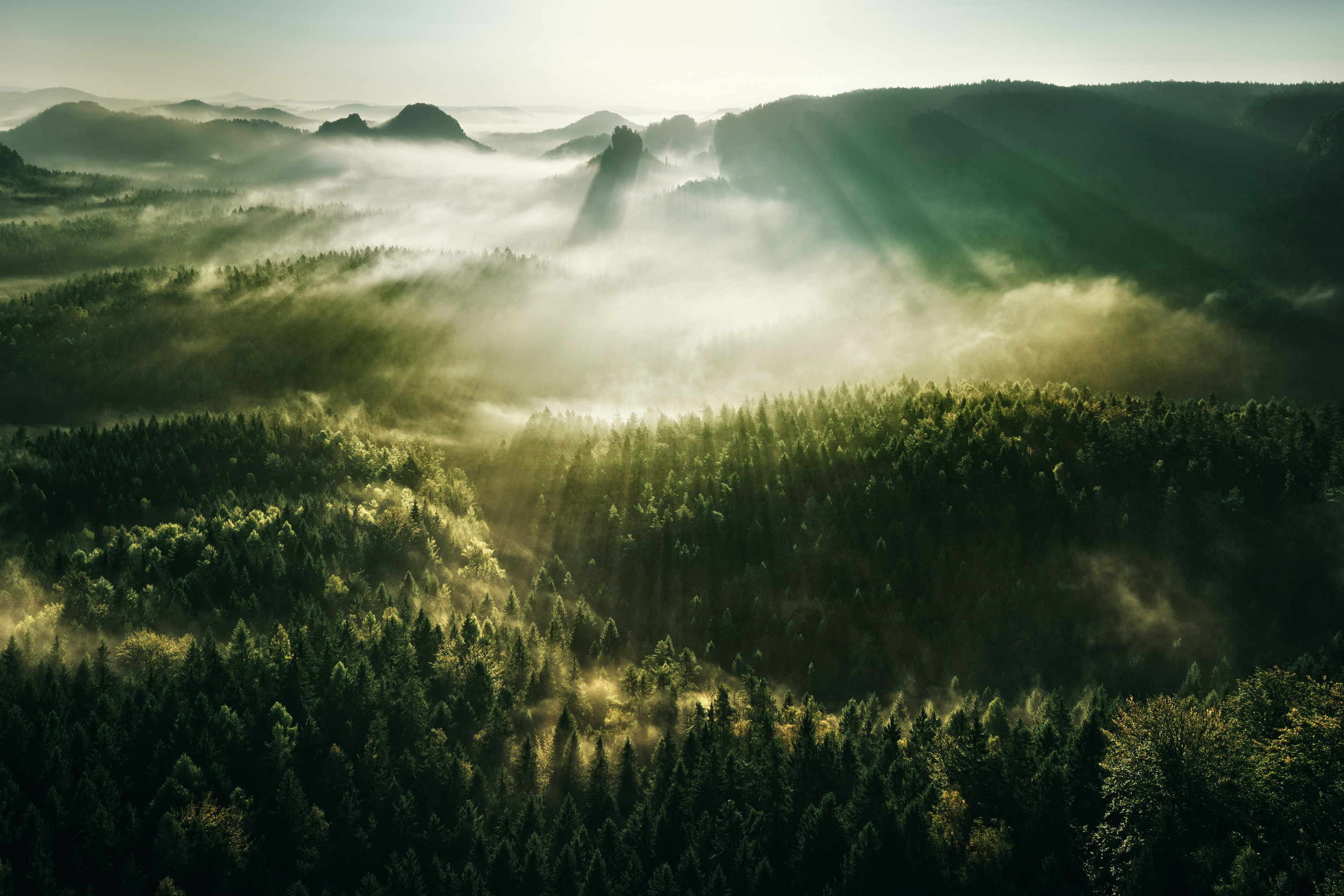
Kilian Schönberger | Sony A7R | Sigma 24mm f/3.5 DG DN FE | 200mm | f/13 | 1/50 sec | ISO 200
Saxon Switzerland is like a cross between Canyonlands National Park and the Pacific Northwest, but in miniature.
With its unique steep sandstone cliffs, deeply carved Elbe Valley gorges, and impressive viewpoints, it's definitely one of Germany's most extraordinary landscapes.
The potential for stunning forest photos here ranges from detailed shots of particularly beautiful trees to impressive panoramic images.
Subjects and Image Ideas
Panoramic shots of the forests and rock formations from Kleiner Winterberg
Fog in the Gorges and Kleiner Zschand
Silhouettes of trees and rocks against the light
Twisted pines on rock ledges
Beech forests along narrow paths
Best Time and Conditions
Spring through fall is the best time for forest photography in Saxon Switzerland. Snow pictures are usually only possible spontaneously at low altitudes.
Tip
Kleiner Winterberg is a rewarding viewpoint — especially at sunrise — with a view over Kleiner Zschand. The rocks jutting out of the forest create a breathtaking effect, especially when backlit — and with a bit of luck, there might still be fog in the valley to add extra depth to your shot.
The Bastei also offers interesting subjects for your forest photography: Not far from the Bastei Bridge, the unique Pölking Pine watches over the Amselgrund, and from the viewpoints, you can see wild tree landscapes on vertical rock faces, as well as birches and pines among the rock formations. Depending on the season, you'll find a unique interplay of shapes and colours here.
For the adventurous: If you don't mind the narrow paths along the cliffs, a descent into the gorge forests of the so-called Schwedenlöcher is well worth it.
4. Black Forest – Fairytale Forest with Ups and Downs
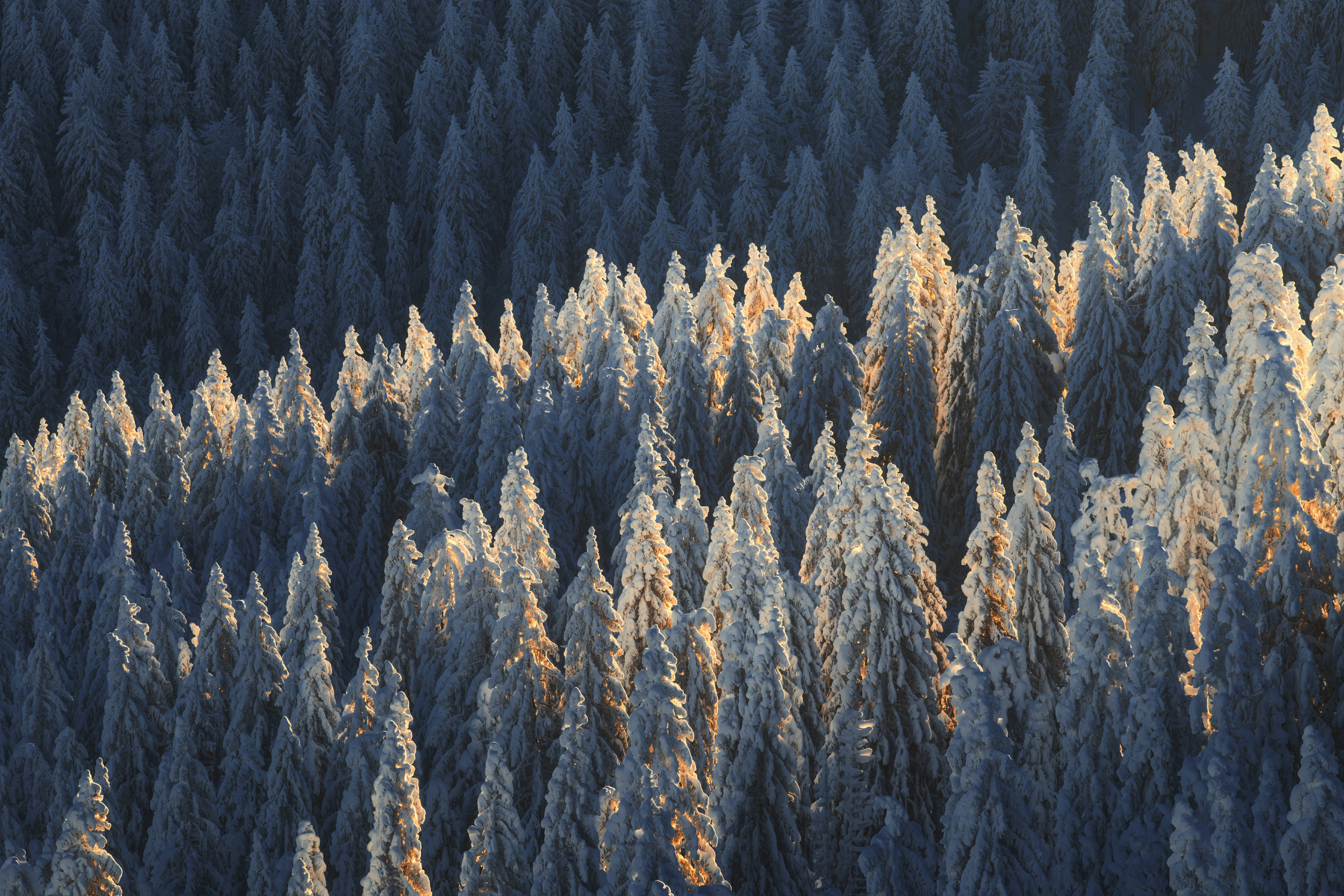
Kilian Schönberger | Nikon D850 | Nikon AF-S NIKKOR 70-200mm f/4G ED VR | 200mm | f/13 | 1/50 sec | ISO 200
The Black Forest holds a special place among Germany's low mountain ranges. With the Feldberg as its highest peak outside the Alps and significant elevation changes down to the Rhine Valley, the slopes here are noticeably steeper than in many other regions, and the forest landscapes offer plenty of variety.
The character of the Black Forest changes significantly depending on the sub-region: The lower northern part is known for its abundant water and moss-green gorge forests, while the High Black Forest offers steep forest slopes and spectacular views towards the Swiss Alps and over to the Vosges mountains.
Whether it's intimate details or expansive forest landscapes, there are virtually no limits to your creative ideas for forest photography here.
Subjects and Image Ideas
Cirque lakes partially covered by moor vegetation beneath steep, forest-covered cliffs
Snow-covered spruce trees and frost-covered branches at higher elevations
Natural forest slopes with individual freestanding trees
Gorge forests with waterfalls, moss, and deadwood
Forest landscapes on hillsides with views of the Rhine Valley
Spectacular sunsets in the west
Best Time and Conditions
Winter for magical snow and hoarfrost scenes in the high altitudes
Spring and fall for lush greenery or colourful foliage in gorge forests and along streams
After rain for waterfall shots
Tip
One of the most beautiful photo spots in the Black Forest is the Feldberg, which — despite its height (1,277 m) — is easy to reach by lift or on foot.
For forest photography, however, the summit plateau with its sparse tree population is less interesting than the slopes facing west, where the forest becomes denser as the slope increases. This is where telephoto lenses with longer focal lengths come in handy to condense groups of trees, isolate individual trunks from the tangle, and bring out natural lines in the forest. The view over deeply cut valleys and the Rhine Valley or the view down to Lake Feldsee are definitely worth a photo or two.
Another worthwhile destination is the Gertelbach Waterfalls in the Northern Black Forest. The high rainfall here ensures lush gorge forests with moss-covered rocks and tree trunks, creating marvellous conditions for capturing both forest and water. You'll find atmospheric combinations of forest and water here, especially in spring with fresh greenery or during the peak of fall foliage.
5. Baltic Sea in Mecklenburg-Vorpommern – Where the forest grows right up to the sea
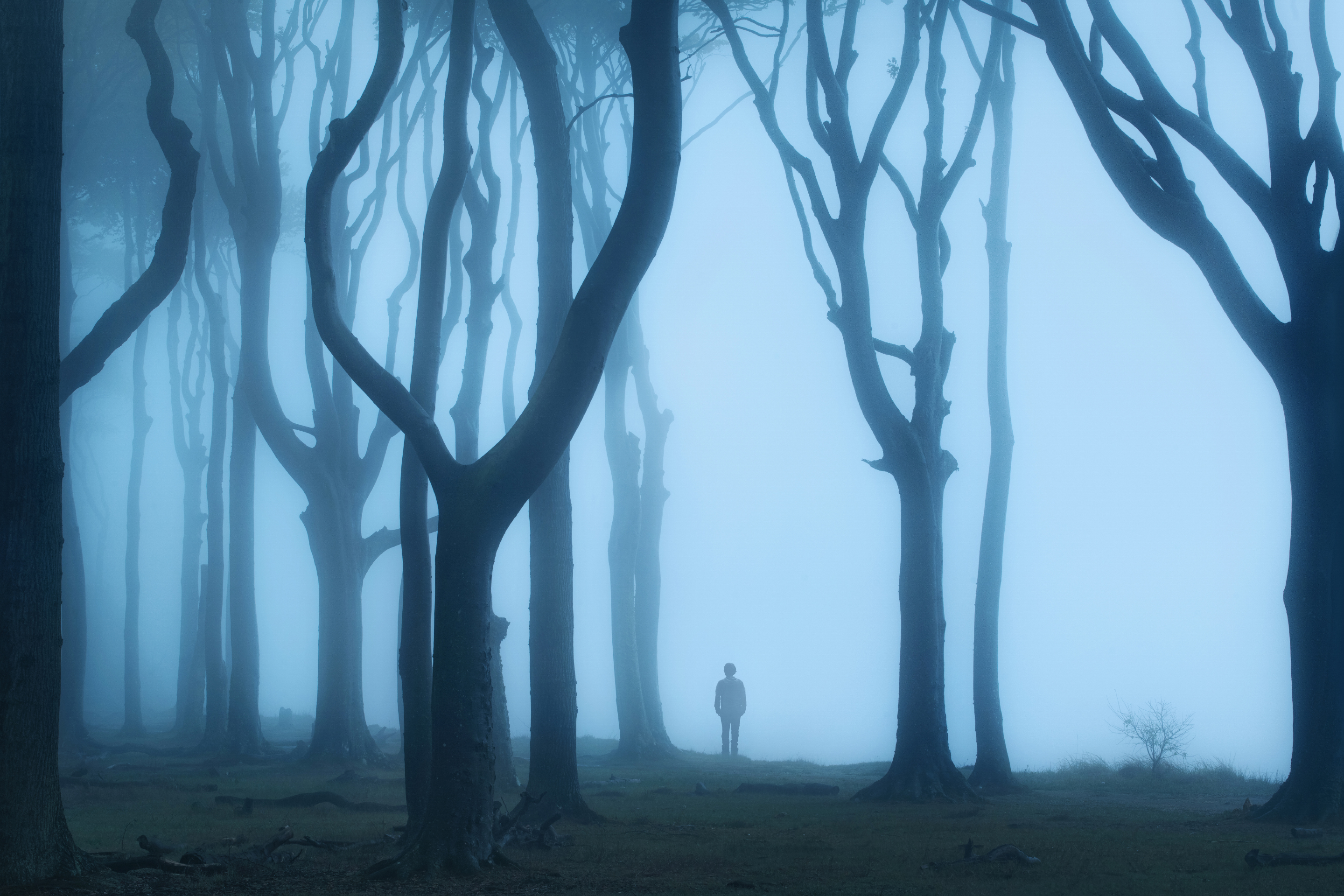
Kilian Schönberger | Nikon D850 | Nikon AF-S NIKKOR 70–200mm f/4G ED VR | 110mm | f/13 | 1/20 sec | ISO 400
Wind in the treetops, salty air, and a view to the horizon — on the Baltic Sea, forest photography meets the open ocean.
Unlike the North Sea, the forest here often extends directly to the beach or even to the coastline. This unusual proximity of forest and sea gives the region a unique character and provides special forest motifs.
But photographing by the sea almost always means wind and rapidly changing conditions. Plus, particularly natural coastal forest sections, like those in the Vorpommersche Boddenlandschaft National Park, are protected and cannot be entered off the paths.
Subjects and Image Ideas
Coastal forests on steep cliffs
Windswept pines (known as "Windflüchter")
Uprooted trees and driftwood on the beach
Contrasts between forest, sand, and sea
Best Time and Conditions
Fog for calm, mysterious moods
Low sun at sunrise and sunset for special lighting moods (especially in summer)
Wind for movement in the water and hidden footprints in the sand
Tip
One of the most famous photo spots for forest photography on the Baltic Sea in Mecklenburg-Vorpommern is the Gespensterwald (Ghost Forest) near Nienhagen. It truly lives up to its name. You can capture atmospheric images of pale, bare trees on the cliff, especially when it's foggy or the sun is low.
Important: When taking photos, always keep a safe distance from the edge of the cliff, as some parts can collapse.
If you continue following the coast eastward, you will reach the Darß West Beach and the Darß Forest lying behind it — a former hunting ground of the GDR party leadership that is now a national park. To fully explore the 14-kilometre-long sandy beach with your camera, you'll need some stamina, as parts of it are only accessible on foot. But you'll be rewarded with most of the motifs mentioned above.
6. Taunus – Summit Bliss on the Edge of the Big City
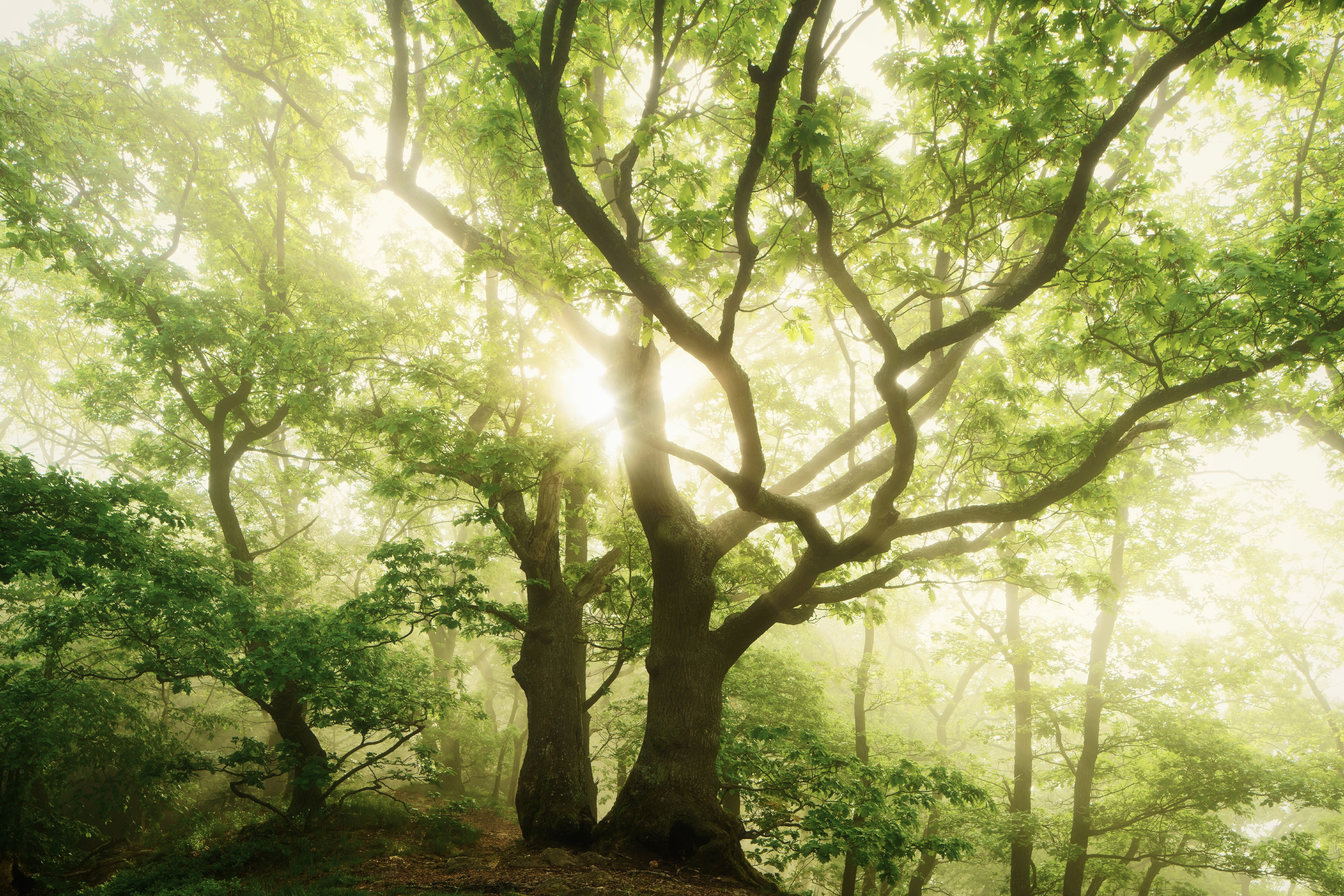
Kilian Schönberger | Sony A7R II | Sigma 24mm f/3.5 DG DN FE | 24mm | f/13 | 1/8 sec | ISO 100
Many only know the Taunus as a dark mountain range north of Frankfurt Airport — and this low mountain range is often underestimated by forest photographers. However, the Taunus extends far beyond the Hochtaunus (all the way to the Rhine Valley in the west and the Lahn in the north), offering plenty of room for discovery.
Subjects and Image Ideas
Crooked beeches and richly structured forests on the Großer Feldberg
Misty forest scenes
Coppice oaks with low, twisted growth
Transitions between forest and vineyards on the Rhine
Best Time and Conditions
Spring, fall, and winter for structure, colour, and atmosphere
Fog as a central design element
Diffused light for calm compositions
Tip
From Frankfurt am Main, you can reach the Großer Feldberg (not to be confused with the Feldberg in the Black Forest) in just a few minutes by car. A road makes it easy to access the summit, but the edges of the summit plateau are especially interesting for forest photography. Here, gnarled beech trees offer strong motifs in every season — whether with fresh leaves in spring, autumnal colours, or hoarfrost in winter.
However, easy accessibility comes at a price. Practice patience and avoid stepping into other photographers' compositions, especially on popular days.
Another exciting photo spot in the Taunus is the Niederwald near Rüdesheim. The bark of the oaks was historically used for tanning leather, which led to many of the trees on the slope to the Rhine growing low or twisted. These woods provide excellent atmospheric photos, especially during the growing season and in fog.
7. Eifel – Expansive Deciduous Forests and Atmospheric River Valleys
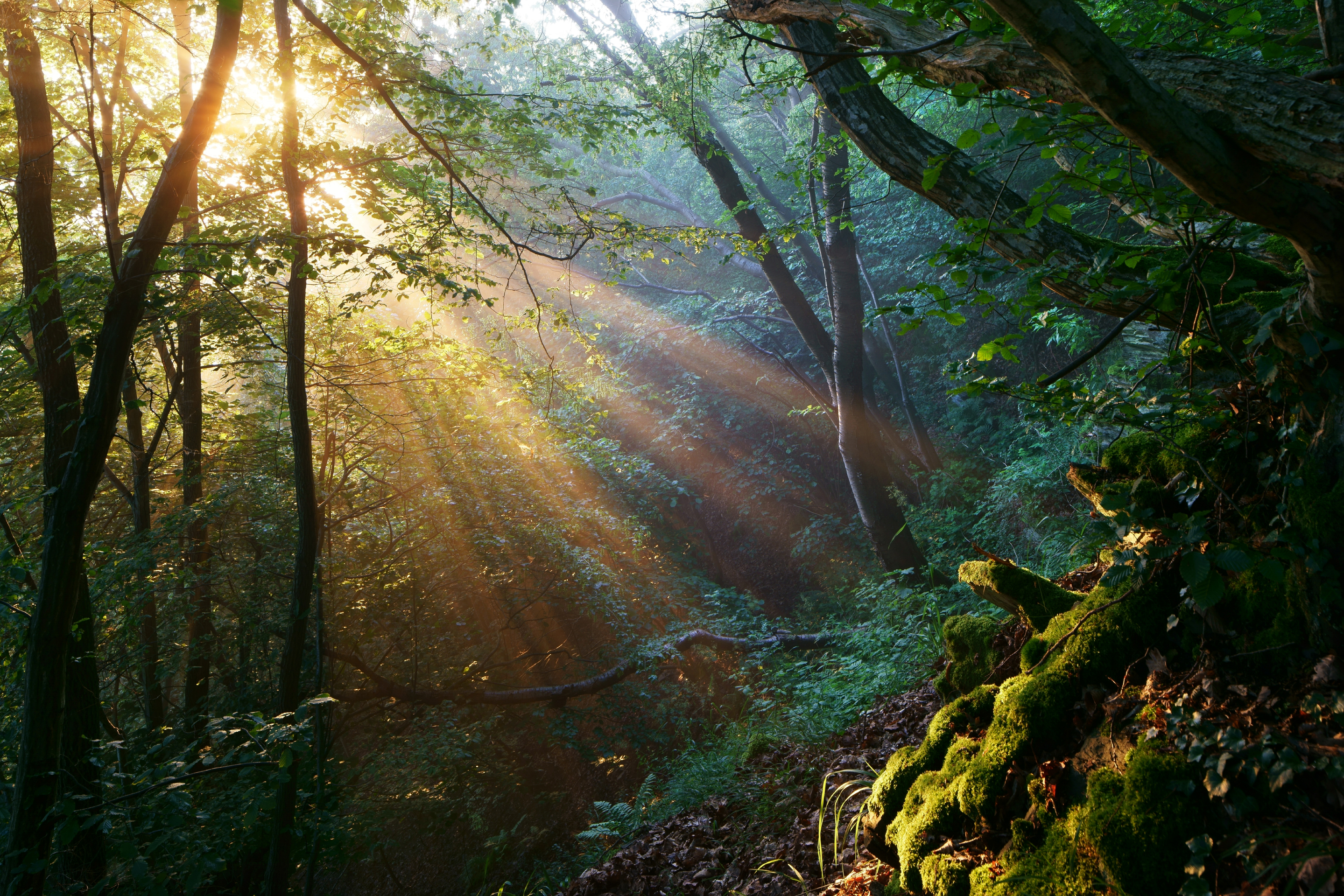
Kilian Schönberger | Sony A7R II | Sigma 24mm f/3.5 DG DN FE | 24mm | f/11 | 4/5 sec | ISO 200
At first glance, the Eifel seems unspectacular for forest photography. You'll often search in vain for big differences in elevation or truly breathtaking landscapes. Plus, many of the forests are used for forestry, so you'll have to look a bit for exciting subjects. The good news is that even small, natural stands are sufficient for appealing forest photos.
Geologically, the Eifel is very diverse. Volcanic domes and water-filled maars meet limestone, sandstone landscapes, slate deposits, and much more.
Subjects and Image Ideas
Expansive deciduous forests for a tranquil composition
Stunted oaks on steep slopes, especially in the Ahr Valley
Various forest scenes along quiet river valleys
Bog and border areas in the High Fens
Best Time and Conditions
Spring for fresh greenery and early bloomers
Late autumn for golden-red leaves in the beech forest
Winter for frosty scenes in the High Fens
Diffused light for even contrasts
Tip
The Ahr Valley was my go-to photography spot during my geography studies in Bonn. The oak forests on the steep valley slopes were largely spared from the flood disaster of 2021 and offer strong subjects year-round with their stunted oaks. These areas can be well explored along hiking trails like the Ahrsteig or the Red Wine Trail. For composing your shots, I recommend using not only wide-angle lenses but also light telephoto lenses to focus specifically on the growth forms of the trees.
Near the Belgian border, the High Fens begin, a high moorland area that, with its open spaces dotted with small groups of trees and forest islands, is somewhat reminiscent of Scandinavia. In between, monotonous spruce forests stretch out, which in their uniformity can also be interesting subjects. They create calm, melancholic forest images, especially when covered in frost during winter.
8. Thuringian Forest – Vast Ridges and Atmospheric Valleys
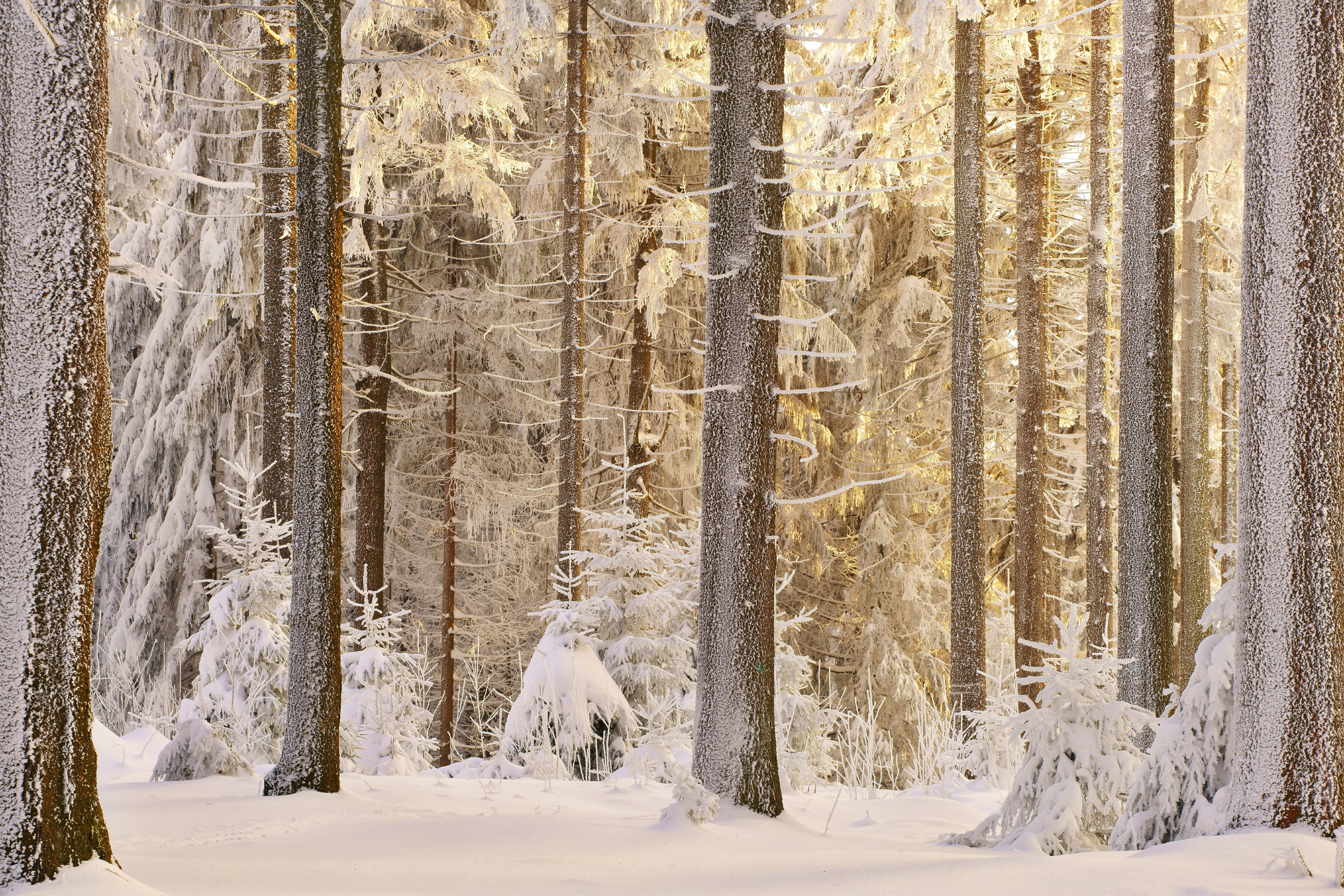
Kilian Schönberger | Sony A7R II | Sony FE 70-200mm f/4 G OSS | 122mm | f/13 | 1/6 sec | ISO 100
The Thuringian Forest stretches like an elongated ridge in the heart of Germany from west to east. With the Rennsteig, one of the country's most famous long-distance hiking trails, runs here for about 170 kilometres along the ridge, touching natural and cultural highlights like the Wartburg or the Drachenschlucht.
Many associate the region primarily with winter sports – but beyond the Rennsteig, the Thuringian Forest has a lot to offer forest photographers.
Spruce forests shape the landscape in many places here, but there are also beautiful forest areas and quiet valleys that create a calm, almost fairy-tale atmosphere, especially in winter – but also in fog or rain.
Subjects and Image Ideas
Dense mountain forests along the Rennsteig
Snow-covered spruce forests and frost on branches
Forested valleys with rock formations
Misty forest landscapes with clear depth gradation
Best Time and Conditions
Winter for snow and frost moods
Fog for calm, minimalist compositions
Rain for rich colours in the valleys
Tip
Around Oberhof, you'll find particularly good conditions for winter forest photos due to the altitude and the snowmaking on the cross-country ski trails. Snow-covered spruces and hoarfrost are not uncommon here; the only challenge is keeping the winter sports facilities and infrastructure out of the picture.
Another worthwhile destination is the Lauchagrund near Tabarz, also known as Felsental (Rocky Valley). The path through the green valley, interspersed with rocks, is a great way to slow down and relax. The striking Torstein — a moss-covered rock passage more than five meters high and, in some places, 12 meters wide — is reminiscent of a scene from a modern fantasy film. The heavily wooded Lauchagrund is particularly impressive in the rain or fog, as the green vegetation appears especially vibrant.
9. Sandstone Cliffs – Warm Evening Light Over Endless Treetops
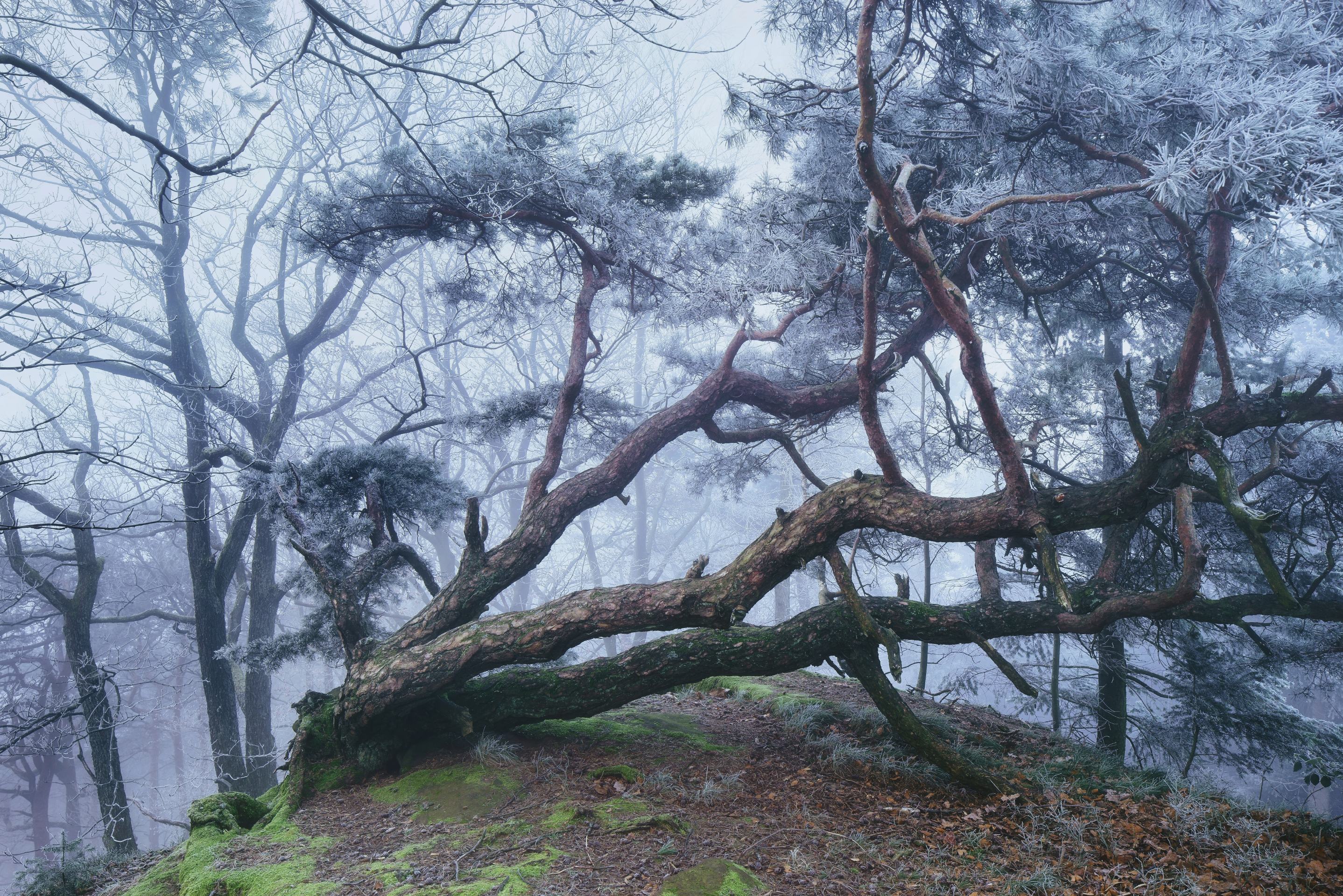
Kilian Schönberger | Sony A7R | Sigma 24mm f/3.5 DG DN FE | 24mm | f/11 | 1/4 sec | ISO 200
The Palatinate Forest may not score high in terms of elevation, but it is still one of the most interesting areas for forest photography in Germany.
Endless hills covered with deciduous forests, spectacular sandstone cliffs (some more impressively shaped than those in Saxon Switzerland), and numerous castle ruins together provide wonderful opportunities for atmospheric landscape and forest photos.
Subjects and Image Ideas
Fog in the wooded valleys between the hills
Twisted pines on bizarrely shaped sandstone rocks
Ruins of castles jutting out of the forest like teeth
Mosses, lichens, and small detailed worlds on rocks and deadwood
Best Time and Conditions
Early summer and fall for light and colour
Morning for valley fog at sunrise
Warm light on the reddish rocks in the evening
Impressive hoarfrost scenes in winter
Diffused light for detail and macro shots
Tip
An exciting location for atmospheric forest photography is the Karlstal Gorge near Trippstadt. Here, the Moosalbe stream ripples over small cascades as it winds through a wooded ravine lined with beech trees. The stones lying in the water and the driftwood along the banks are covered in a thick layer of moss, and in the most picturesque section stands an old wooden pavilion — its moss-covered roof evoking memories of the Elven forest cities from The Lord of the Rings. If you wish to incorporate the surrounding red beeches as compositional elements, I recommend using a telephoto lens to seek out distant vantage points that offer glimpses through the trees. This approach makes the pavilion appear even more secluded amidst the ancient woods.
A great way to get an overview of the treetops and peaks of the Palatinate Forest is from the Rehberg Tower near Annweiler. On a clear day, you can see as far as the legendary Trifels Castle. But the immediate surroundings are also worth it: On the sandstone rocks in the forest, peculiarly shaped pines grow, and in the sparse areas, small forest-themed worlds with lichens and mosses emerge, which are perfect for macro and detail shots.
10. Rügen – Island of Beech Forests
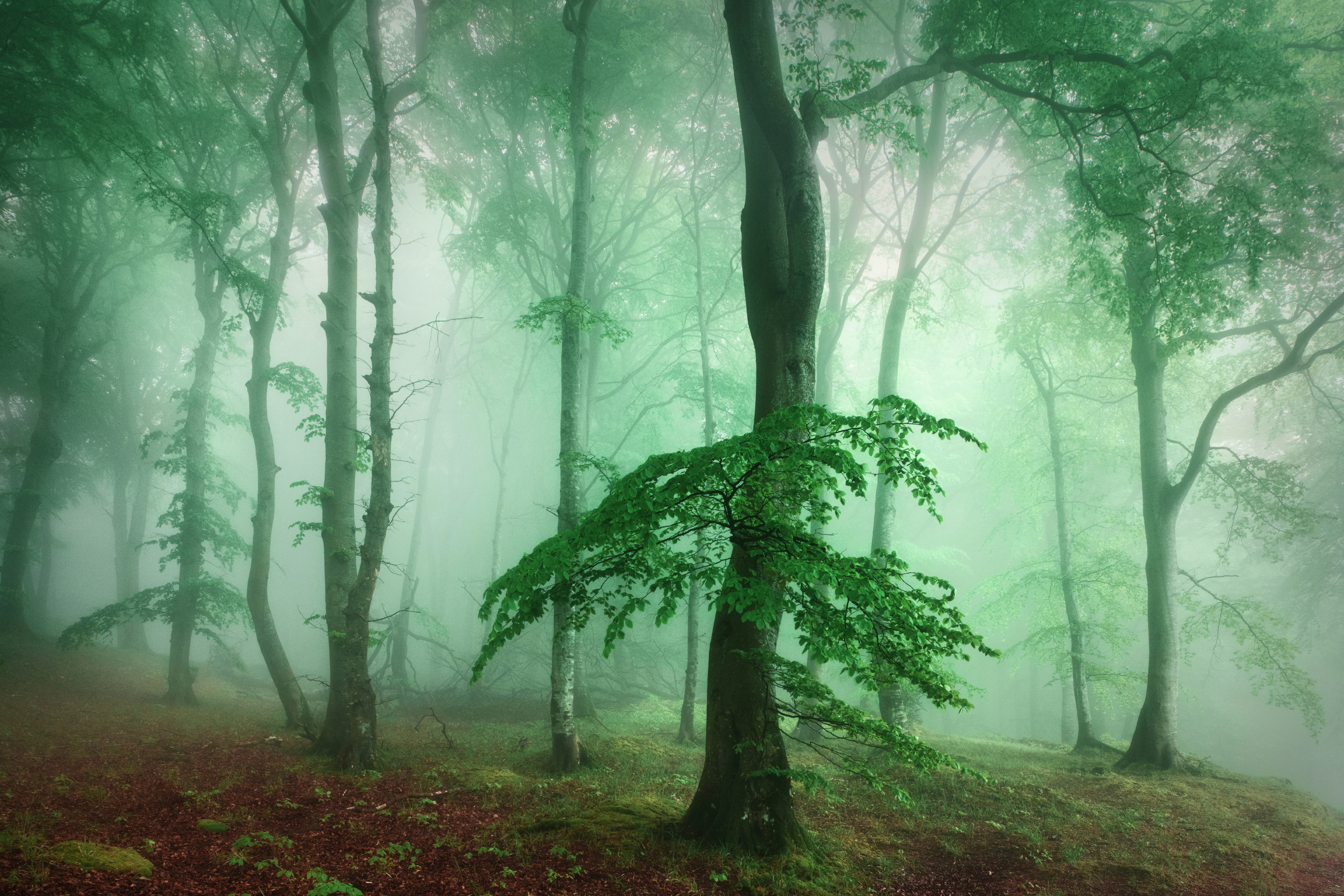
Kilian Schönberger | Nikon D850 | Nikon AF-S NIKKOR 70–200mm f/4G ED VR | 110mm | f/13 | 1/20 sec | ISO 400
Rügen is an exceptional destination for forest photography. Time and again, forests extend directly to the sea, interspersed with countless bays, cliffs, and small lakes.
The ancient beech forests in the northeast are particularly well-preserved to this day. They are protected and have even become part of the UNESCO World Natural Heritage. But if you keep your eyes open, you'll discover fascinating tree stands almost everywhere on the island.
Subjects and Image Ideas
Ancient beech forests along the chalk coast
Twisted trunks and exposed roots on the steep edges
Swamp and bog forests with standing water areas
Bizarre tree shapes like the Süntel beeches in the Witch's Forest
Best Time and Conditions
Spring for wood anemones under still leafless beeches
Autumn for fine foliage colours
Winter — for calm, monochrome moods in the snow, reminiscent of ink drawings
Humid air and fog for soft contrasts
Tip
A particularly impressive spot for forest photography on Rügen is Jasmund National Park. From the large parking lot in Hagen, trails lead past the Viktoriasicht viewpoint and along the chalk coast. As you make your way along this route, you look down in places from a height of over 100 metres onto the Baltic Sea. Right at the edge of the chalk cliffs, you encounter a quintessential subject of Rügen’s forest photography: beech trees with gnarled trunks, their widely branching roots grappling for a foothold.
Even away from the coast, it's worth keeping your eyes open. Small lakes and moors have given rise to alder swamp forests, where the trees literally get "wet feet" when the water level is high, providing some eerily striking photo opportunities.
A small but special grove is the Hexenwald near Lietzow. It's not really a forest, but a collection of artificially planted Süntel beeches. Unlike "real" beeches, these trees grow in a twisted manner, leaning in all directions with a canopy that reaches the ground. The quirky trunks and branches offer countless composition possibilities year-round — even if the eye is initially overwhelmed by all the lines and curves. To achieve a bit more calm in your image composition and avoid people in the picture, I recommend visiting during off-peak times.
The photo spots in Germany presented here are a personal selection of locations that have proven particularly rewarding for my forest photography over the years.
They are perfect for extended photo tours and also serve as inspiration to rediscover the forest right outside your door — because good subjects are often closer than you think.
If you're just getting started with forest photography, you'll find practical tips in the video above.
Find out more about Kilian and his work on Instagram at @kilianschoenberger.
See more tips and techniques on the MPB content hub.