Porto is the kind of city that makes you slow down and start noticing light, colour and detail. One minute you’re climbing a steep, sunlit street, the next, you’re pausing to frame a façade of Azulejo tiles or the way the light slips across the Douro River.
Iconic photography spots like Ponte Luís I and São Bento Railway Station sit just minutes from quieter backstreets in Miragaia and Rua de Belomonte. That mix of big landmarks and lived-in neighbourhoods is what makes Porto such a rewarding place for a photowalk.
In this guide, photographer Connor Redmond shares 10 of the best places to shoot in Porto, captured during a full walk through the city. Along the way, you’ll find practical tips and composition ideas to help you make the most of your time there.
https://youtu.be/sr32-_Nug44?rel=0While we were in sun-drenched Porto, I had the Sigma BF and 50mm f/2 DG DN L with me for testing. I thought there was no better way to put Sigma’s new premium block of metal through its paces than to walk around a city like Porto for five hours without stopping on a very bright spring afternoon. Read our Sigma BF Review. In hindsight, I would have left the hotel a few hours later to time my walk with the softer light you get before sunset. Instead, I set off earlier while reading MPB’s guide to travel photography, however, I do enjoy the challenge of shooting in bright midday sun, which produces harsh shadows and bright highlights. You end up finding dynamic scenes with dramatically long shadows, and Porto’s long, winding streets play with this sort of light wonderfully. Next time, I will remember to bring an ND filter with me.
Photowalk Lens Suggestions
For a photowalk like this through Porto, versatility matters more than perfection, which is why zoom lenses are often the most practical choice. A standard zoom, such as a 24–70mm covers the vast majority of situations you’ll encounter, from wide cityscapes and architecture to tighter street scenes and details, without constantly changing lenses.
Pairing that with a wider zoom, like a 16–35mm, is ideal if you enjoy exaggerating perspective on bridges, narrow streets and hilltop viewpoints. Zooms allow you to react quickly to changing scenes, shifting light and fleeting moments, which is particularly important in busy areas like Ribeira or Rua das Flores, where stopping to swap lenses can mean missing the shot.
That said, carrying one or two primes can add both creative focus and practical advantages. A 35mm prime is an excellent all-round companion for street photography, and my personal favourite for a walk like this. I would recommend a great 35mm fixed-lens compact camera like those in the best compact travel cameras, as they are perfectly suited to this style.
The venerable 50mm prime is also worth a quick mention, as I had it with me on this walk as a fast, lightweight option for low-light, tighter compositions and isolating details without distraction.
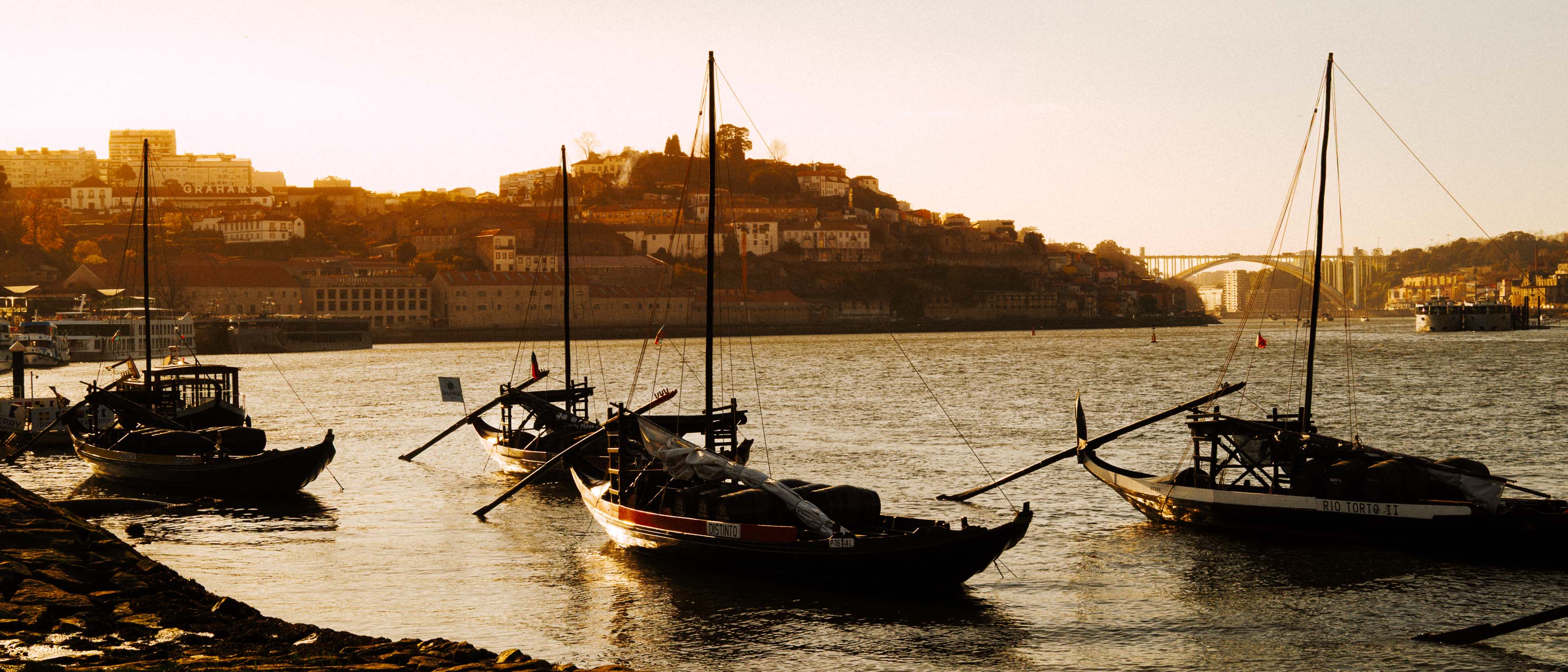
Connor Redmond | 21:9 Example | Sigma BF | Sigma 50mm f/2 DG DN Contemporary | f/16 | 1/400 sec | ISO 400
Cais de Gaia Promenade
Start your photowalk on the lively Cais de Gaia promenade, the historic heart of Porto's famous Port trade. Here you can enjoy ‘classic’ views of Porto, and see traditional Rabelo river boats sailing up and down the Douro river.
Use the stacked and colourful old town rising on the opposite bank, the Dom Luís I bridge cutting through the skyline and the river activity (boats, ripples, reflections) to get your ‘postcard’ shot. It’s fairly hard to mess a photo up here because wherever you look, it’s gorgeous.
What to photograph
Porto’s old town skyline across the river
Dom Luís I Bridge framed with boats or railings
Reflections in the Douro especially at golden hour and people walking the promenade for scale.
Tip
Sit at the riverfront and watch the boats sail up and down, whilst observing the interesting characters who pass you by.
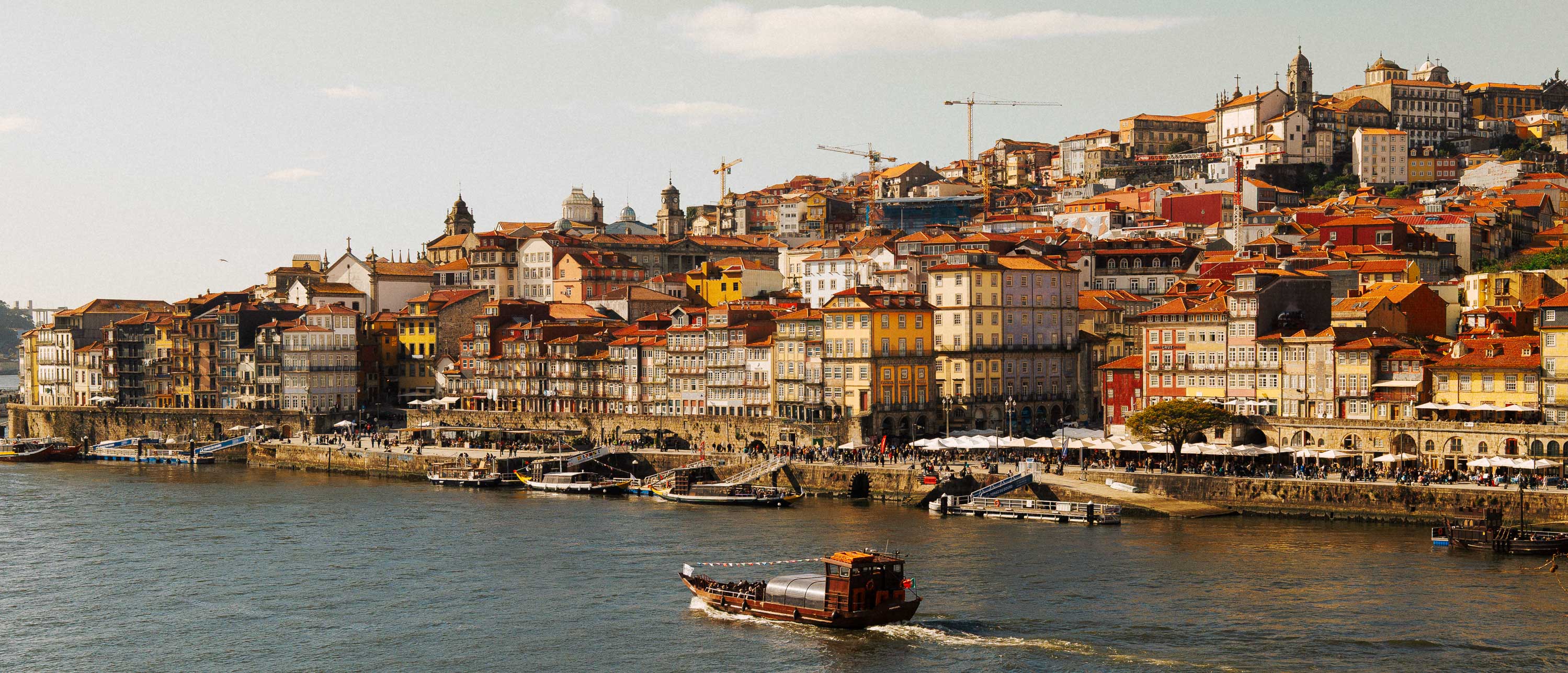
Connor Redmond | Sigma BF | Sigma 50mm f/2 DG DN | f/11 | 1/160 sec | ISO 400
Jardim do Morro Hilltop Park
Climb up to Jardim do Morro for a completely different view. From up here, you’ll understand why Porto is known as the ‘City of Bridges’. You can see most of the six famous bridges and get a sense of how the city is built upon a hill overlooking the river.
There are lots of golden opportunities for cityscapes up here, but it is also a great place to photograph people in the scene without losing a sense of place. You’ll most likely stumble across street performers who will encourage you to take their pictures, as well as silhouettes, couples sitting on the grass and small groups watching the view.
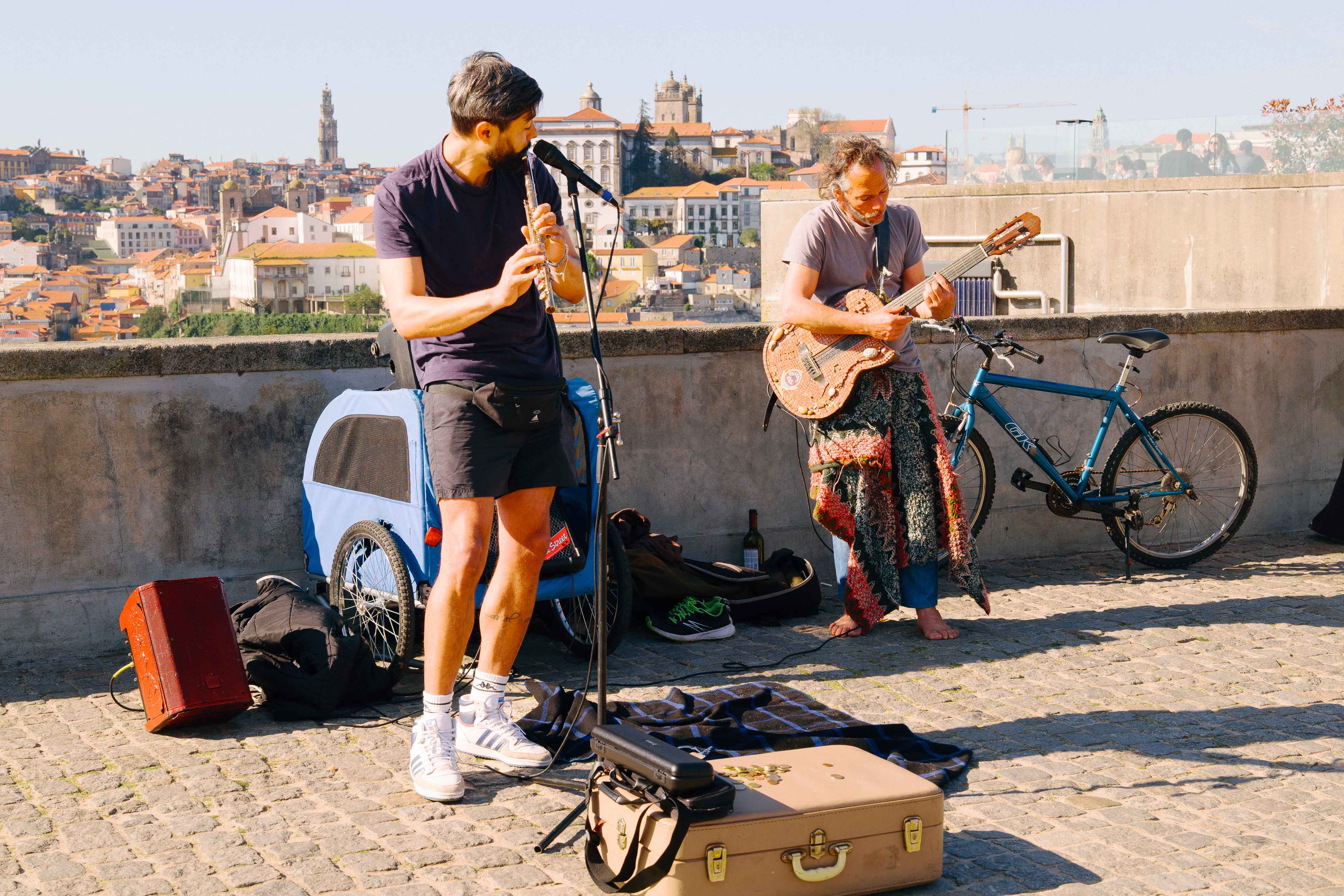
Connor Redmond | Sigma BF | Sigma 50mm f/2 DG DN | f/9.0 | 1/400 sec | ISO 400
What to photograph
Silhouettes of people sitting on the grass
Compression shots using a longer focal length, with the city blurred in the background
Sunset and blue-hour transitions
Tip
Use people deliberately here. A single figure near the edge instantly gives the scene a sense of scale.
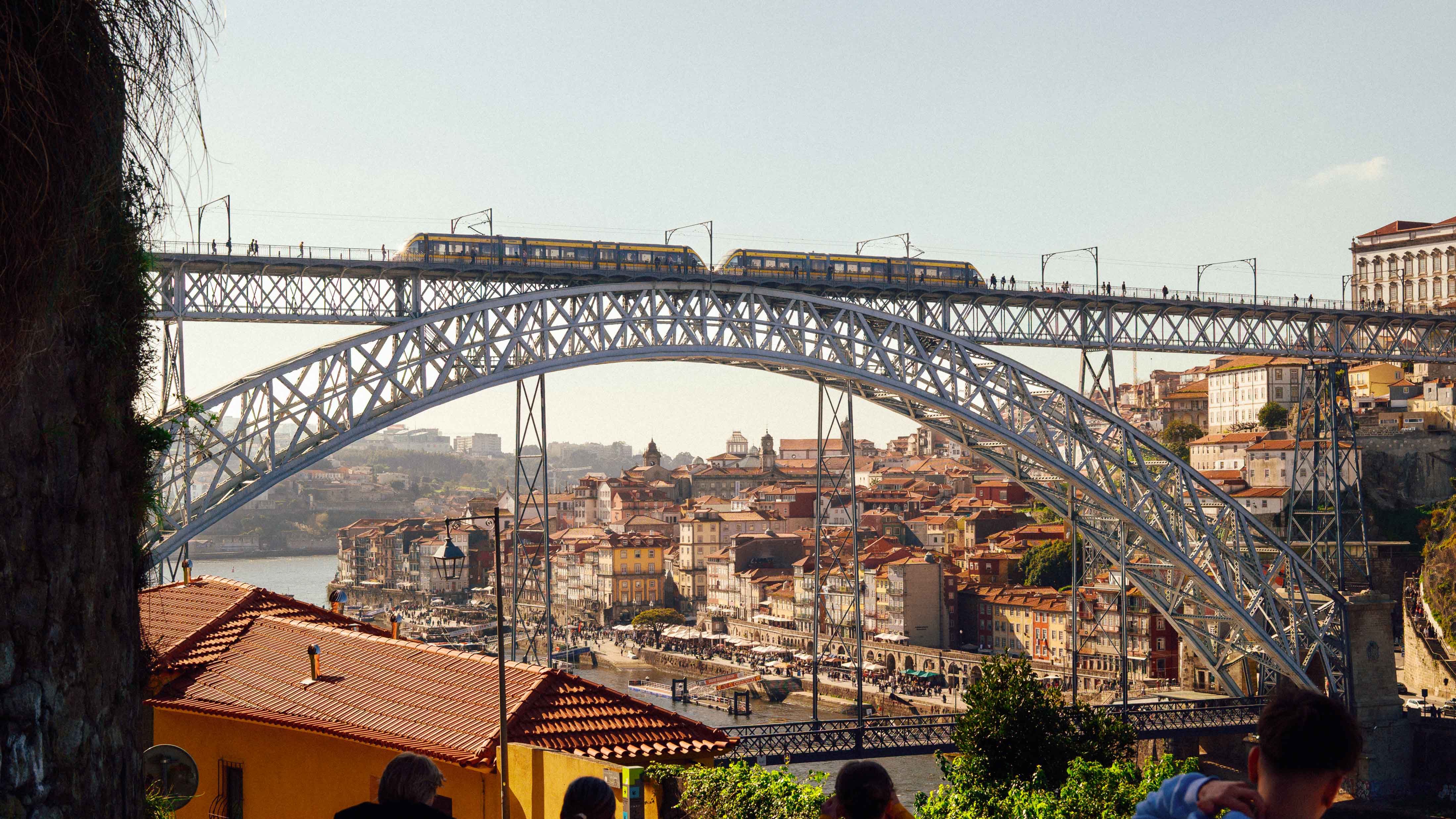
Connor Redmond | Sigma BF | Sigma 50mm f/2 DG DN | f/8.0 | 1/1250 sec | ISO 400
Ponte Luís I Bridge
From the park, head straight to the Ponte Luís I bridge nearby and walk across it to the centre of the city. While you do this, you will inevitably be snapping away at the city, as there are many leading lines and natural frames to be found from up here.
This would be a good time to use a telephoto lens, if you happen to have one with you, and pick out interesting details of the city, such as the promenades below or the various colourful rooftops.
What to photograph
Strong leading lines from the iron framework
The river far below for dramatic perspective
People crossing the bridge against the skyline
Tip
Look both ways, as some of the strongest frames often appear when you turn back toward where you came from.
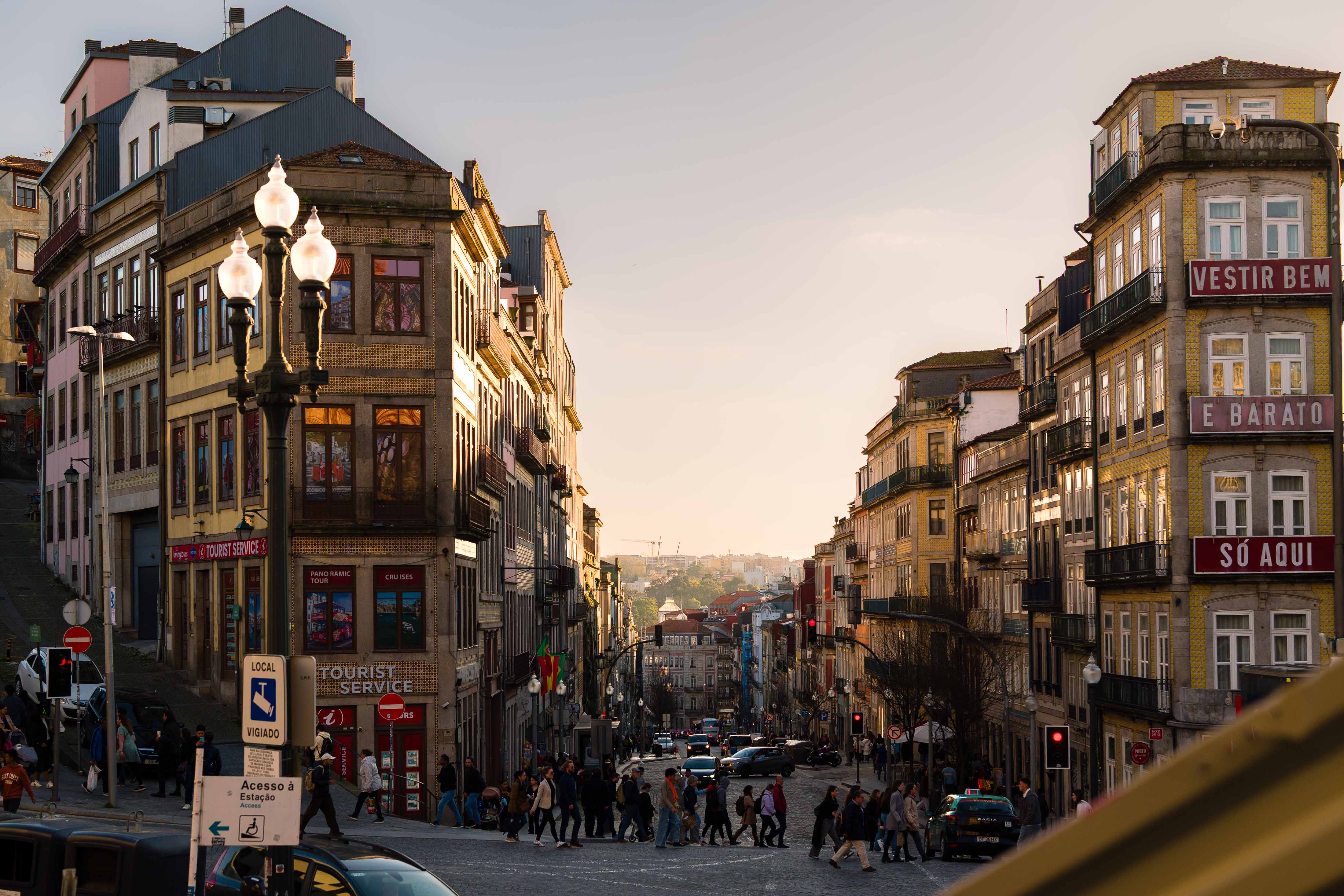
Connor Redmond | Sigma BF | Sigma 50mm f/2 DG DN | f/4.0 | 1/1250 sec | ISO 400
Ribeira
Once you’re back on the Porto side, drop down into the Ribeira neighbourhood and switch your mindset from “big view” to “busy detail.” This area is packed with photographic gems. There are numerous colourful façades, old stonework, laundry lines, café tables, riverfront energy and narrow lanes that create interesting compositions on their own.
It’s ideal for street photography in Ribeira, as it has a lot of energy to it, but as you might expect, it's fairly tourist-heavy as well. It’s important to look for the less trodden backstreets.
What to photograph
Colourful façades stacked along the riverbank
Street scenes at cafés and along narrow lanes
Shopfront details and layered street scenes
Steps, cobblestones, and worn textures
Tip
If you’re here on a bright early morning or a late afternoon and the sun is low in the sky, look for the shafts of light that beam through the little backstreets for dramatic-looking images.
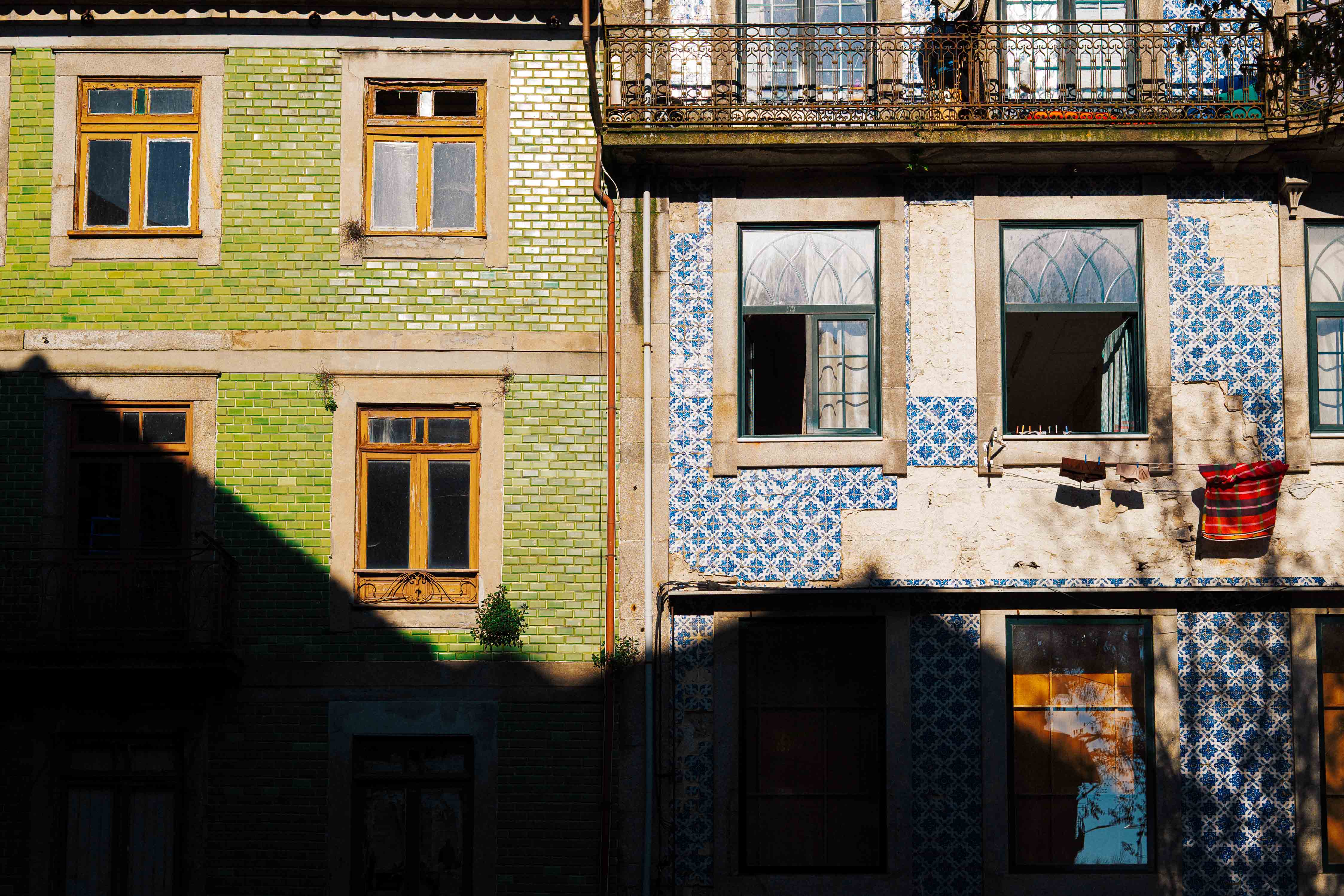
Connor Redmond | Sigma BF | Sigma 50mm f/2 DG DN | f/4.0 | 1/1250 sec | ISO 400
Don’t just stick to the waterfront, search the side streets for tighter compositions and better control of light. The buildings create pockets of shade and shafts of sun, which are perfect for isolating a subject. If you get a rainy moment, Ribeira becomes even more photogenic. Trust me. The wet cobblestones, reflections and a moodier colour palette make for strong black and white shots.
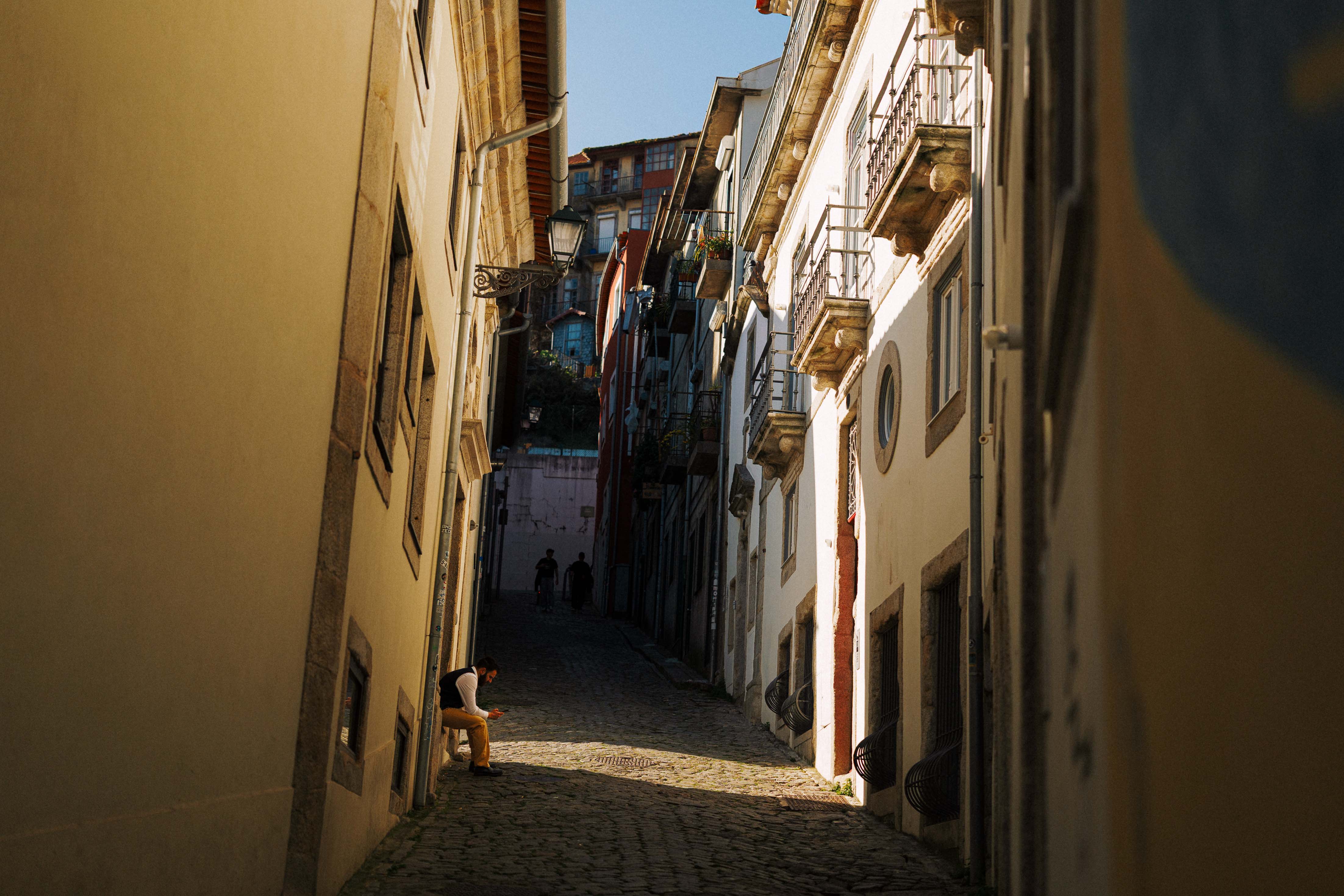
Connor Redmond | Sigma BF | Sigma 50mm f/2 DG DN | f/2.0 | 1/10,000 sec | ISO 400
Rua das Flores & Rua de Belomonte
Now, move on to Rua das Flores, where the vibe shifts to a lively pedestrian street with constant hustle. People browsing, chatting, carrying pastries, stepping in and out of doorways. Photographically, it’s a great “practice street” because you can shoot almost anything here, like portraits, candid street scenes, architectural details and storefronts.
If you want cleaner frames, come through earlier in the day and focus on symmetry, lines of balconies and repeating windows. If you prefer energy, later hours tend to bring more movement and layering, which is perfect for capturing Porto as a lived-in city rather than a postcard. Either way, keep your eyes open for texture, from worn stone to tiled details and the small contrasts between old façades and modern life.
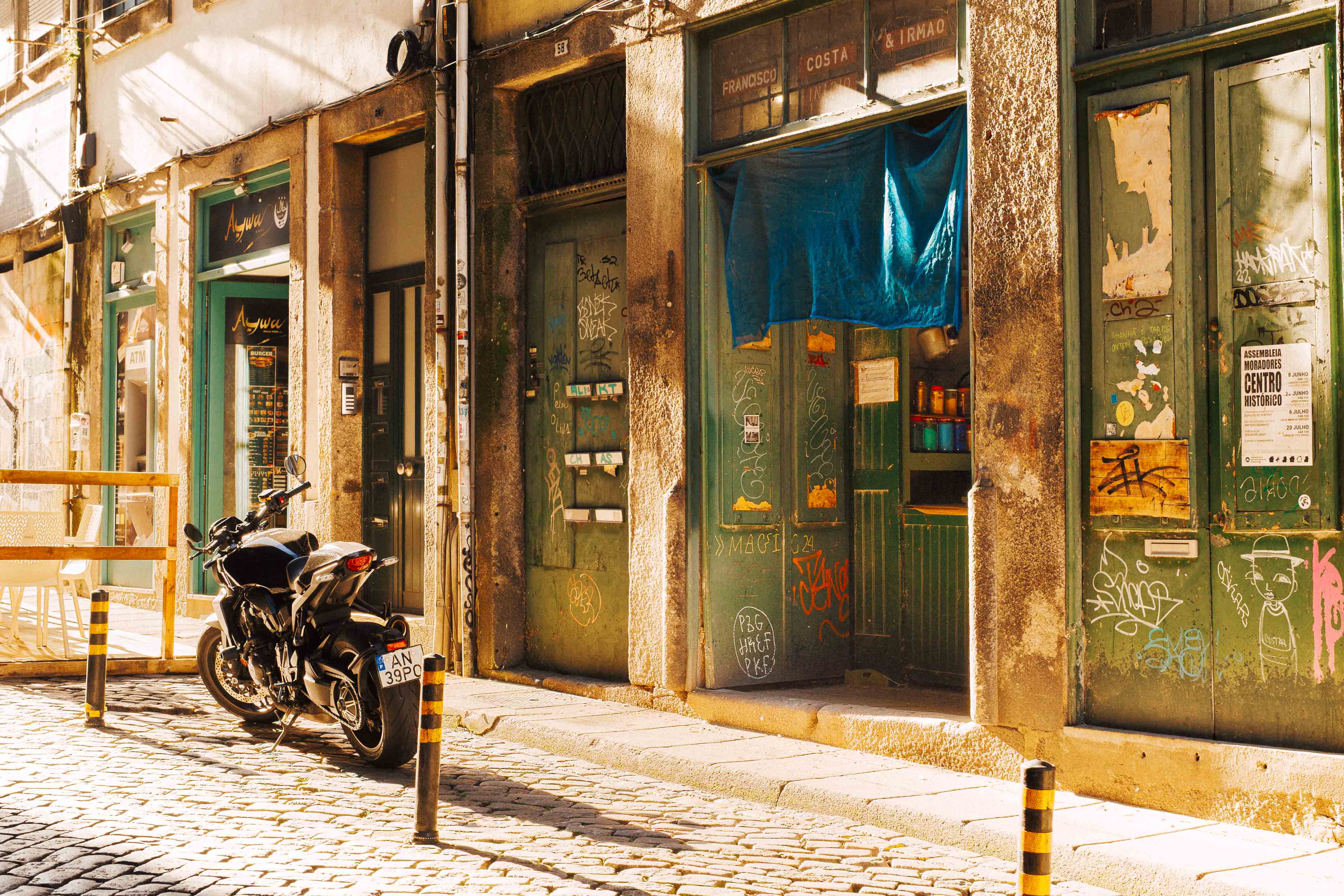
Connor Redmond | Sigma BF | Sigma 50mm f/2 DG DN | f/8.0 | 1/100 sec | ISO 400
From Rua das Flores, meander toward Rua de Belomonte, where the architectural details are fantastic. This street in particular really screams Porto living. The many unaligned balconies create a beautifully chaotic aesthetic, one that has a distinctly human touch. There is so much detail, texture and decoration to soak up here.
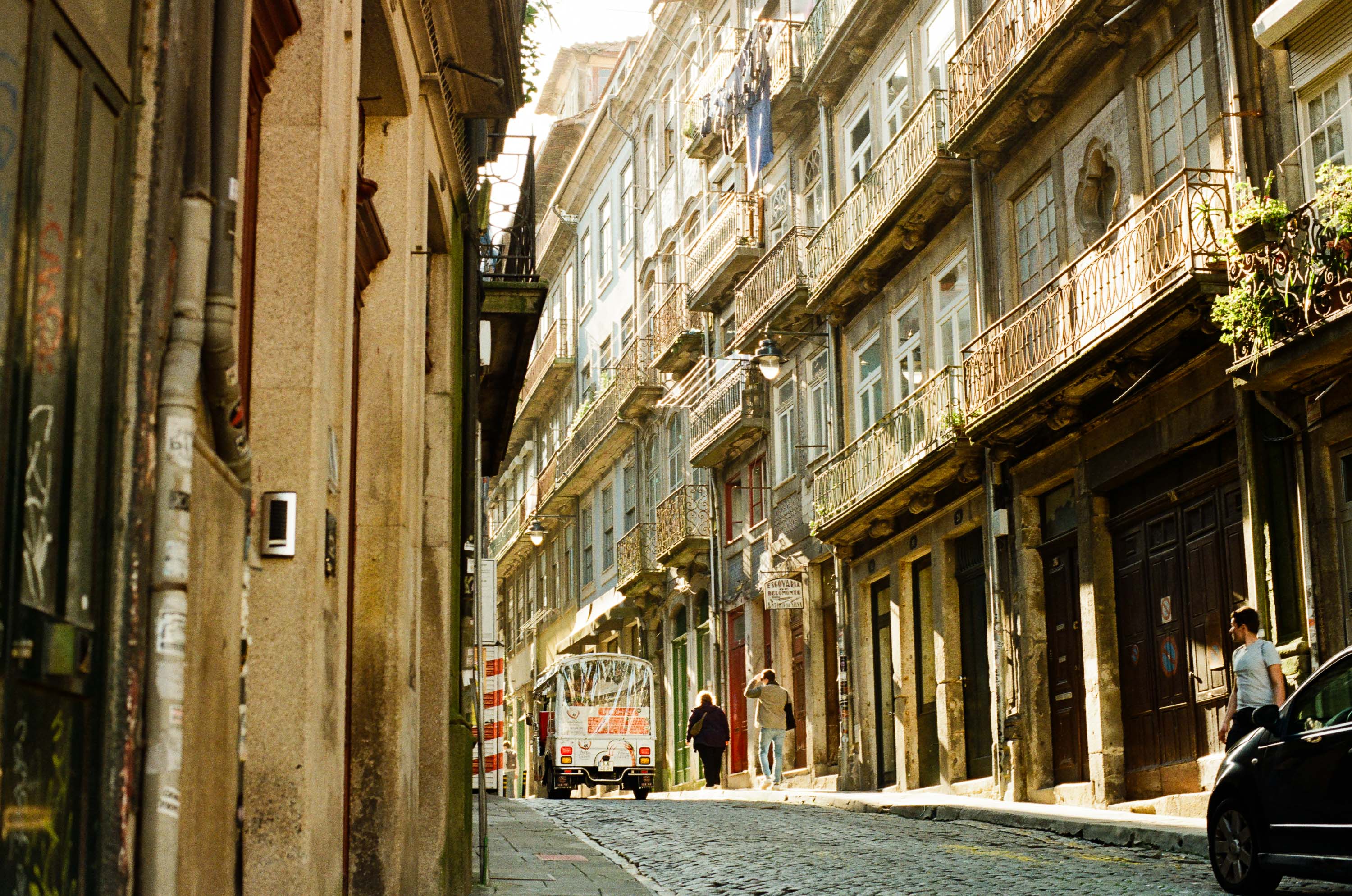
Connor Redmond | Contax 139 Quartz | Contax Zeiss Planar 50mm f/1.4 | Kodak Pro Image 100
This is a strong spot for detail-oriented photography, from door handles to faded signage, stone edges to peeling paint and little moments of everyday life framed by tight architecture. Overcast weather is actually your friend in this situation. Soft light brings out surface texture without harsh shadows, keeping the mood consistent as you shoot from one end of the street to the other.
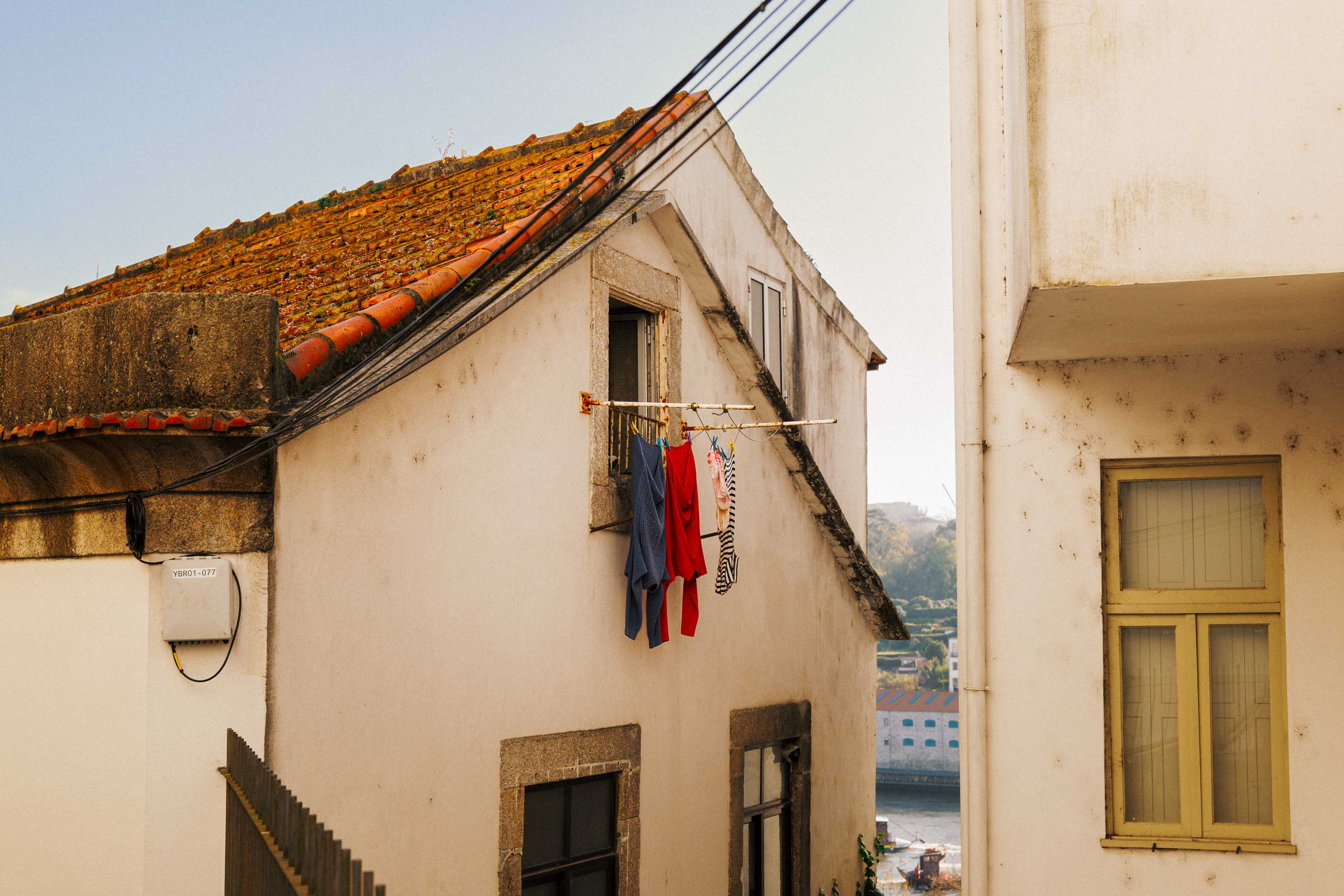
Connor Redmond | Sigma BF | Sigma 50mm f/2 DG DN | f/5.6 | 1/1600 sec | ISO 400
Miragaia
Next, make your way into Miragaia, which often feels calmer and more local than the busiest parts of Ribeira. That quieter pace is great for photography because you can slow down and build frames, with layered façades, tiled walls, laundry lines and gentle street life without the constant crowds walking through your shot.
Miragaia is also a nice place to alternate between river-facing shots and street scenes set inland. You can use the river as negative space, clean, simple backgrounds, then turn back toward the buildings for richer texture and colour. If you like storytelling, this is the kind of area where one good frame can say “Porto” without relying on obvious landmarks.
What to photograph
Calm residential street scenes
Colourful walls and azulejo tiles
Laundry, doorways, and small human details
River views with minimal crowds
Tip
Slow down here, make the most of the pace and look for interesting texture and details.
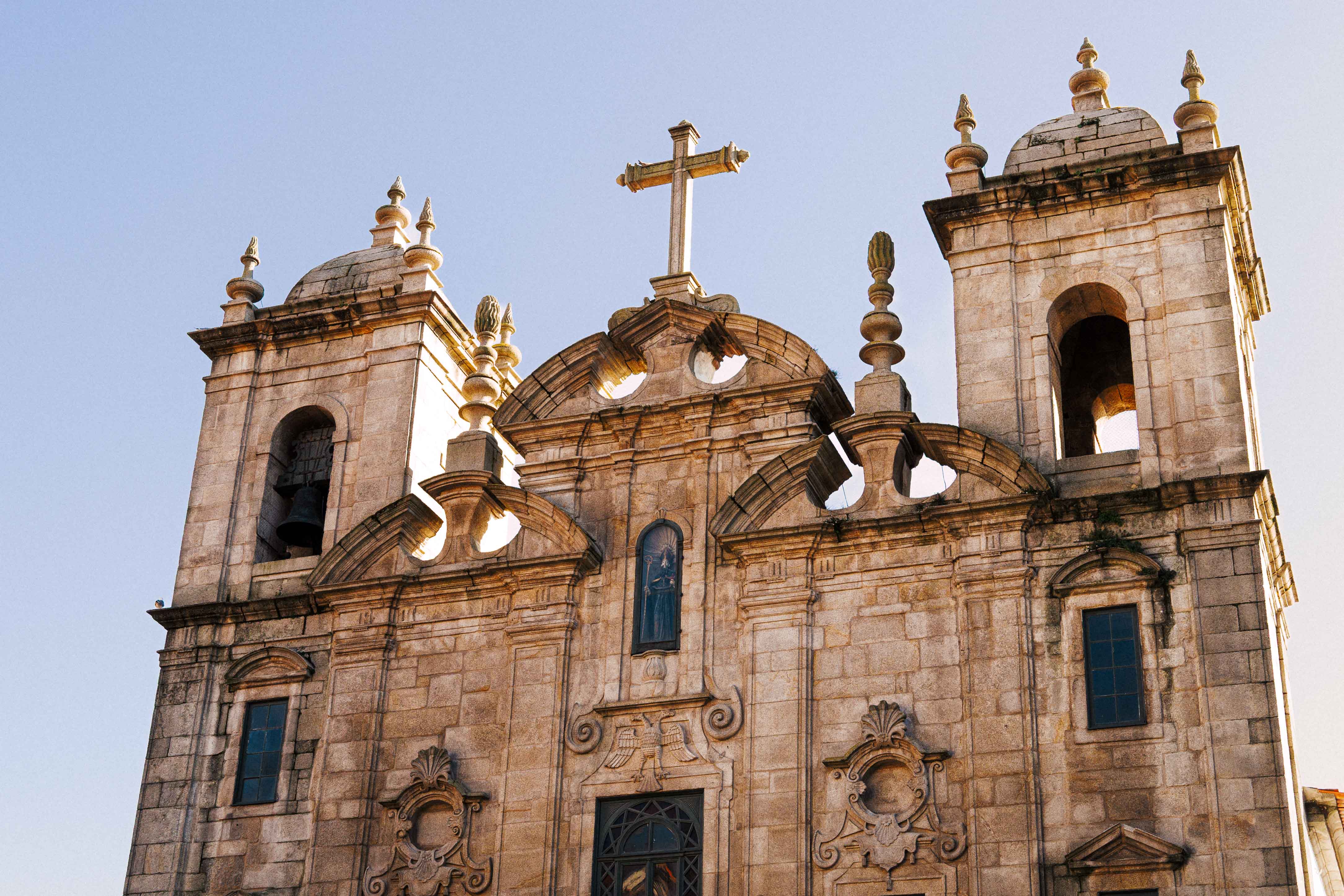
Connor Redmond | Sigma BF | Sigma 50mm f/2 DG DN | f/8.0 | 1/160 sec | ISO 400
Igreja de São João Novo Catholic Church
Now head up to the Igreja de São João Novo and treat the approach as part of the shoot. The church is reached via narrow passages and stone steps, which always make for interesting photography. The church is very old, dating back to 1539, and it sits in the Largo de São João Novo area, which provides ample space to compose the façade and the stairways leading up to it.
If it’s open (and photography is permitted), the interior offers a completely different subject. The ornate details, tilework and general atmosphere work beautifully in both colour and black and white. Notable elements include decorative features like the altarpiece and tile panels depicting scenes from the life of Santa Rita of Cascia. These are great for close-up detail shots when the light is low and the mood is quiet.
What to photograph
The church façade and stairways
Stone textures and architectural details
Interior tilework and altarpieces (if permitted)
Quiet, contemplative scenes
Tip
Treat the walk to the church as part of the shoot; the approach often produces stronger images than the destination itself.
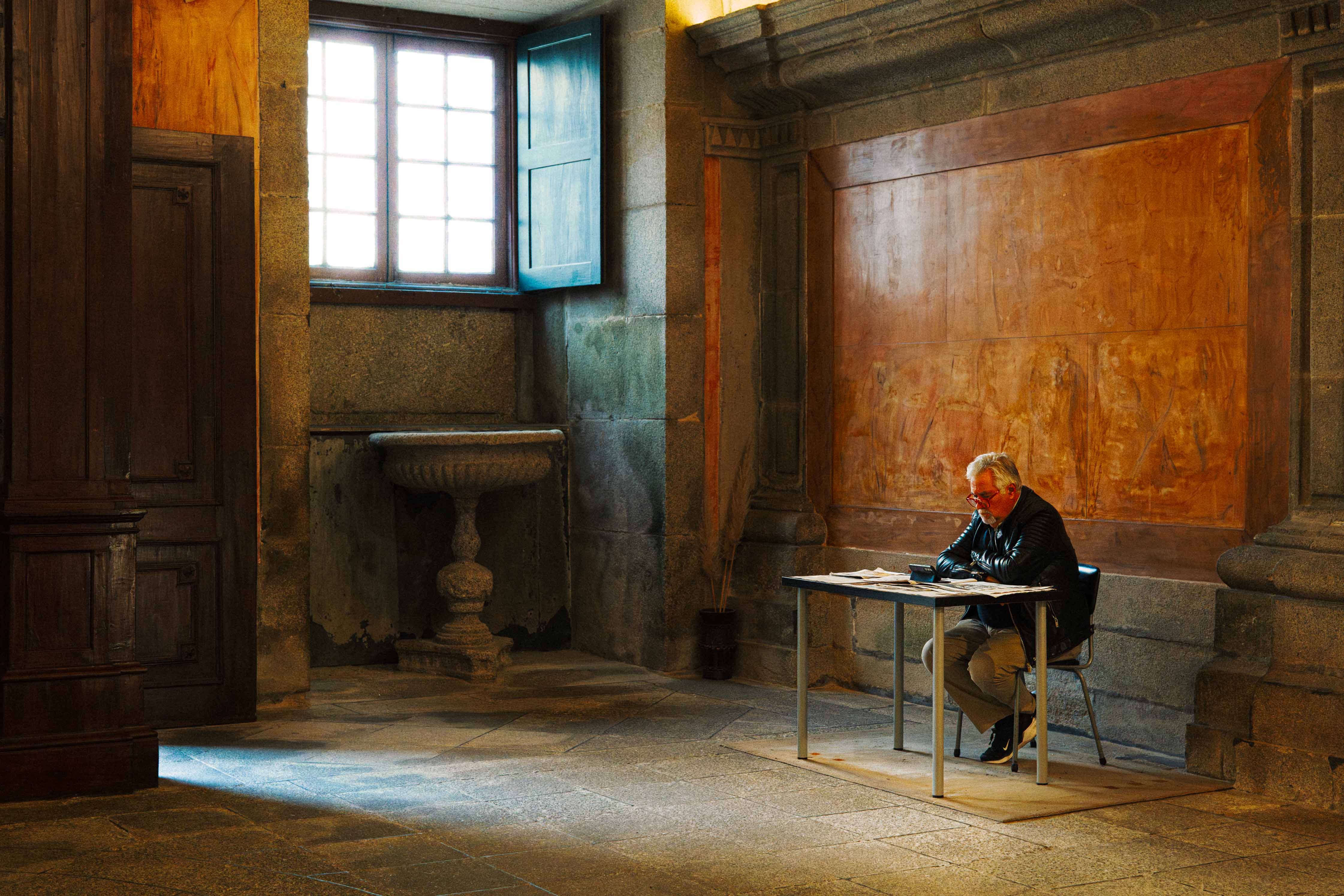
Connor Redmond | Sigma BF | Sigma 50mm f/2 DG DN | f/5.6 | 1/100 sec | ISO 400
Passeio das Virtudes Gardens
From the church area, move uphill to the Passeio das Virtudes Gardens for more amazing views and the lesser-known parts of the city. Many trees line the terrace, forming pretty frames. It’s an easy place to build strong compositions quickly, especially if you include a person near the edge of a terrace to add scale.
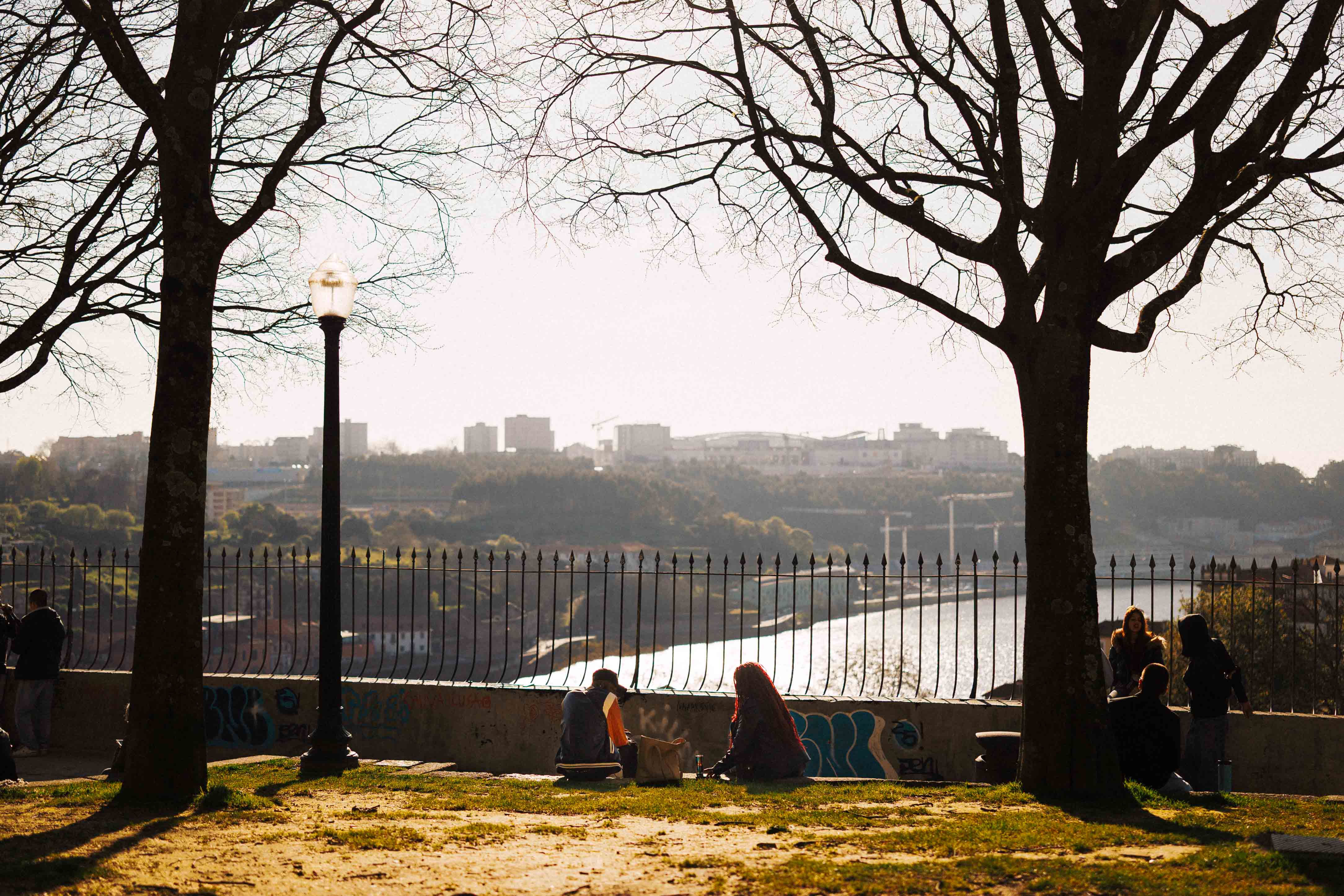
Connor Redmond | Sigma BF | Sigma 50mm f/2 DG DN | f/5.6 | 1/2000 sec | ISO 400
What to photograph
Terraced gardens leading toward the river
People relaxing along the edges
Layered compositions with foreground/midground/background and enjoy the silhouettes the sunset creates.
Tip
You can use the terraces as natural framing and shoot from one level down into another to build depth.
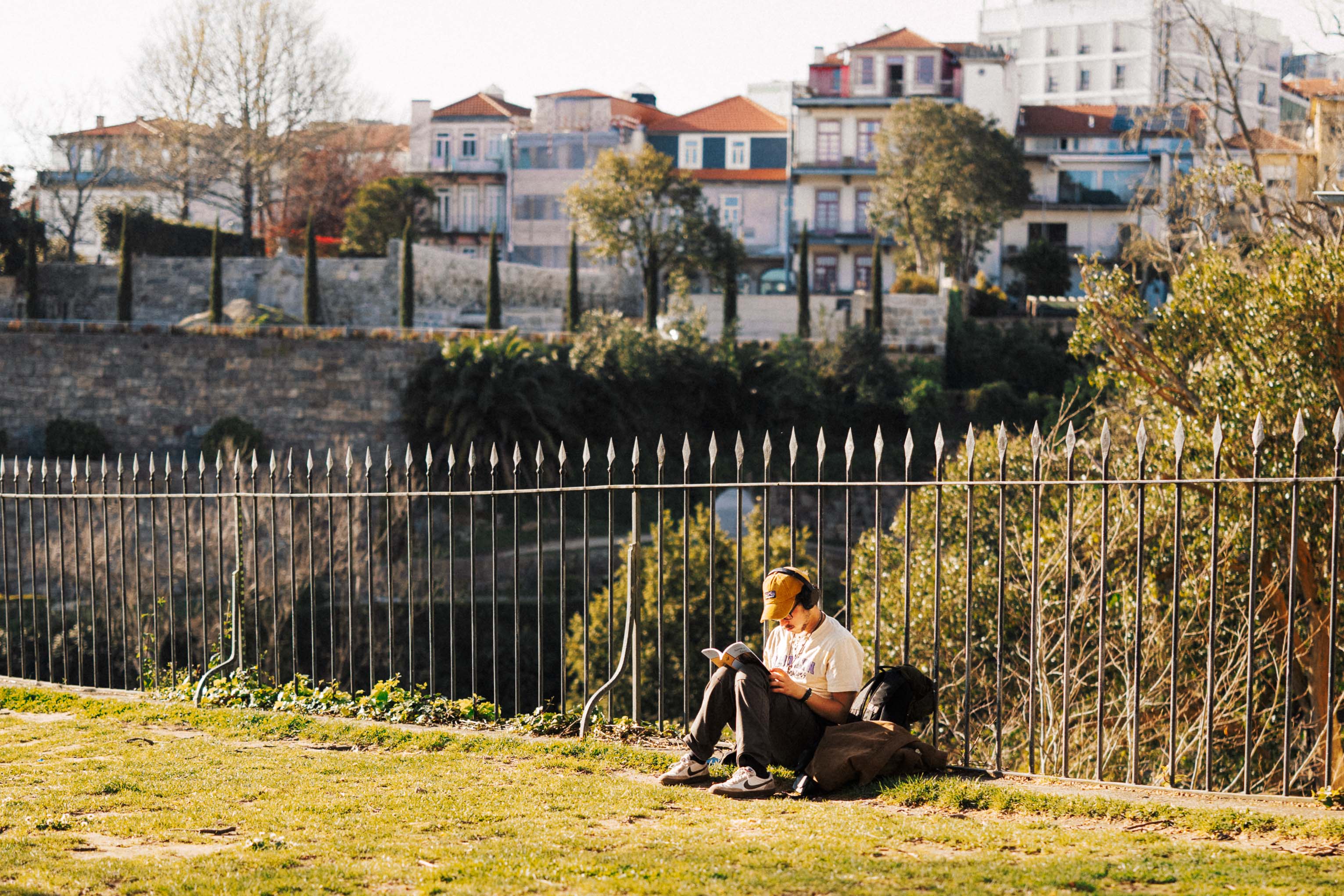
Connor Redmond | Sigma BF | Sigma 50mm f/2 DG DN | f/2.0 | 1/6400 sec | ISO 400
Praça General Humberto Delgado
Now head towards the more stately side of the city at Praça General Humberto Delgado, where Porto suddenly feels grand and symmetrical. This square, situated along Avenida dos Aliados, is close to Praça da Liberdade and is known for its impressive views of civic architecture, particularly the surrounding monumental buildings and the visual pull toward City Hall.
For photographs, lean into clean lines and strong perspective. Stand centred and shoot straight down the avenue for symmetry, or angle slightly to emphasise depth and repeating façades. It’s also a strong spot for long exposures if you have a tripod. Let people and traffic blur while the architecture stays perfectly sharp, and turn a busy square into something cinematic.
What to photograph
Symmetrical city architecture
Leading lines down Avenida dos Aliados
People crossing the square for scale
Long exposures with motion blur
Tip
Centre yourself in the square; symmetry is your strongest compositional tool here.
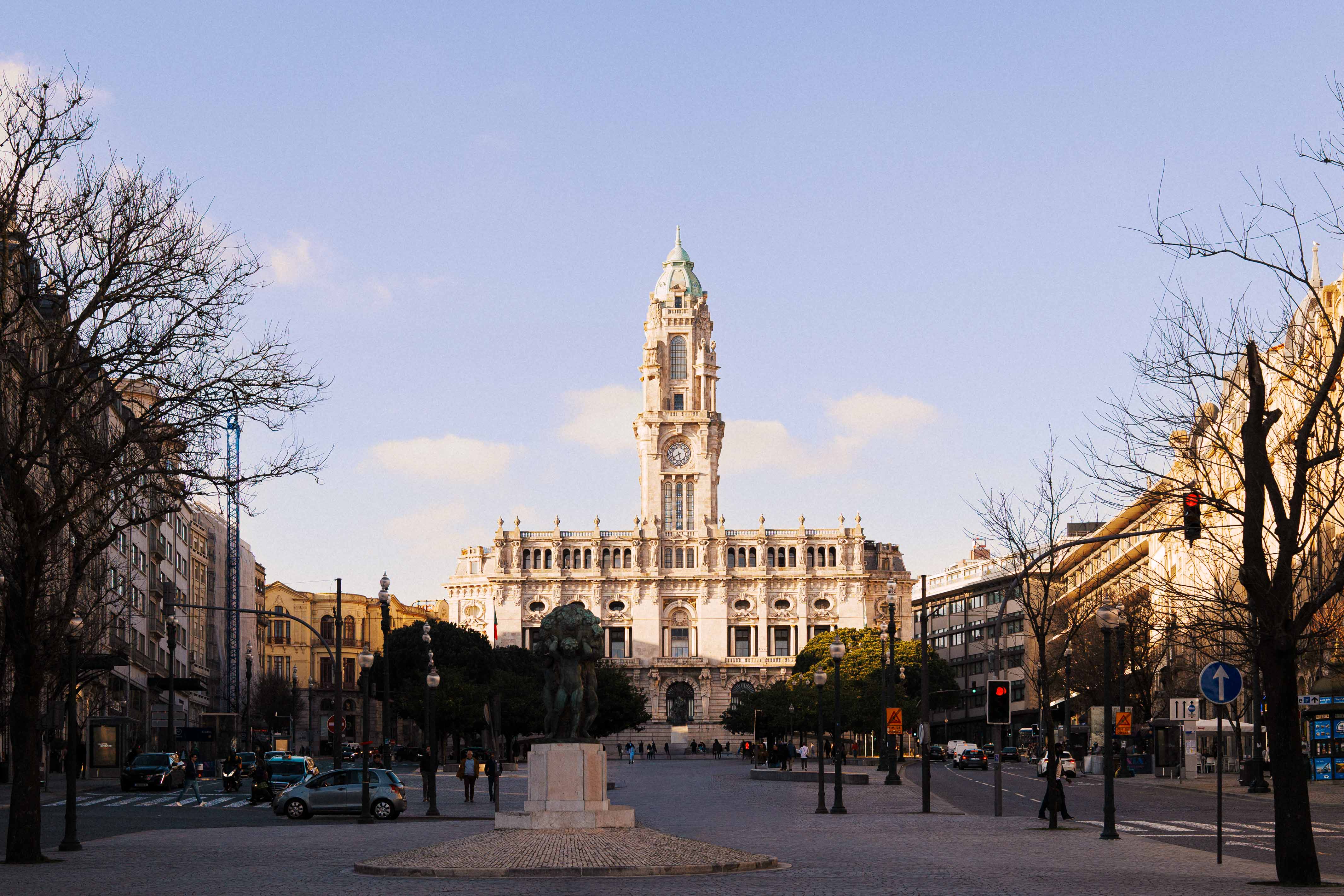
Connor Redmond | Sigma BF | Sigma 50mm f/2 DG DN | f/8.0 | 1/125 sec | ISO 400
São Bento Railway Station
Next, move on to the famous São Bento Railway Station. The moment you step inside, you’re practically in an art gallery that also happens to be a transport hub. The entrance hall is adorned with large azulejo panels, comprising 20,000 tiles. It is a wonderful sight. You can shoot everything from sweeping wides to show scale, to tight crops to isolate scenes, patterns and texture.
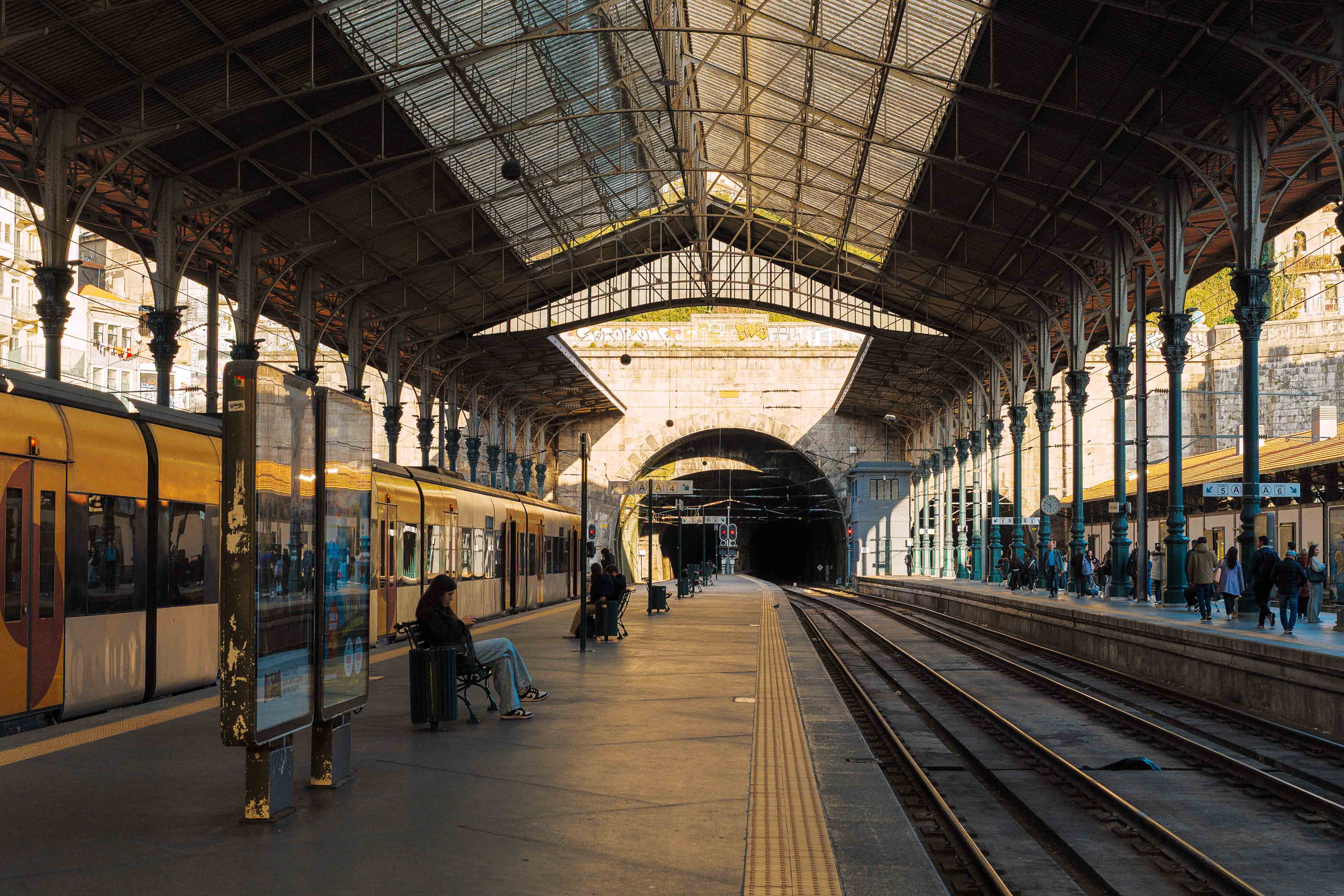
Connor Redmond | Sigma BF | Sigma 50mm f/2 DG DN | f/2.0 | 1/6400 sec | ISO 400
After you’ve captured the tilework, don’t leave immediately. Walk toward the platforms and look for that unique Porto detail. The station sits beside an escarpment, with a tunnel carved into the hill, giving you strong leading lines and a sense of trains disappearing into the city itself. Even if you don’t photograph trains, the platforms, signage and receding lines make great minimalist compositions.
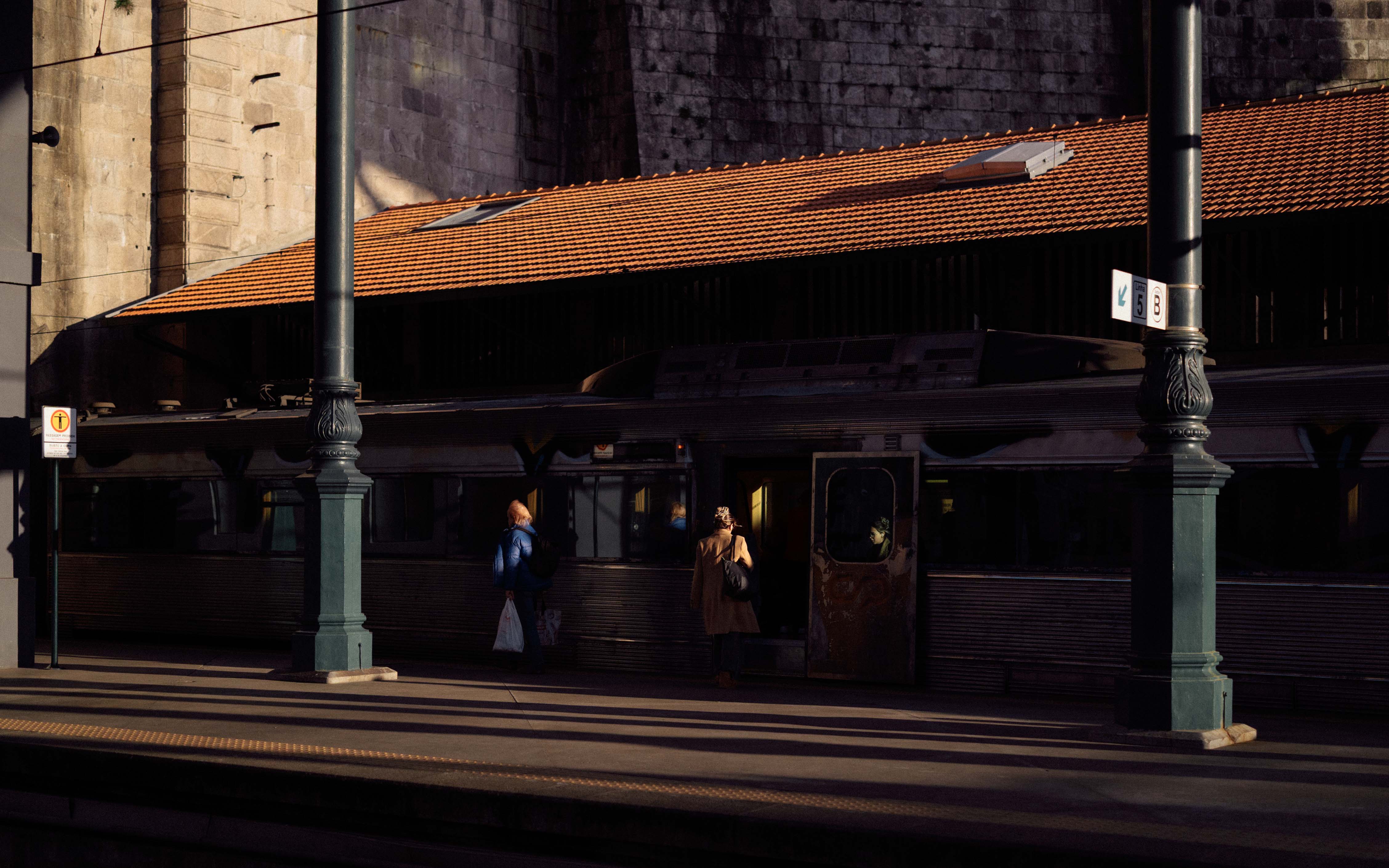
Connor Redmond | Sigma BF | Sigma 50mm f/2 DG DN | f/2.0 | 1/10,000 sec | ISO 400
What to photograph
Azulejo tile panels (wide and detail shots)
Architectural symmetry in the main hall
Trains, platforms, and receding lines
The tunnel carved into the hillside
Tip
Shoot both wide and tight. The station works just as well for storytelling details as it does for grand scenes. Look for the reasons behind people departing and arriving, observing whether they’re in a rush or they’re dawdling. This is where the best photos are.
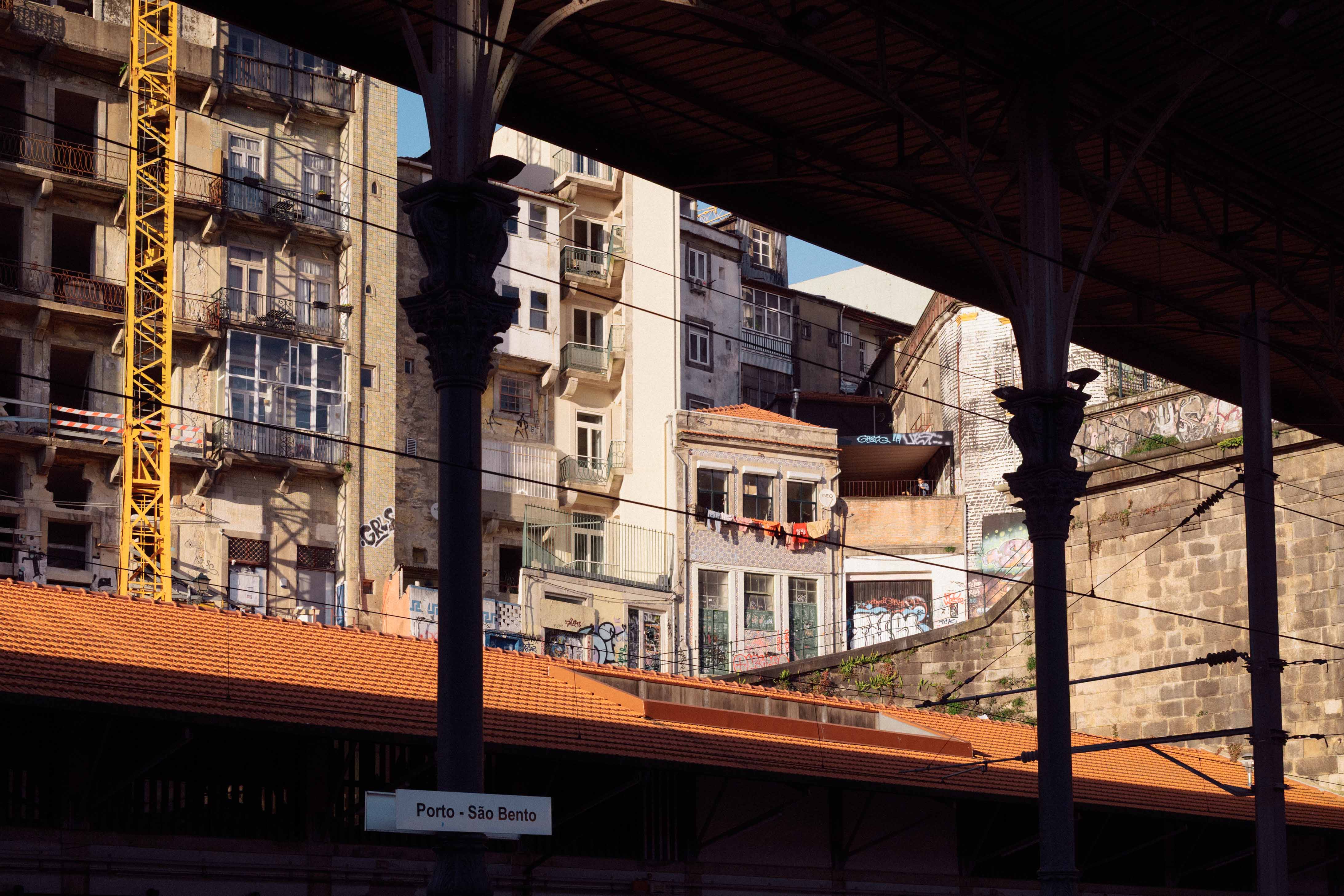
Connor Redmond | Sigma BF | Sigma 50mm f/2 DG DN | f/8.0 | 1/800 sec | ISO 400
You can easily spend an hour or two here just watching the trains arrive in and out of the tunnel like urban snakes. This appeal is not exclusive to just photographers. The architecture and structures deserve to be looked at because of the ingenuity and unusual look, which feels closer to the tiled churches nearby than what you might expect from a train station.
Ribeira do Porto/Douro River
Finish your route by returning to the Ribeira do Porto/Douro River itself and use the water as your visual thread that ties the whole walk together. If you have timed it perfectly, you may arrive here just before sunset and get blessed by beautiful light.
The Douro is ideal for “closing shots” because it allows you to capture Porto in a single frame: bridges, boats, reflections, stacked buildings and the constant movement that makes the city feel alive. If you’re shooting at blue hour, the river becomes a mirror, and even simple compositions start to look polished.
This is also the best moment to experiment. Try a long exposure to smooth the water, shoot handheld with a higher shutter to freeze boat spray, or opt for silhouettes of people along the river wall.
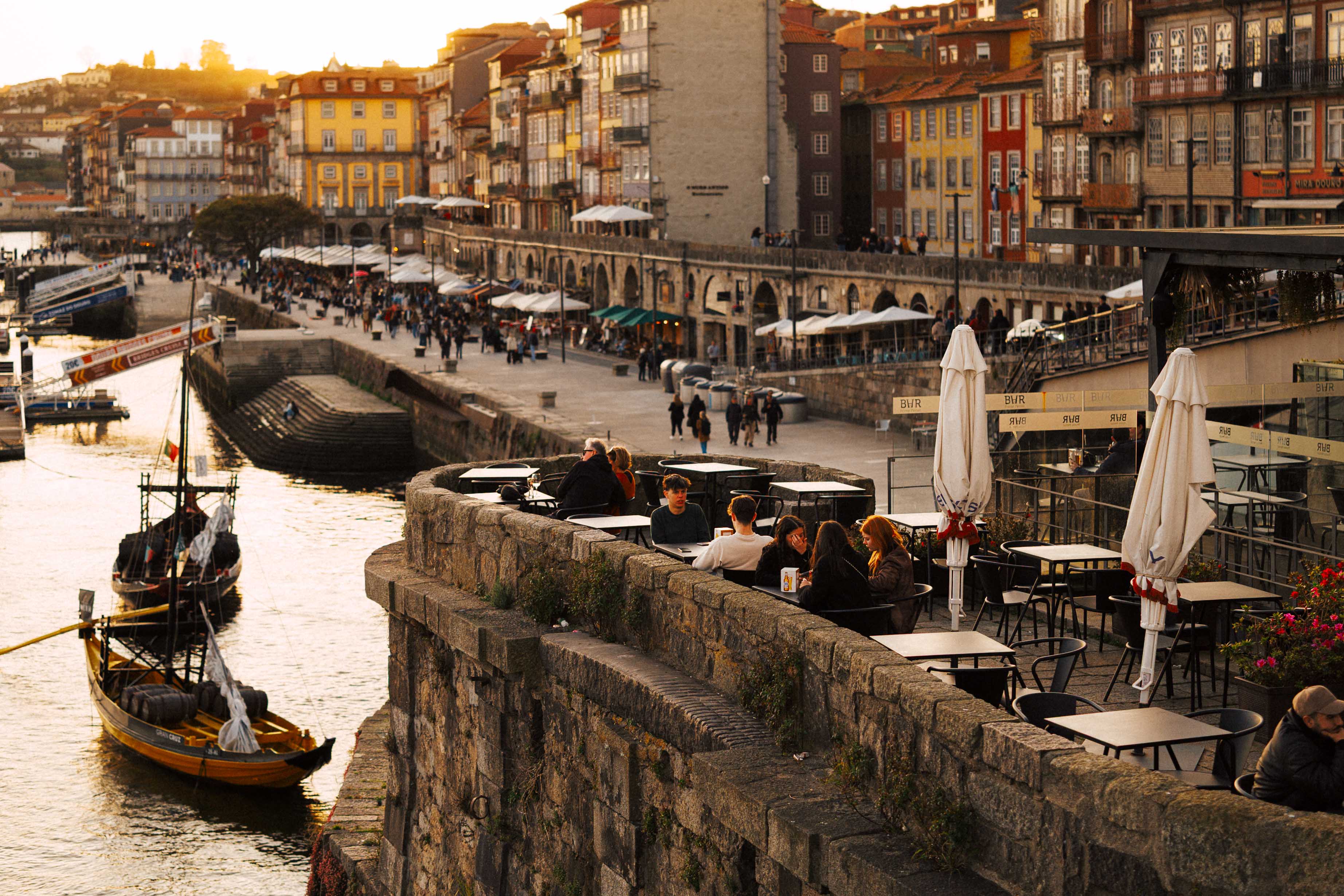
Connor Redmond | Sigma BF | Sigma 50mm f/2 DG DN | f/2.0 | 1/1600 sec | ISO 400
Photographing Porto
Porto is one of those cities that seems to reward curiosity wherever you end up walking. It is a place you can get lost in, but in the best possible way. From grand viewpoints and iconic bridges to quiet backstreets and everyday moments, it’s endlessly photogenic and perfectly suited for exploration on foot.
If this walk has inspired you to explore further, we have a growing collection of Location Guides covering photogenic cities and destinations around the world. Each one is designed to help you plan your own routes, discover new perspectives and make the most of your time behind the camera, wherever you choose to shoot next.
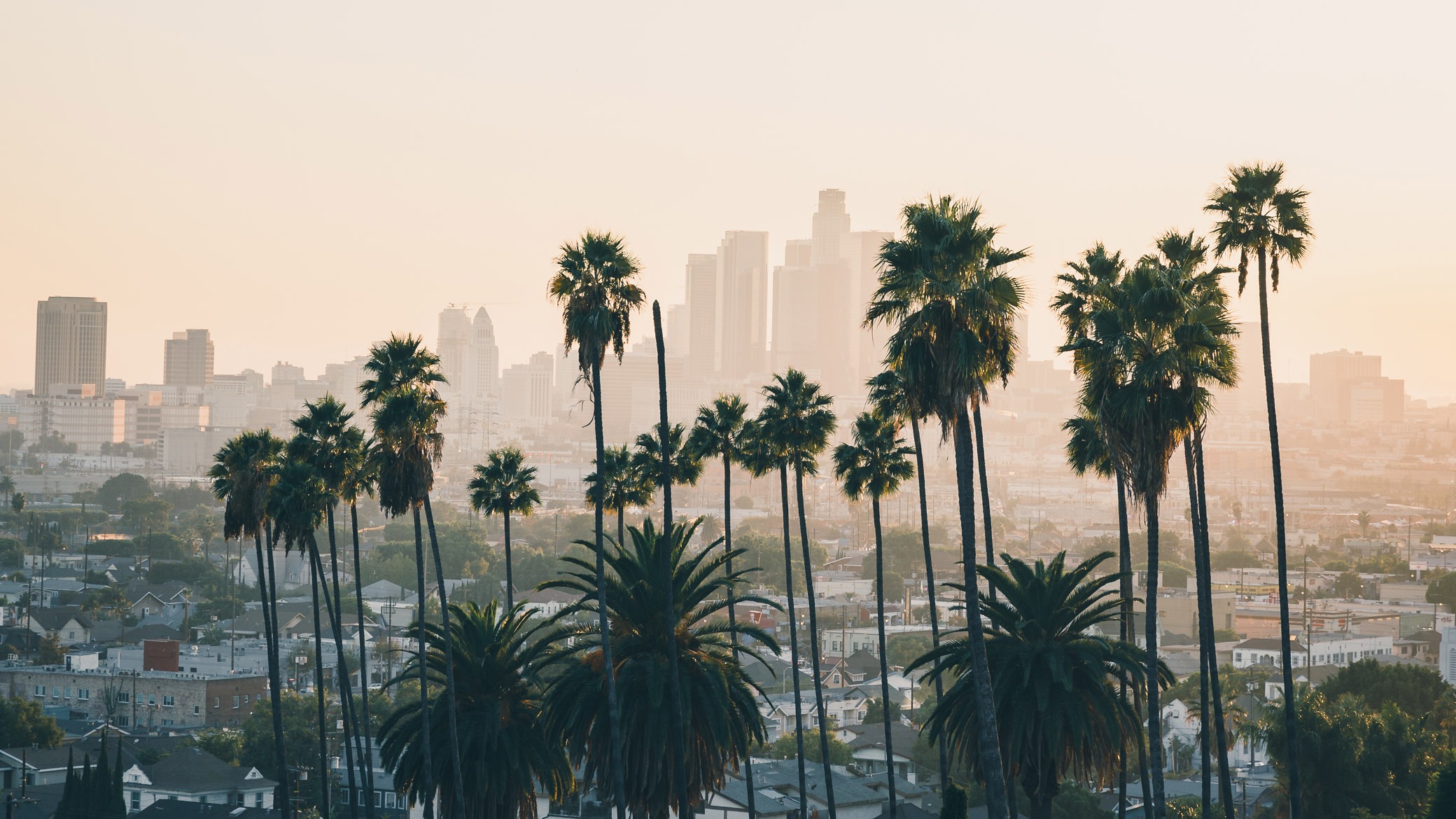
Top Photography Locations in Los Angeles
If you’re planning to explore Los Angeles with your camera, then check out our top 7 photography locations.
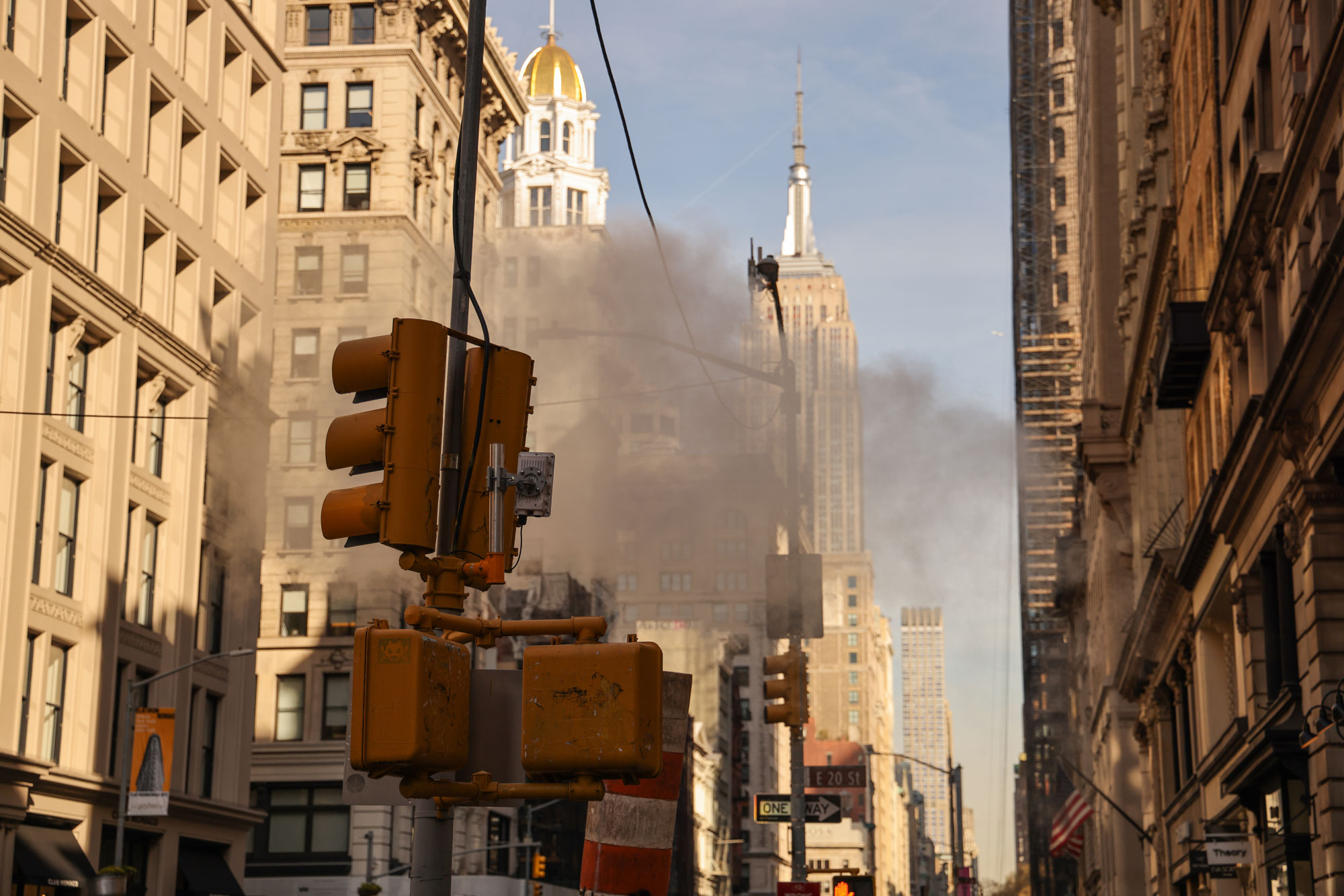
Top Photography Locations in New York City
Want to capture the Big Apple’s most recognisable spots? Grab your favourite camera and hit the best photography locations in New York City
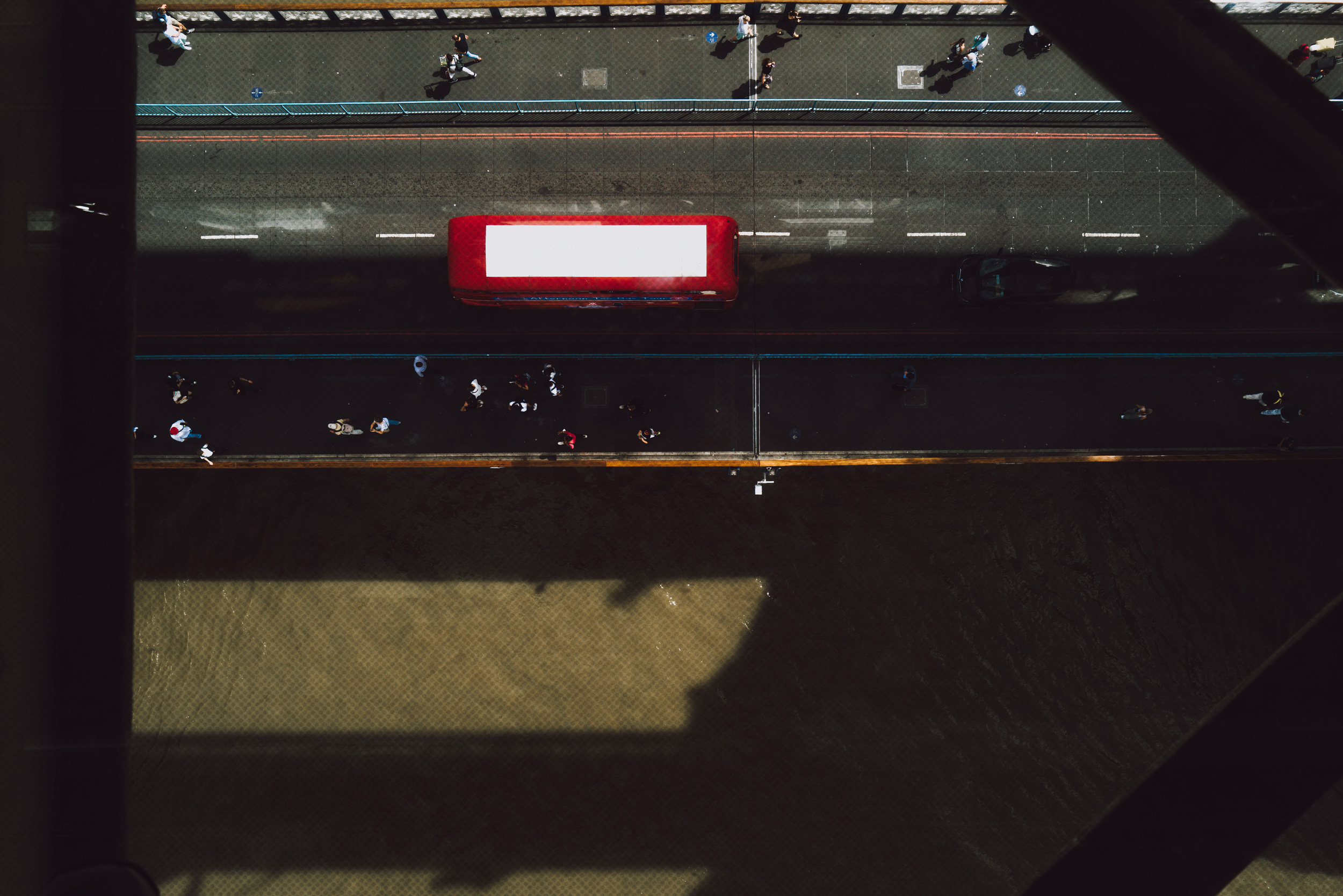
Top Photography Locations in London
London has an almost endless amount of interesting subjects to photograph, read our top photography locations in London
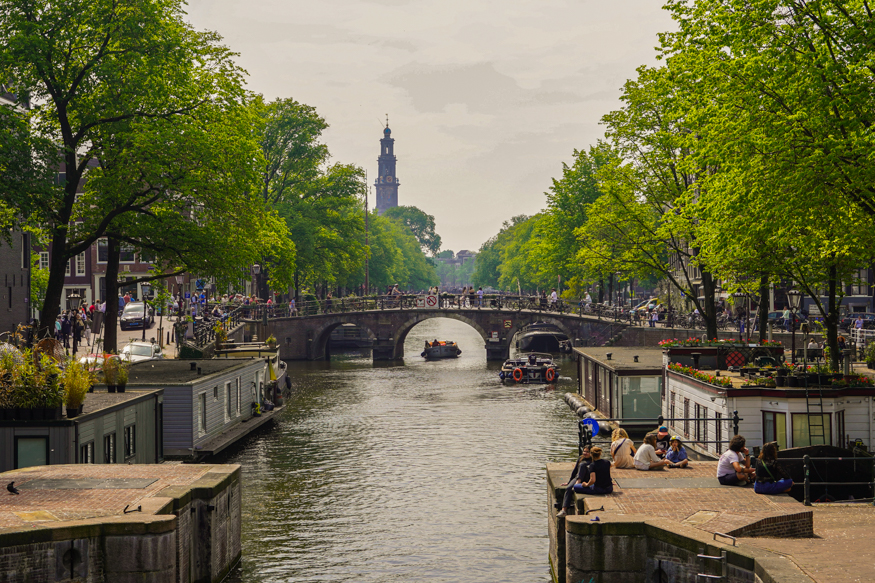
Top Photography Locations in Amsterdam
Explore the best photography spots in Amsterdam along the canals, coffee shops and parks.
You can sell or trade your camera kit to MPB. Get a free instant quote, free insured shipping to MPB, and get paid within days.