
Amsterdam is a city that, quite literally, never gets boring, even for its locals. The soft light dancing along the canals, the historic facades that always seem a bit more tilted than you expect, and the constant rhythm of people, bikes and boats make the city a dream for anyone with a camera. Although Amsterdam is one of the most photographed cities in the world, the best spots can often remain overlooked by the crowds.
In this article, we take you to seven photogenic spots that offer more than the standard postcard view. Locations where the light falls just a bit more beautifully, and where you can create images that haven't been posted a thousand times on Instagram. From the industrial Netherlands Dock and Shipbuilding Company (NDSM) site to the classic houses along the Damrak, Amsterdam’s main entry point, these are the locations where the city comes to life.
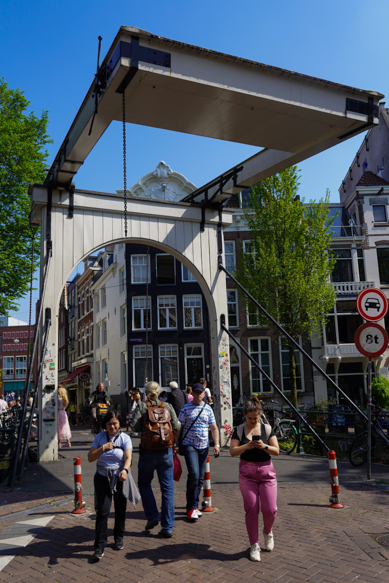
Louise Kluit | Sony A7C | Sony FE 28-60mm f/4-5.6 | 28mm | f/9.0 | 1/125 | ISO 100
1. NDSM: Raw contrasts and colourful art
The former shipyard in Amsterdam-Noord has become a home for creatives, free thinkers and anyone who loves visual chaos. Here, steel, concrete and street art collide in a perfect mix. The huge warehouses, brightly painted walls and industrial remnants create compositions with bold lines and surprising colours.
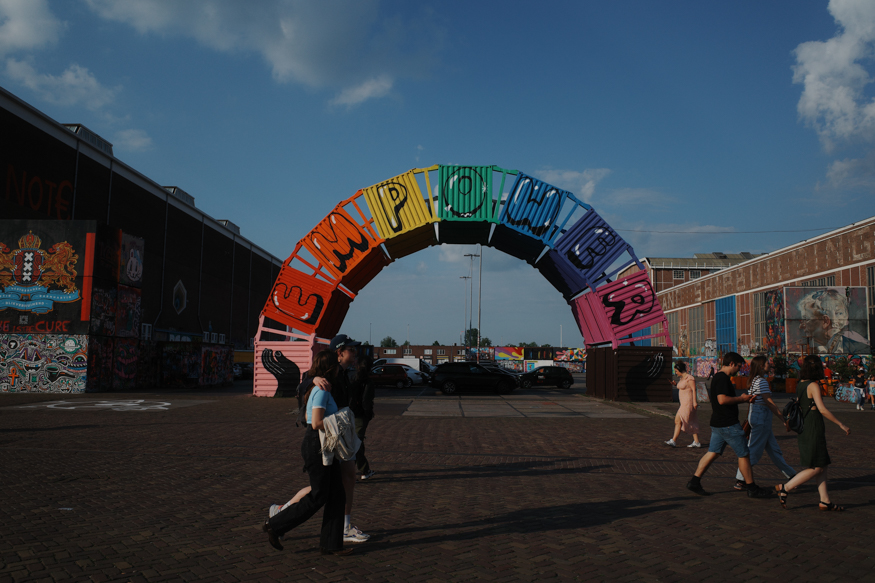
Hermann Furin | Ricoh GR III | 18.3mm | f/5.6 | 1/1000
Once a month, NDSM transforms into the largest flea market in Europe: a colourful collection of people, items, patterns and scenes that cry out for both street and documentary photography.
What to photograph
Look for brightly coloured graffiti and graphic patterns, reflections in metal surfaces, portraits with a raw edge and industrial structures and stark contrasts.
Tip
Head out early in the morning, before sunrise, or during golden hour. The low sun creates long shadows and dramatic contrasts on the metal structures.
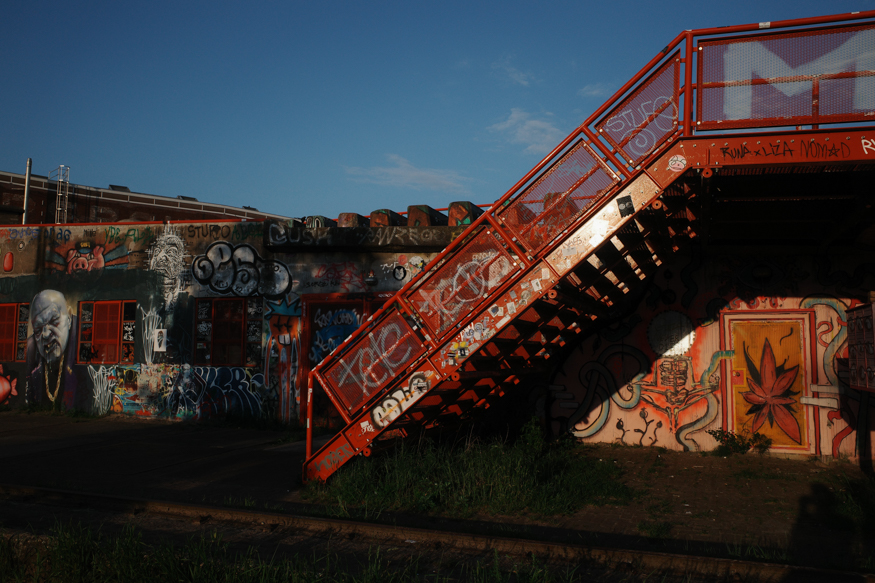
Hermann Furin | Ricoh GR III | 18.3mm | f/5.6 | 1/1250
2. Damrak: Amsterdam in one frame
The Damrak isn't exactly a place; it's an icon. The narrow, crooked canal, with its houses reflecting in the water, is perhaps the most recognisable image of the city. From here, you have a view of Amsterdam Central, and within a few minutes, you're in the Red Light District. It's a very walkable place.
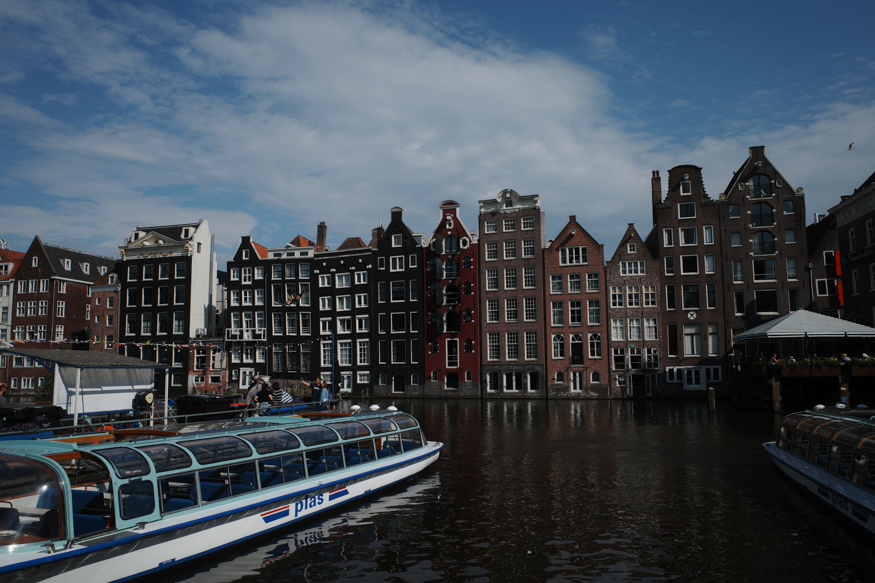
Hermann Furin | Ricoh GR III | 18.3mm | f/5.6 | 1/1000
What to photograph
Choose from the characterful “dancing houses,” their reflections rippling in the water, chase long-exposure light streaks from canal boats, or capture the grandeur of Central Station. You’ll never be short of tourists to photograph, either.
Tip
Sunrise is your best friend here: soft light, almost no people and a great chance of stumbling upon mirror-like water. As soon as the city wakes up, the Damrak morphs into a steady stream of people, so the earlier you get there, the easier it is to photograph without hundreds of backpacks in the frame. During the blue hour, the lights and boats give the water an almost surreal glow.
3. Grachtengordel: it doesn't get more Amsterdam than this
The Canal Belt is the heart of Amsterdam, and each canal has its own rhythm. From perfectly symmetrical bridges to small glimpses between buildings, those with an eye for composition will never tire of the city.
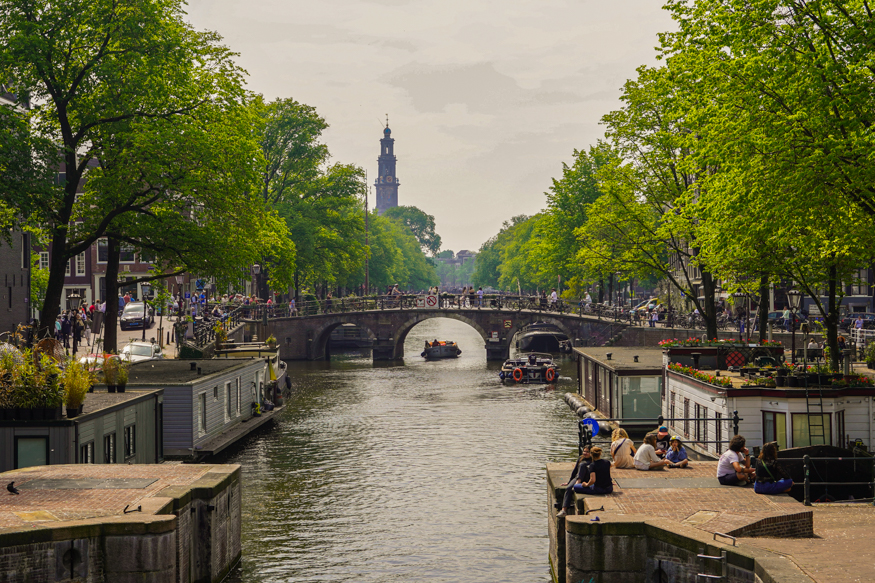
Louise Kluit | Sony A7C | Sony FE 28-60mm f/4-5.6 | 60mm | f/11 | 1/125 | ISO 100
The famous Seven Bridges viewpoint is a must-see. The perfectly aligned bridges are a dream for anyone who loves leading lines. But even without that specific spot, you’ll find small scenes everywhere — boats, dogs, cyclists, couples on the quays — all giving your shots a storyline.
What to photograph
Look for the arches of bridges and repeating forms, reflections and ripples in the water, warm brick tones and activity on the water to add some energy to your shots.
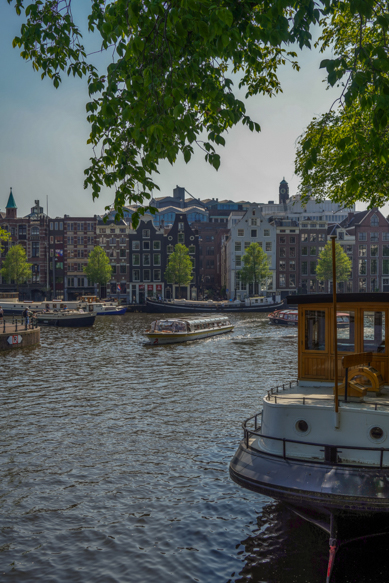
Louise Kluit | Sony A7C | Sony FE 28-60mm f/4-5.6 | 39mm | f/9.0 | 1/320 | ISO 100
Tip
Take a canal cruise or rent a small boat. From the water, you'll get compositions that you simply can't see from the quay. A filter will help to control reflections.
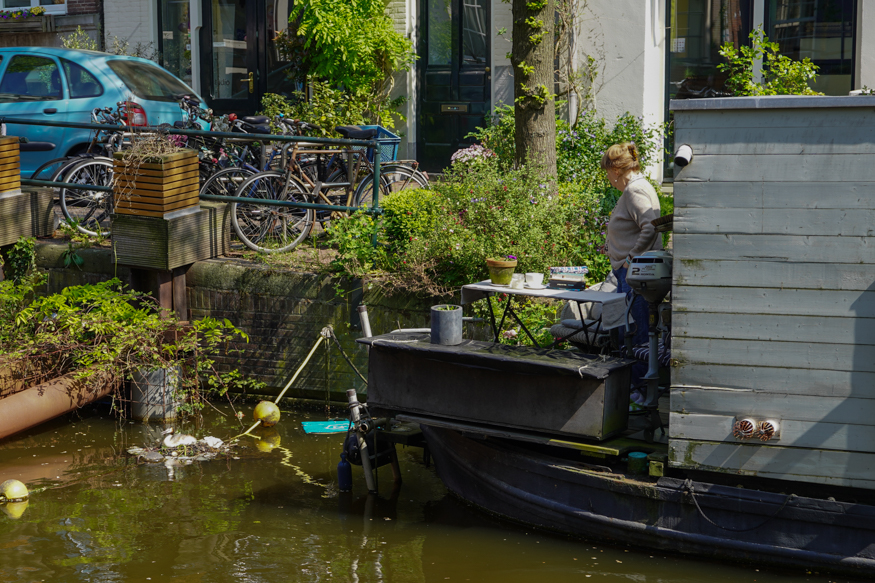
Louise Kluit | Sony A7C | Sony FE 28-60mm f/4-5.6 | 60mm | f/7.1 | 1/80 | ISO 100
4. Magere Brug: romance over the Amstel
The Skinny Bridge is beautiful during the day but breathtaking at night. Hundreds of lights cast a soft, warm glow, inviting long exposures and experimentation with movement, especially when the bridge opens. You’ll see a play of silhouettes, backlighting and reflections in the Amstel.
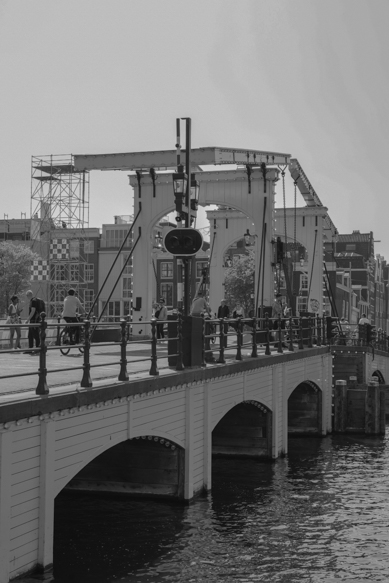
Louise Kluit | Sony A7C | Sony FE 28-60mm f/4-5.6 | 59mm | f/9.0 | 1/160 | ISO 100
What to photograph
Capture silhouettes of cyclists and pedestrians, the opening of the bridge and capture the warm lights on the water at blue hour.
Tip
Stay until the blue hour. The contrast between the deep blue sky and the warm lighting is magical.
5. Flowers Market: colour in motion
The floating flower market is chaotic, colourful and sometimes completely overwhelming. This is exactly what makes it so photogenic. Tulips, tourists, bulbs, souvenirs, textures and repeating patterns: everything moves, everything changes. It's the ideal place to set your camera to burst mode and look for little stories in the hustle and bustle.
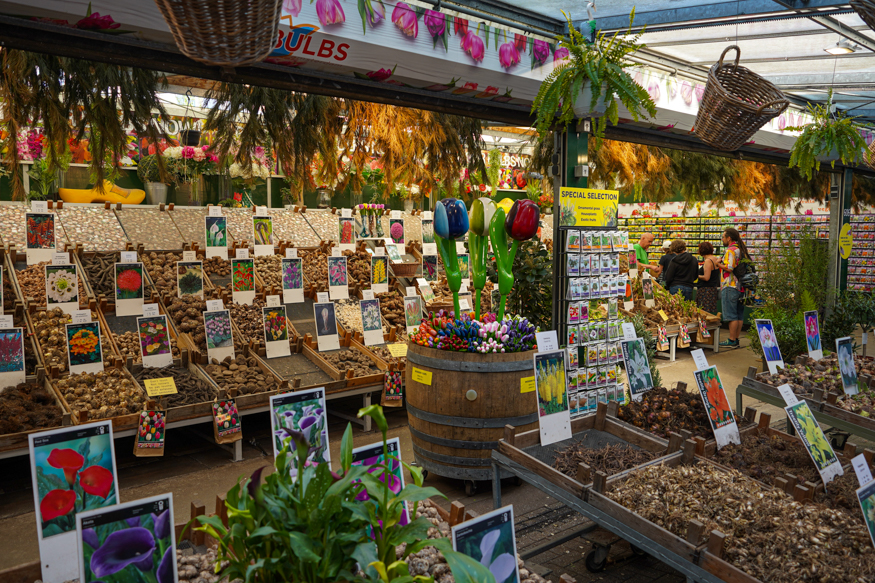
Louise Kluit | Sony A7C | Sony FE 28-60mm f/4-5.6 | 28mm | f/4.0 | 1/160 | ISO 100
What to photograph
Get up close to the flowers, exploring the textures and colours of the stalls as well as the interactions between sellers and visitors.
Tip
Head to the market just after opening time for the best light and fewer crowds.

Louise Kluit | Sony A7C | Sony FE 28-60mm f/4-5.6 | 54mm | f/5.6 | 1/160 | ISO 100
6. Waterlooplein: vintage chaos and street photography
Waterlooplein is one big visual party. The market is full of stalls with clothes, records, antiques and random objects you didn't know existed. Perfect for photographers who love colour, texture and observing human behaviour.
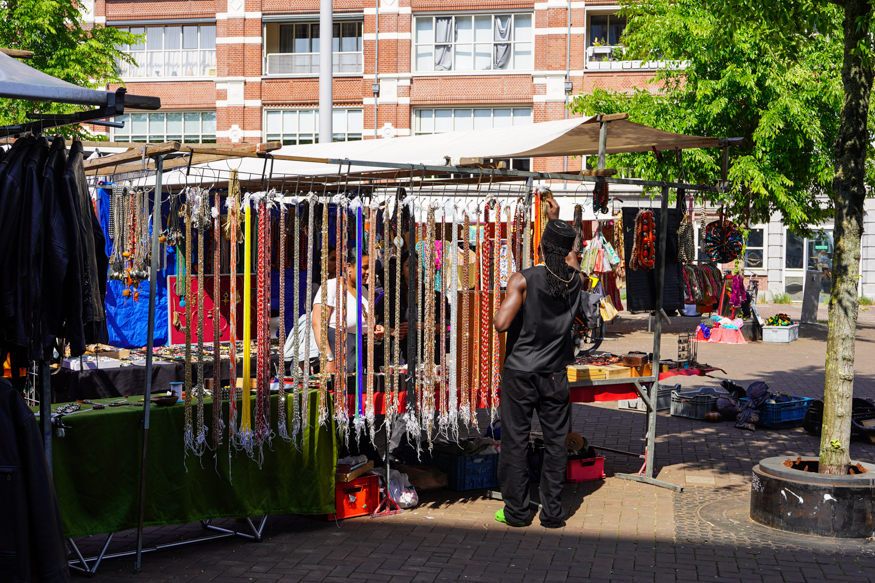
Louise Kluit | Sony A7C | Sony FE 28-60mm f/4-5.6 | 44mm | f/10 | 1/125 | ISO 100
What to photograph
Waterlooplein is one big visual party. The market is full of stalls with clothes, records, antiques and random objects you didn't know existed. Perfect for photographers who love colour, texture and observing human behaviour.
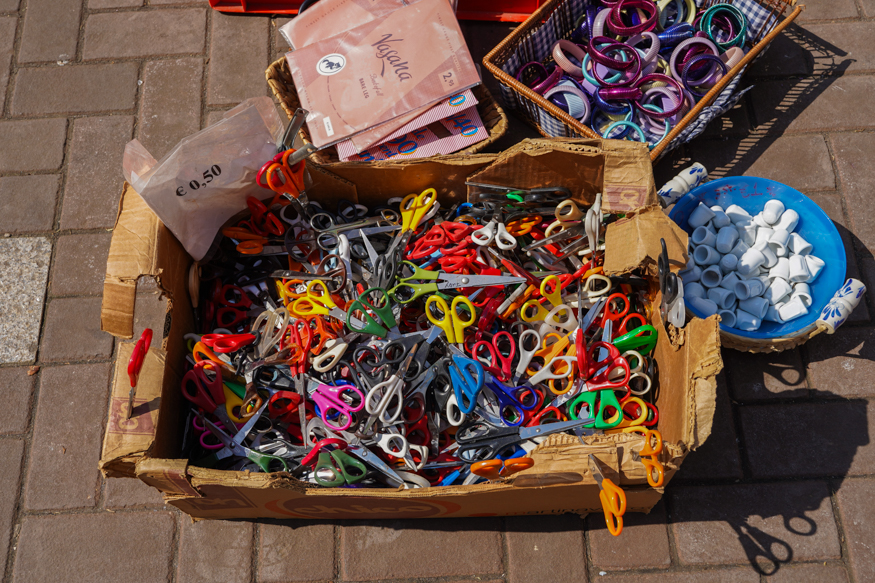
Louise Kluit | Sony A7C | Sony FE 28-60mm f/4-5.6 | 40mm | f/7.1 | 1/320 | ISO 100
Tip
Be quick with your shutter because things move quickly here. Think in terms of short visual stories about the encounters and interactions you see.
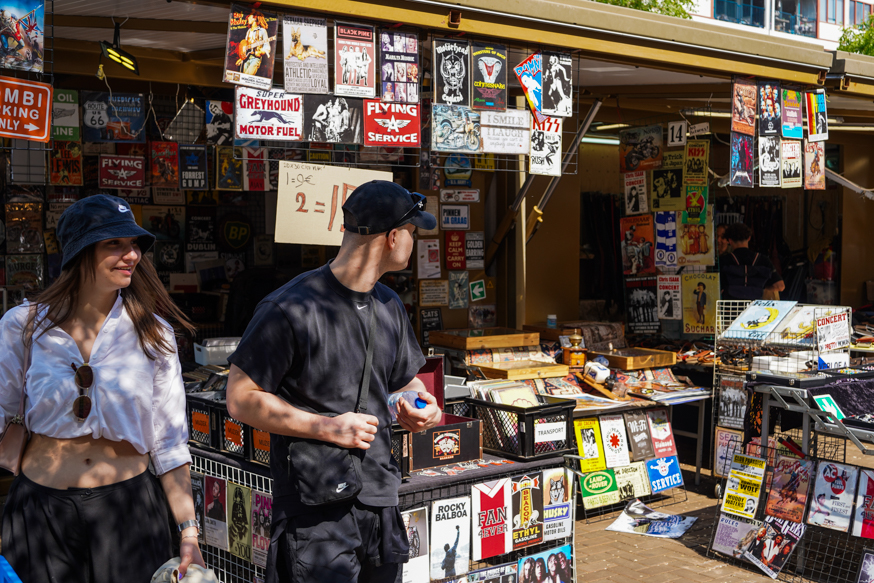
Louise Kluit | Sony A7C | Sony FE 28-60mm f/4-5.6 | 44mm | f/5.6 | 1/200 | ISO 100
7. Begijnhof: serene in the heart of the city
The Begijnhof is one of the few places in the centre where time seems to stand still. Its medieval origins, the enclosed courtyard and the serene atmosphere make it a place you feel rather than see.
You can't take photos here with a camera, only with your phone, but that doesn't have to be a limitation. The soft lines of the houses and the gentle light are perfect for minimalist images.
What to photograph
The Gothic chapel, the soft lines of the houses and the shadowy silence.
Tip
Either use the space as inspiration or capture some scenes with your phone. Photograph in black and white for a timeless effect, and remember to be respectful, as the Begijnhof is still a residential area.
Mastering your Amsterdam shots
Whether you prefer DSLRs, mirrorless cameras, or compact cameras, the possibilities in Amsterdam are endless. These seven locations are just the start. The best image will emerge when you look for it.
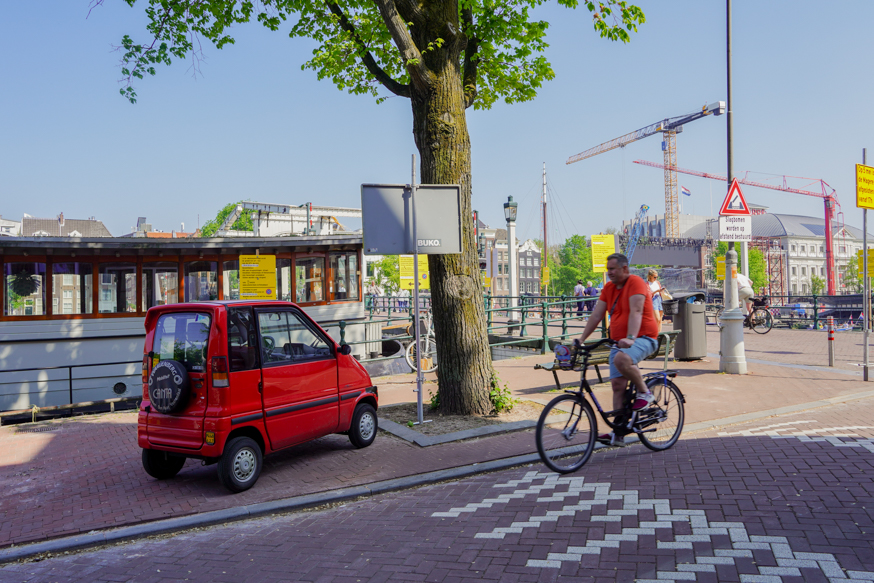
Louise Kluit | Sony A7C | Sony FE 28-60mm f/4-5.6 | 28mm | f/9.0 | 1/125 | ISO 100
Top 10 Photography Locations in Porto
Selects: Top 5 Cameras For Street Photography
Discover the best cameras for street photography with the specs, benefits and drawbacks of each option.
Fujifilm X100V vs Sony A7C for Travel Photography
Find out which camera is better for travel photography between Fujifilm X100V and Sony A7C in this detailed comparison by MPB.
You can sell or trade your camera kit to MPB. Get a free instant quote, free insured shipping to MPB, and get paid within days.