Top 10 Photography Locations in Paris
Published 17 August 2026 by MPB
We teamed up with photographer Wesley Verhoeve to uncover some of the most striking photo spots in Paris. Shot by Dan Umareta, each image captures the city as it really feels; layered, cinematic, and constantly changing. Originally from Indonesia, Dan has spent enough time in Paris to know exactly when a place comes into its own, from quiet early mornings to those fleeting seasonal moments that make a scene click.
This guide brings those locations together to help you see Paris differently and maybe shoot it that way too.
Autumn changes Paris in a way that’s hard to explain. The city shines a bit more and it feels just a bit calmer and more local. The cafés spill a little warmth and flickering light onto the sidewalks, and people walk with their hands in their pockets instead of their phones. It’s my favourite time to photograph here.
When I travel, I usually carry one camera and one lens. Staying compact keeps me nimble and honest. Too much gear starts to weigh on me, not just physically but mentally. I overthink, I second-guess, I stop looking. With less, I move more freely and react faster. With just one body and one lens, the gear becomes part of me, an extension of my eye, and so I notice more.
Over the years, I’ve sold and traded in some of my gear with MPB as I honed in on my go-to travel setup. It’s taken time to figure out what I really need, and what I don’t, but that process has made me a better, more intentional photographer.
In many ways, Paris is one of the ideal street photography cities, alongside New York City and Tokyo. It has an old-world romance and architecture, vibrant street life, and an attitude and personality all its own. If you’re planning some Paris photography this autumn, consider this a starting point to help you get out of the research phase and into the shooting phase.
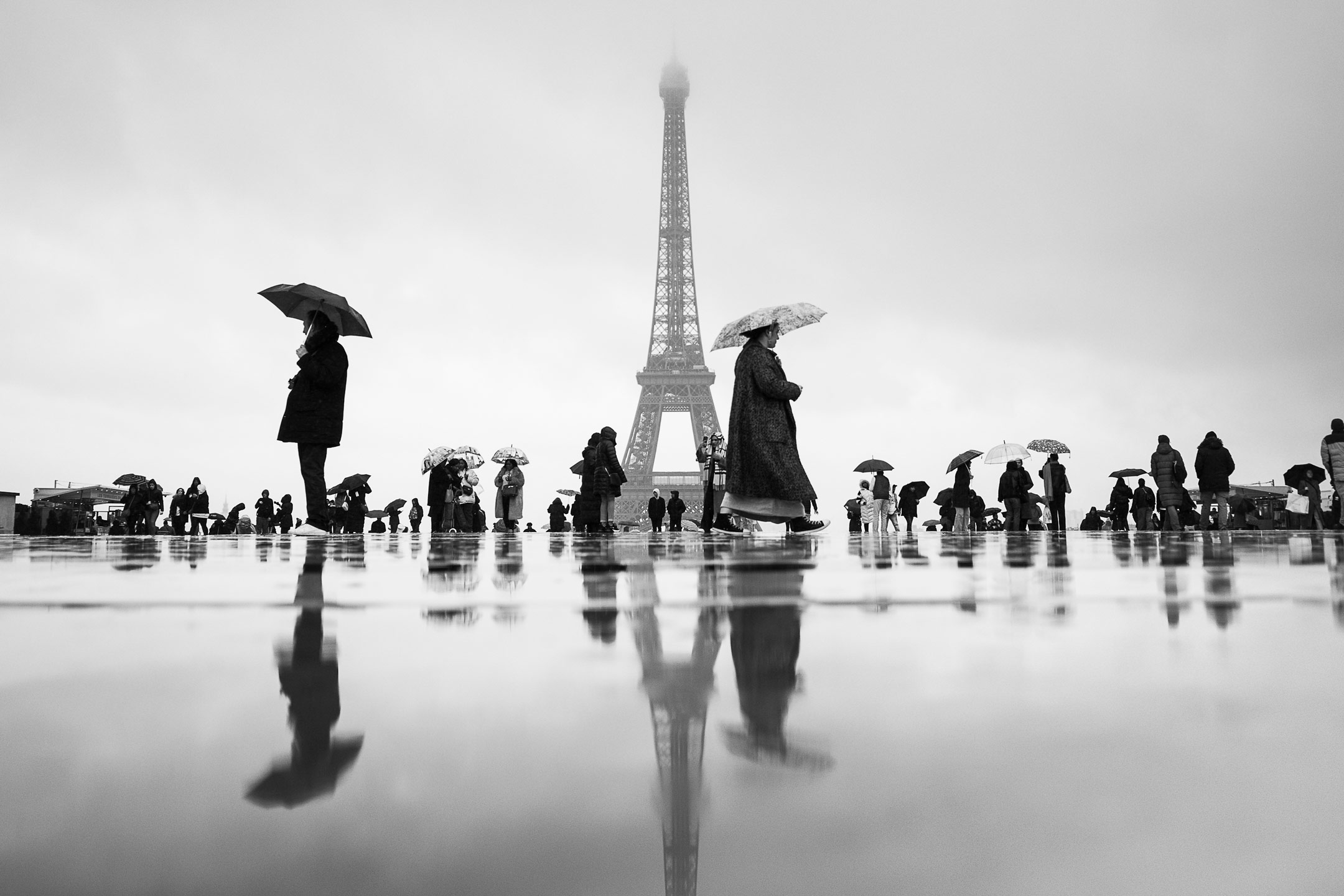
1. Eiffel Tower from Trocadéro
Every list of Paris photography spots starts here for a reason. The Eiffel Tower seen from Trocadéro never feels the same twice. What makes it endlessly interesting is how much it changes with the light, the weather, the time of day. It’s a landmark, yes, but it’s also a living subject.
Dan Umareta | Ricoh GR III | f/2.8 | 1/800 sec | ISO 400
What to photograph
Reflections in puddles on the stone platform for a softer, abstract take
Shadows cast across the platform at a low sun angle, especially in the morning
The tower framed by people and movement at the edges of the platform rather than dead centre
Wide establishing shots versus tight abstract details on the ironwork
Tip
Go early in the morning. You’ll get soft, even light and space to move without crowds. Walk the edges of the platform instead of heading straight to the centre. Treat it less like a landmark and more like a living creature that changes with the weather and time of day.
2. Pont Alexandre III
Pont Alexandre III is where Paris shows off a little extra. The ornate lamps, the sculptures, the way the bridge arches over the Seine. It’s all very cinematic. It’s been photographed a million times, but there are so many angles to explore, you’ll never tire of it.
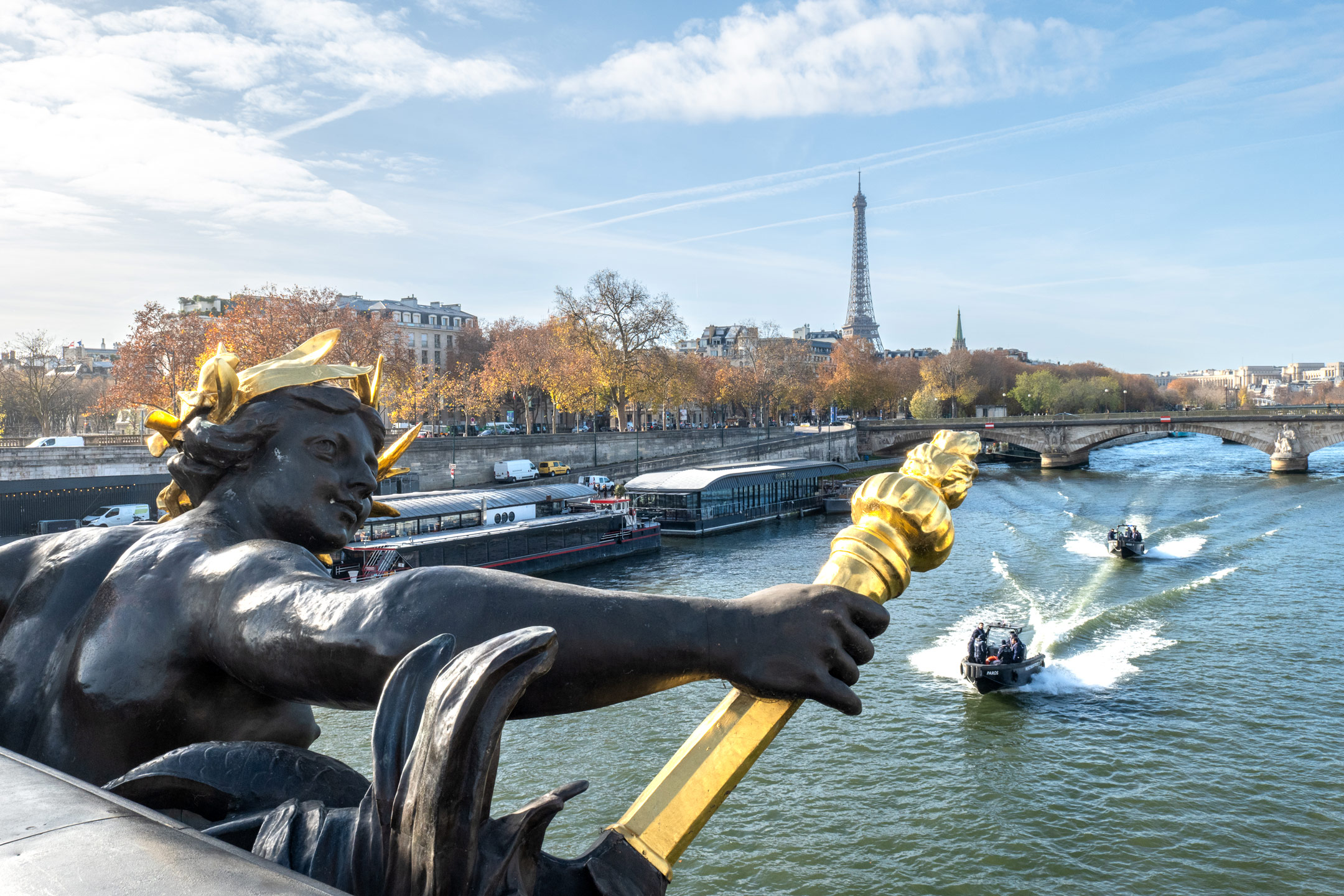
Dan Umareta | Panasonic DC-S5 | Panasonic Lumix S 20-60mm f/3.5-5.6 | f/18 | 1/250 sec | ISO 800
What to photograph
The bridge from mid-span looking toward Les Invalides, waiting for a small figure or cyclist to enter the frame and give the space scale
Close-up details on the gold lamp posts and ornamental sculptures
The Seine’s reflections from either end of the bridge
Long exposures at dusk when the lights come on and the water softens
Tip
Stand mid-bridge and be patient. Wait for someone, like a cyclist or a lone walker, to cut through your frame and give the architecture some human scale. That contrast is what makes the shot.
3. Montmartre and Sacré-Cœur
Montmartre feels like an old film that never stopped rolling. Beyond the crowds at Sacré-Cœur, there’s a maze of quieter streets that tell real stories. The shopkeepers opening up, kids walking to school, the slow rhythm of a hilltop neighbourhood.
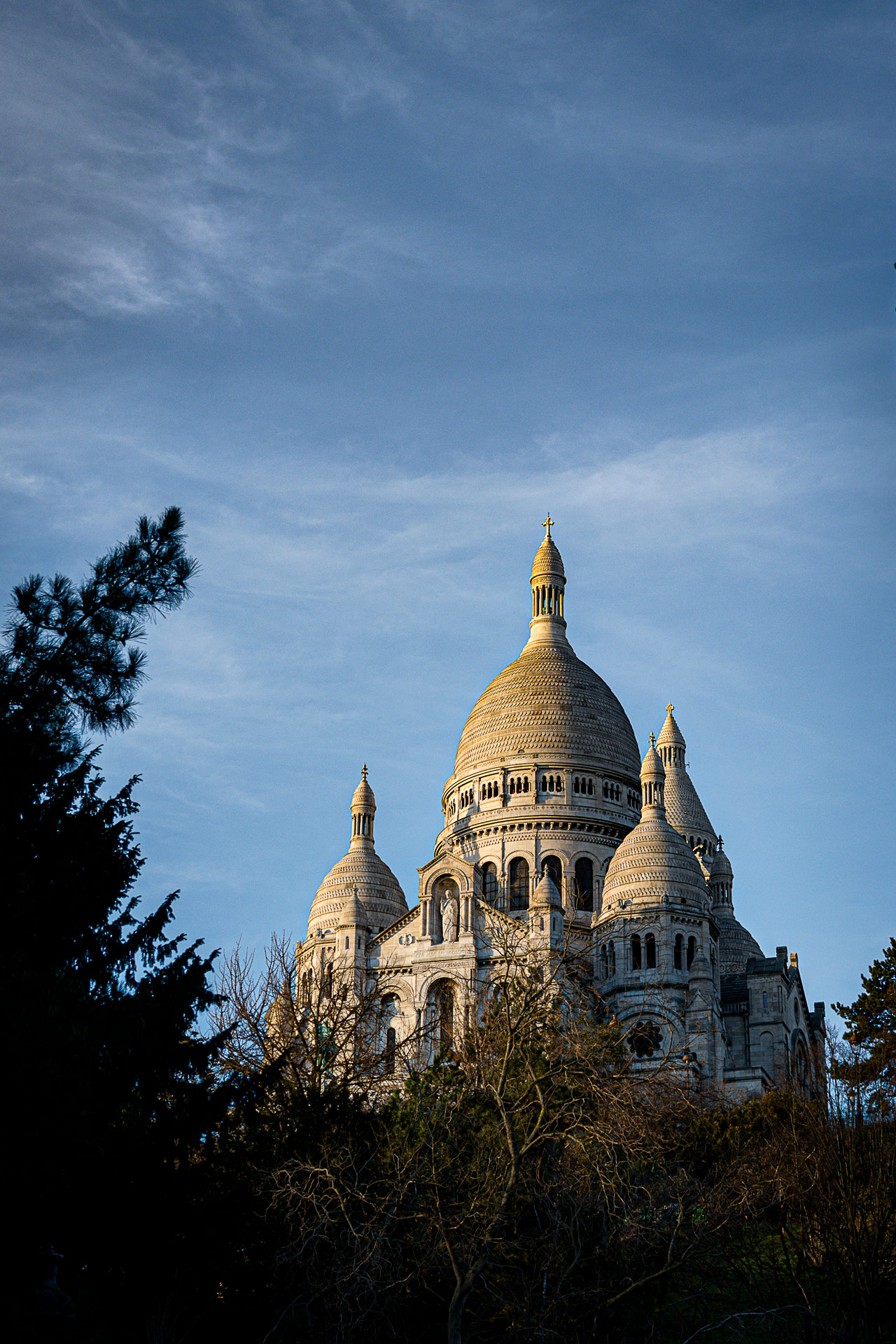
Dan Umareta | Panasonic Lumix DC-S5 | Panasonic Lumix S 20-60mm f/3.5-5.6 | f/3.5 | 1/800 sec | ISO 400
What to photograph
The quiet side streets rather than the main square. Look for daily life playing out
Damp cobblestones in the morning light, catching reflections
Juxtapositions of stillness and movement: someone carrying groceries, a cat crossing the street, a shadow falling across a wall
The Sacré-Cœur from below, using the stairways and terraces as leading lines
Tip
Go early when the light is soft and the cobblestones are still damp. The tourist crowds arrive fast, so getting there before 8 am is the difference between a calm neighbourhood shoot and a crowd management exercise.
4. Champs-Élysées and Arc de Triomphe
Go ahead and dismiss the Champs-Élysées as too polished or too “done”. But it’ll only be to your own detriment. It’s still a treasure trove. The symmetry of the trees, the car lights streaking toward the Arc de Triomphe. I think of it as pure rhythm.
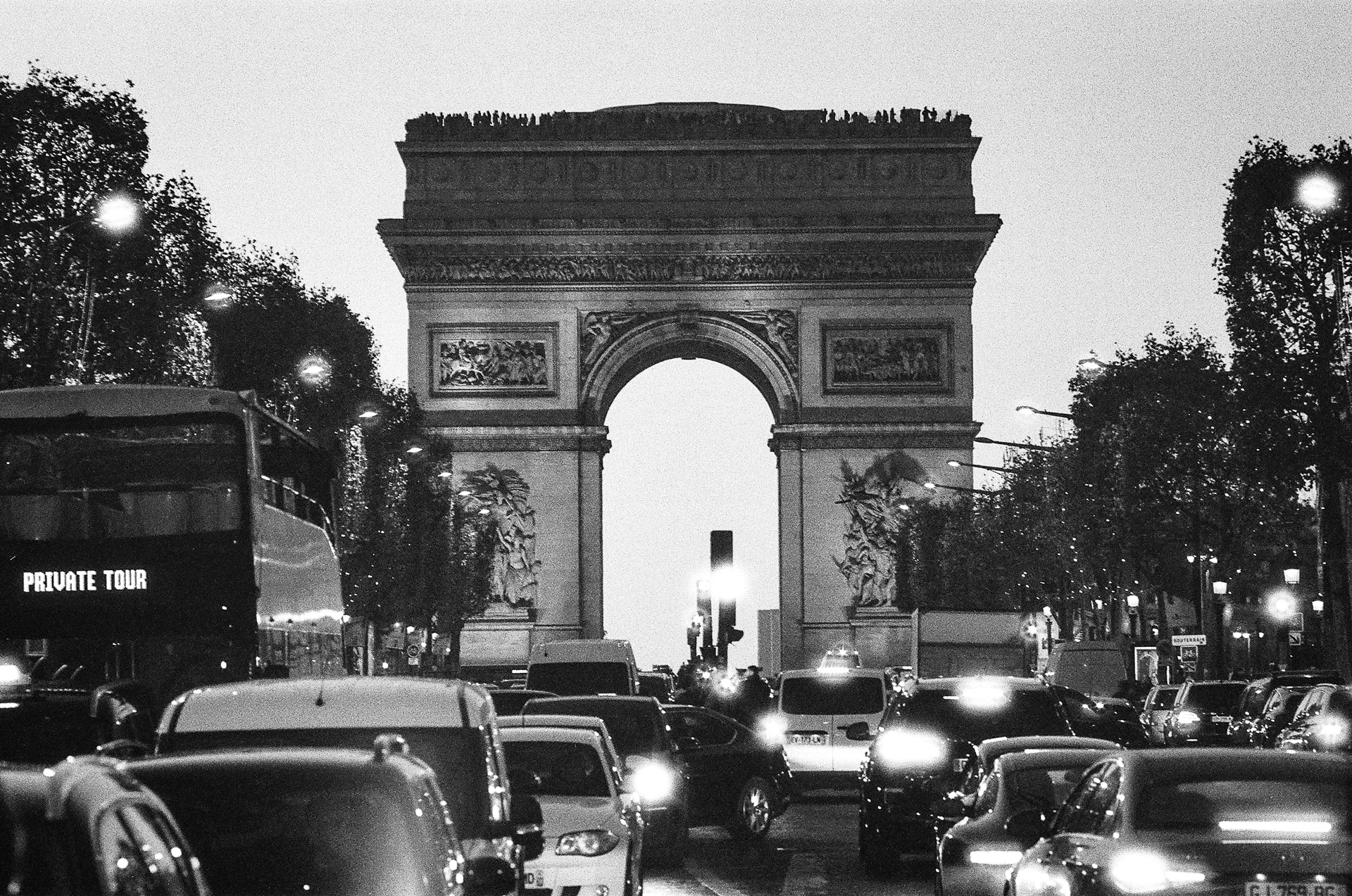
Dan Umareta | Minolta XG-M | Minolta MC Tele Rokkor – PF 135mm f/2.8 | f/2.8 | 1/50 sec | ISO 400
What to photograph
Car light trails at dusk or after dark, shooting down the boulevard toward the Arc de Triomphe
The symmetry of the tree-lined avenue from ground level
Crosswalks where pedestrians and traffic overlap for messy, alive street moments
The Arc de Triomphe itself from the roundabout, using a longer lens to compress the traffic
Tip
A small tripod helps for the light trail shots, but you can also go handheld and let a little motion blur in intentionally. Find the crosswalks on the side streets where the flow of people and traffic overlap. That’s where the real energy is.
5. Place des Vosges
Place des Vosges is where geometry and calm meet. I go there every time I’m in Paris. The arches and the quiet park in the middle create a natural frame that practically composes the shot for you, but the interesting pictures are in the details.
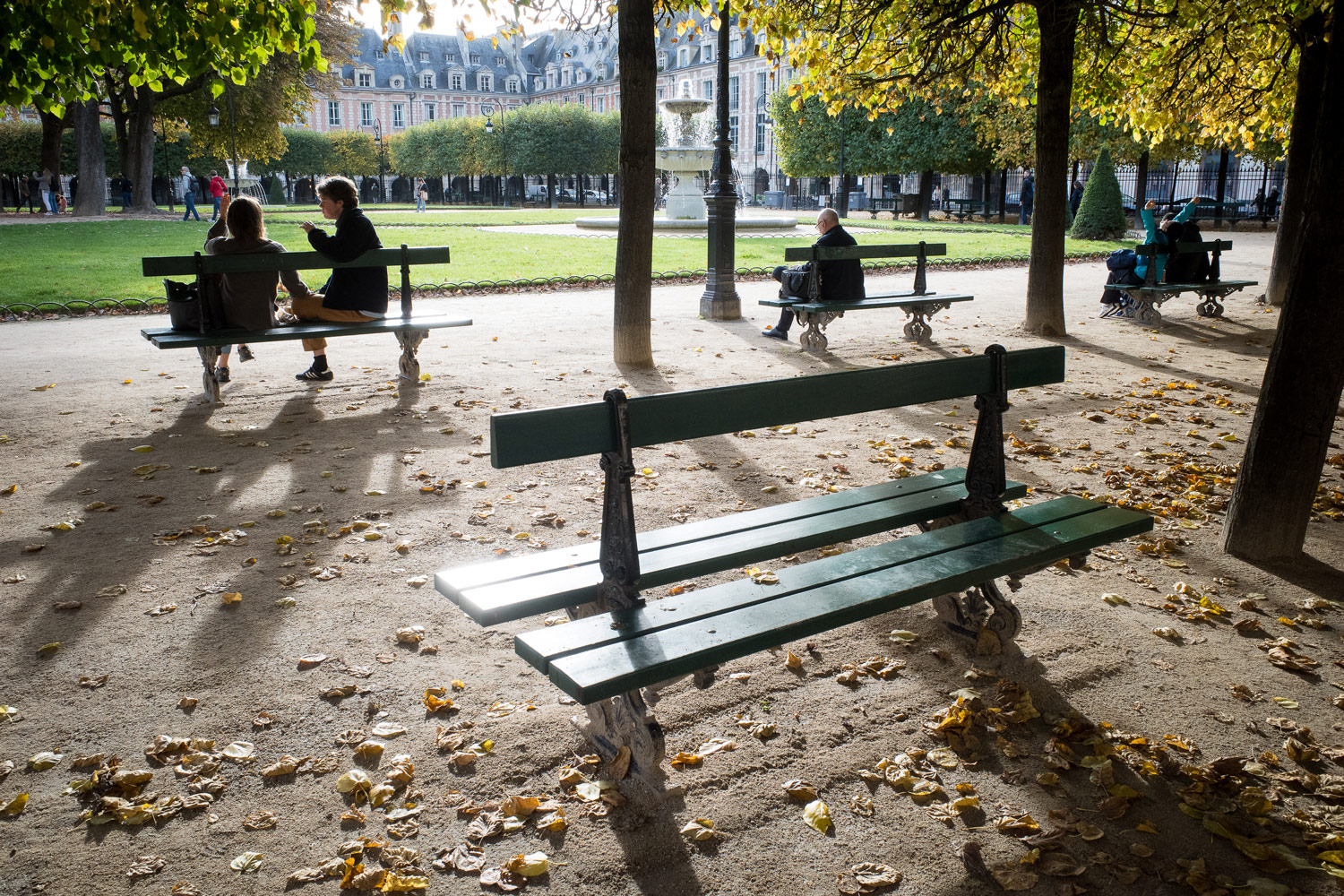
Dan Umareta | Ricoh GR III | f/8 | 1/250 sec | ISO 1250
What to photograph
The repeating arches as a framing device. Shoot through them rather than at them
People reading or sitting in the park, using the symmetry of the square as their backdrop
The colour and texture of the brick façades, which read beautifully under overcast light
Shadow patterns cast by the arcades onto the paving stones on a sunny morning
Tip
Overcast days work beautifully here. Soft light brings out the colour and texture of the buildings without harsh shadows fighting the composition. Slow down, notice the symmetry, and let the place come to you.
6. Palais Royal
Palais Royal is where order meets play. The courtyard pulls you in with its clean lines, calm light, and those black-and-white Buren columns that always seem to spark something new. It’s one of the easiest places in Paris to practice seeing with intention.
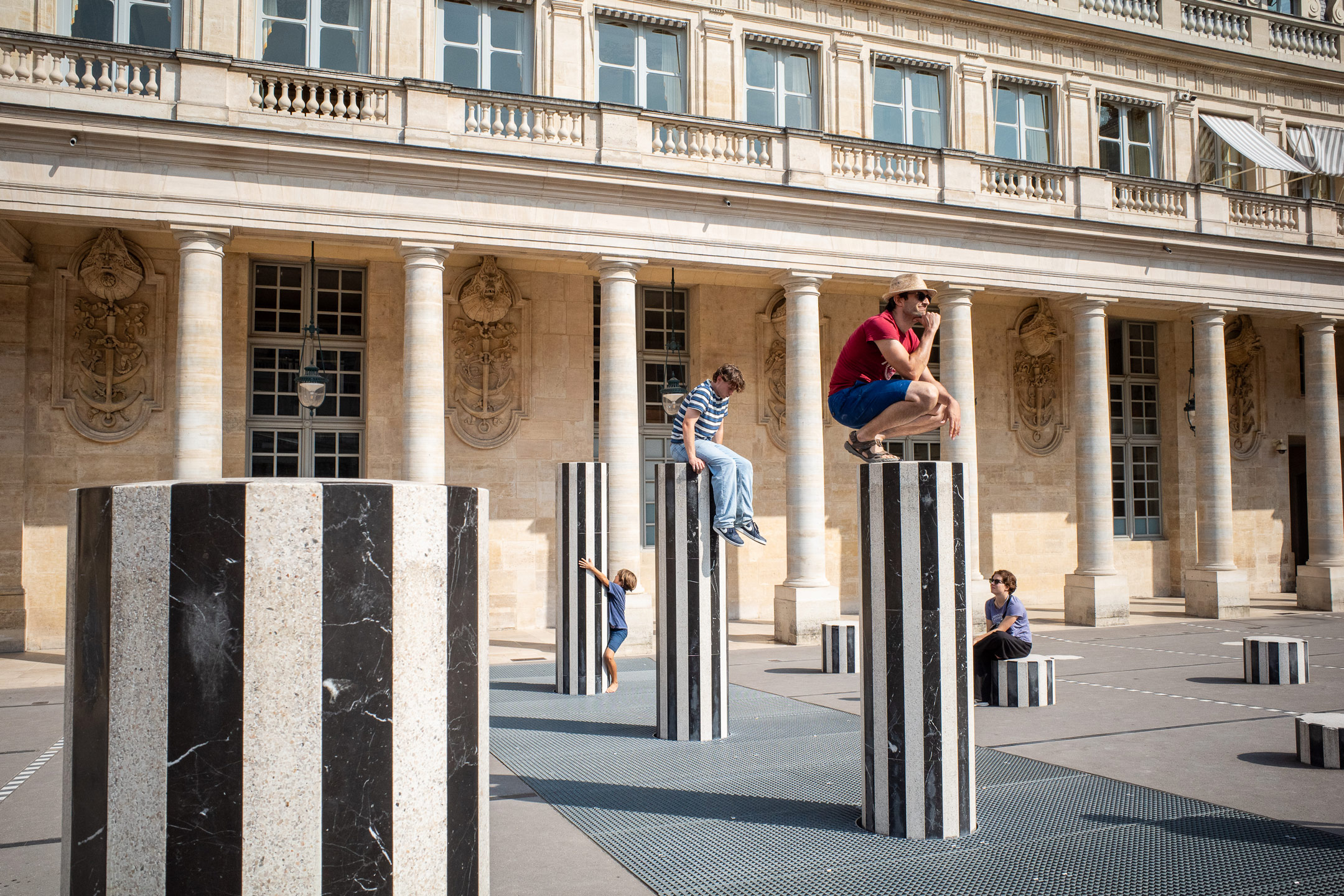
Dan Umareta | Ricoh GR III | f/8 | 1/1000 sec | ISO 800
What to photograph
The Buren columns from low down, using them as repeating shapes to divide the frame
People interacting with the columns. They sit on them and walk between them
The long garden paths with their clean perspective lines
Pockets of quiet shade in the arcades around the perimeter
Tip
Go early when the shadows stretch long and the space feels open. Let the rhythm of the columns guide your framing. Use simple shapes to divide your scenes. It’s a great place to practice minimalist composition without any pressure.
7. Canal Saint-Martin
Canal Saint-Martin is about texture and repetition. You might know it from the film Amélie, but it’s so much more. From the bridges to the railings and the still water, everything here feels built to photograph.
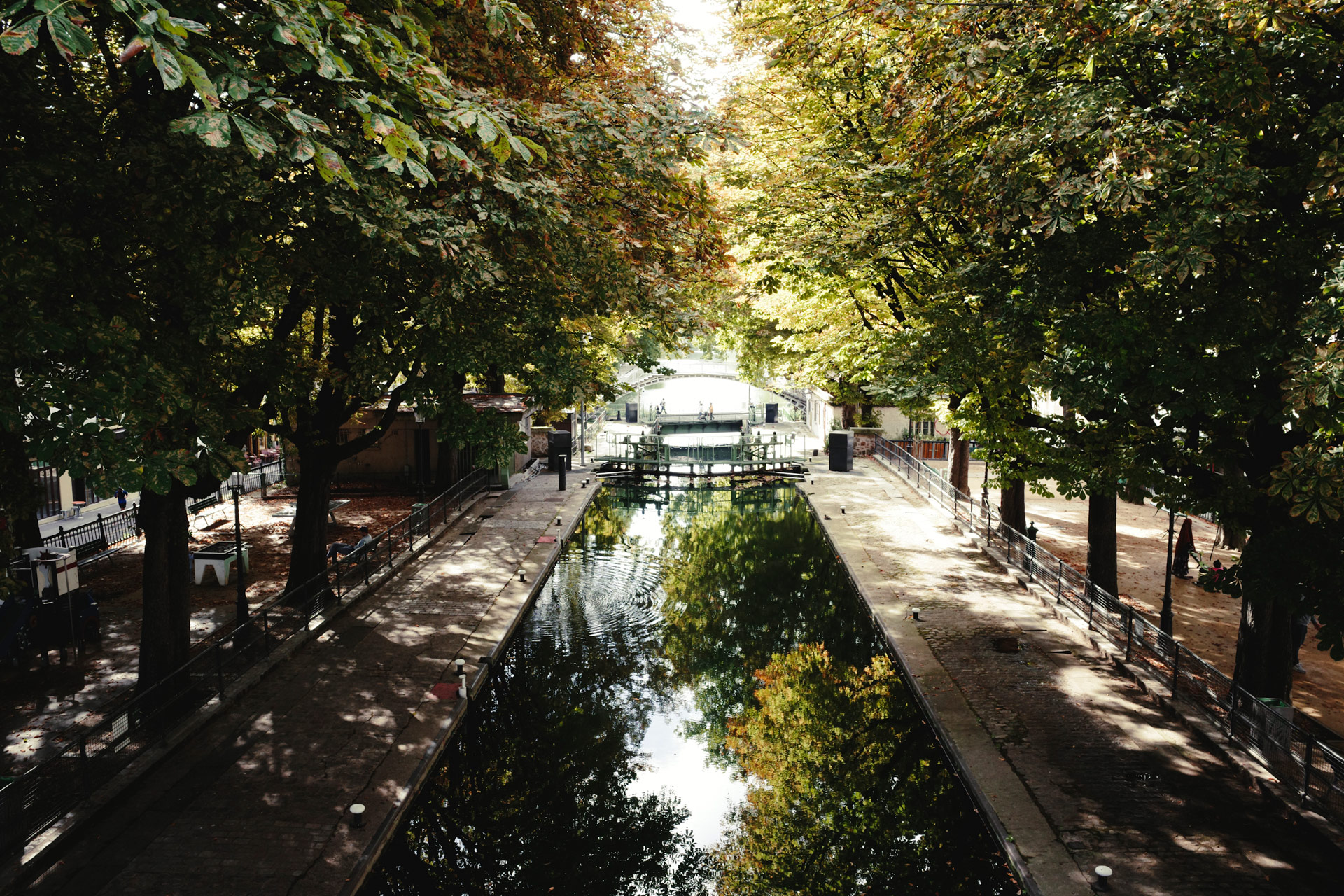
Dan Umareta | Ricoh GR IV | f/6.3 | 1/200 sec | ISO 800
What to photograph
The canal’s surface from a low angle, crouch close to the water and let it fill the frame
The iron footbridges as compositional anchors with the canal receding behind
Evening reflections of street lights and trees in the still water
The railings and lock mechanisms as graphic, textural close-ups
Tip
Mornings are quiet, evenings are reflective. Both work well for different reasons. If you’re there in the morning, wait for the light to catch the water. If you stay into the evening, the canal becomes almost mirror-like and the city lights do the work for you.
8. Jardin des Tuileries
The Tuileries sit right between the Louvre and Place de la Concorde, but they somehow stay peaceful. Autumn here means shorter days and softer light. The summer flowers will be gone, but it’s still worth every minute.
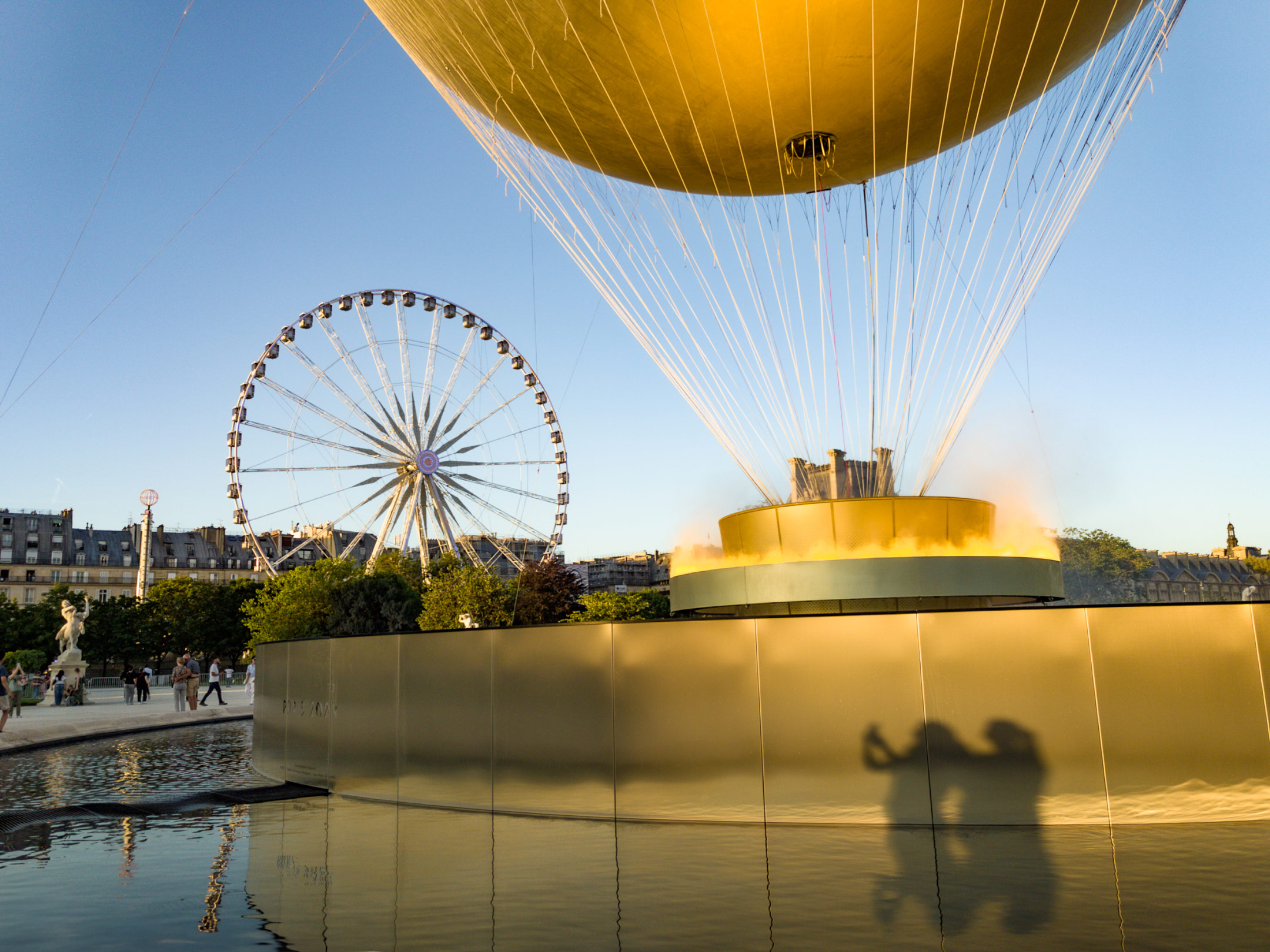
Dan Umareta | f/1.6 | 1/580 sec | ISO 50
What to photograph
People dwarfed by the scale of the tall trees are a reminder of how small we are
The long formal paths and their strong perspective lines leading toward the Louvre or the Obelisk
Autumn colour in the canopy if you’re there in October or November
Quiet benches and figures in the late afternoon light
Tip
This is a spot to practice patience and composition rather than chasing drama. Let the space slow you down. Watch how people move through it. The best frames here tend to come to those who wait.
9. Bastille
Bastille is one of my favourite places to remind myself that Paris isn’t all elegance. It’s more raw here with posters peeling off walls, commuters bringing loud chaos at rush hour. It’s not postcard Paris, but it’s real.
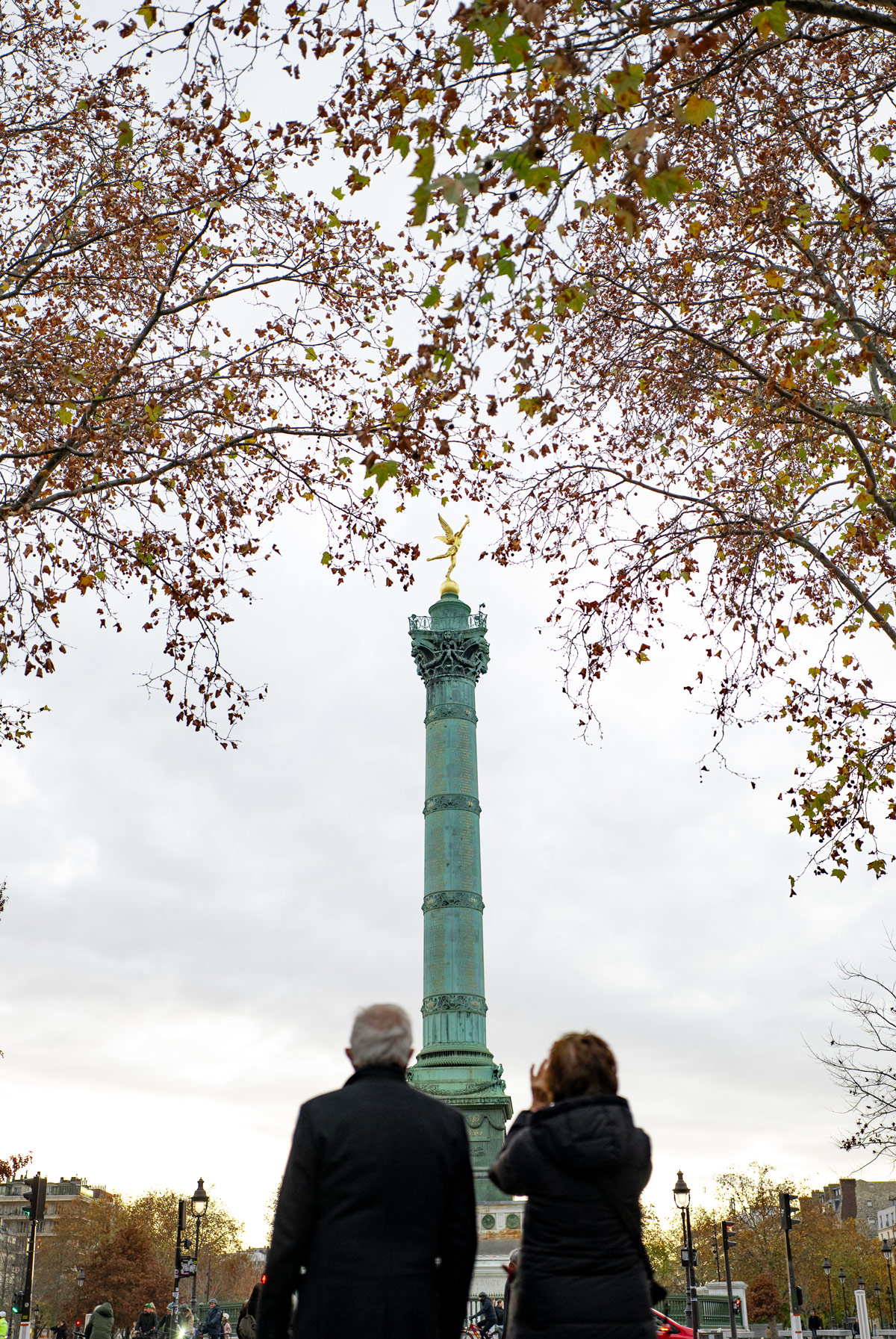
Dan Umareta | Panasonic Lumix DC-S5 | Sigma 28-45mm f/1.8 DG DN Art L | f/2 | 1/200 sec | ISO 100
What to photograph
Rush hour commuter flow. Keep your camera ready and move with the crowd
Reflections in shop windows and wet pavement
Peeling street posters and layered textures on walls for abstract close-ups
Architectural details like ironwork, column bases, and signage. These feel more working-class than the rest of central Paris
Tip
There’s a rhythm to the chaos here that makes for great street photographs. Come at morning or evening rush hour and just let the energy carry you. Don’t over-plan. React.
10. Palais Garnier
The Palais Garnier might be the most photographed building in Paris, but it keeps surprising me even after years of returning. From up close or on a wide shot from across the street, it’s endlessly layered. And if you can step inside, just do it.
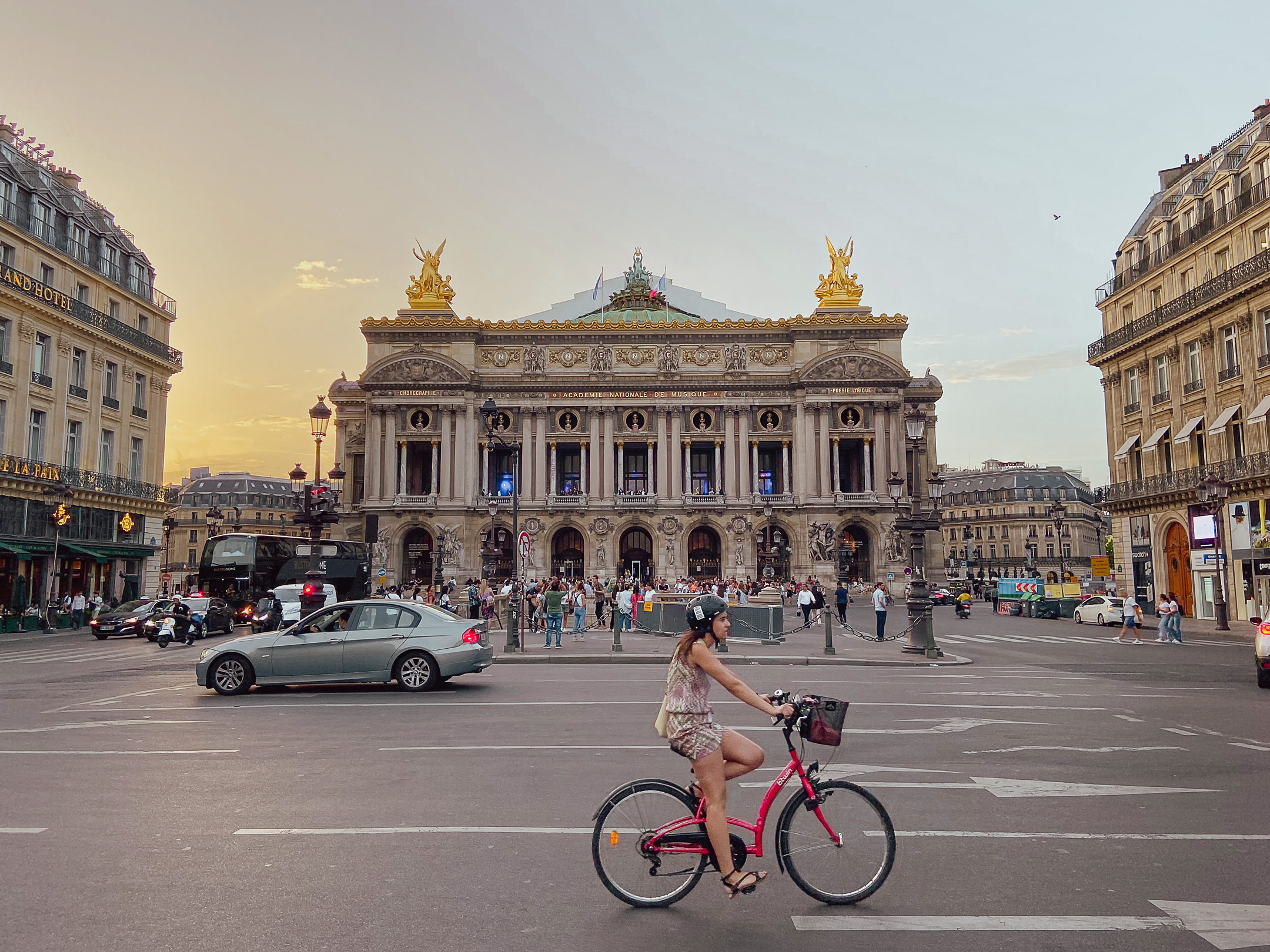
Dan Umareta | f/1.8 | 1/240 sec | ISO 32
What to photograph
The façade straight-on with a wide lens to capture the full scale
Passing cars from across the street using a longer focal length to create layers of movement in front of the building
Interior details if you go inside: marble, mirrors, the grand staircase, and make sure to look for reflections and unusual angles
The building at night when it’s lit up and the surrounding streets are quieter
Tip
The challenge here is finding a new angle on a very photographed building. Try shooting from across the street with a longer lens to compress the scene. Or go inside and work the reflections in the grand mirrors. Take on the challenge to see it differently and I promise you won’t be disappointed.
Final Thoughts
Paris photography is all about timing and trust and chance. Especially in autumn. You can’t trust the weather predictions, but you can trust that there will always be an endless universe of subjects, whether you’re mostly into photographing people, nature, or architecture. Paris never ends, not even at night, or on the rainiest day.
Take these ten places as great starting points, but the best photographs usually happen on the walk between them. Explore, bring a book, have your camera ready on your strap, notice things, shoot a night scene, go to sleep, and do it all over again the next day. Maybe I’ll run into you there.
See more of Dan's photography on his Instagram. Read more tips and techniques on the MPB content hub.
Top Photography Locations in Porto
Discover 10 of the best places to shoot in Porto as well as practical tips and composition ideas to help you make the most of your time.
Top Photography Locations in Amsterdam
Explore the best photography spots in Amsterdam along the canals, coffee shops and parks.
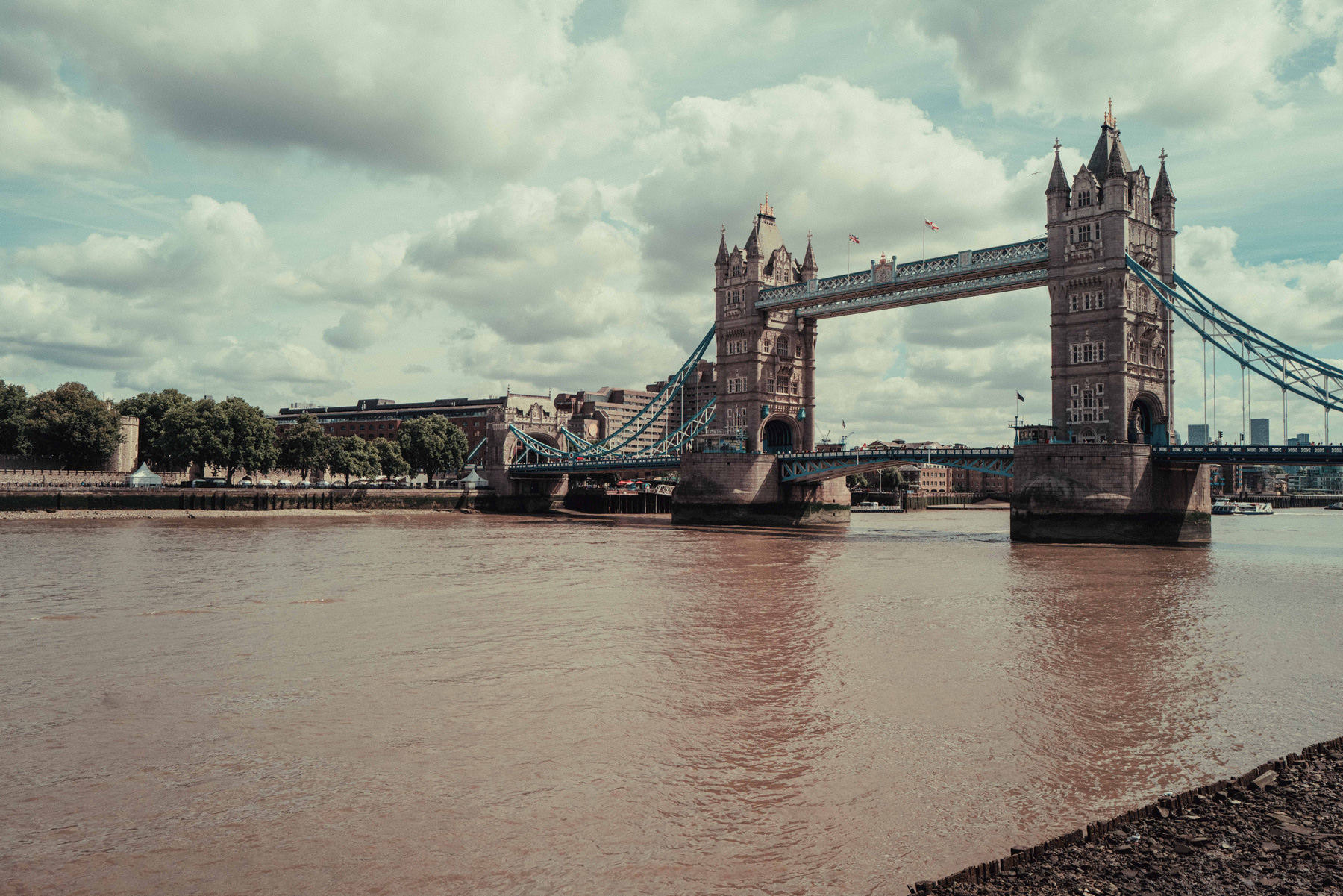
Top 5 iconic photography locations in London
Planning a weekend photography trip to London? Check out our five top locations and landmarks to capture while you're there.
You can sell or trade your camera kit to MPB. Get a free instant quote, free insured shipping to MPB, and get paid within days.