The Top 10 Berlin Photo Spots
Published July 29, 2026 by MPB
Berlin is one of the best places in Europe to photograph because of its never-ending contrasts: Soviet-era geometry next to glass-and-steel office towers, a decommissioned airport turned public park, and walls covered in street art only a few steps away from perfectly manicured government buildings. It's a city that can't sit still, but rebuilds, layers and argues with itself.
Amsterdam-based photographer and filmmaker Wesley Verhoeve regularly visits Berlin to lead photo walks. Join him and his Berlin-based colleague Austin Fassino on a trip to 10 of the best photo spots in Berlin, and discover a mix of landmarks and lesser-known locations that reward photographers who show up ready to look.
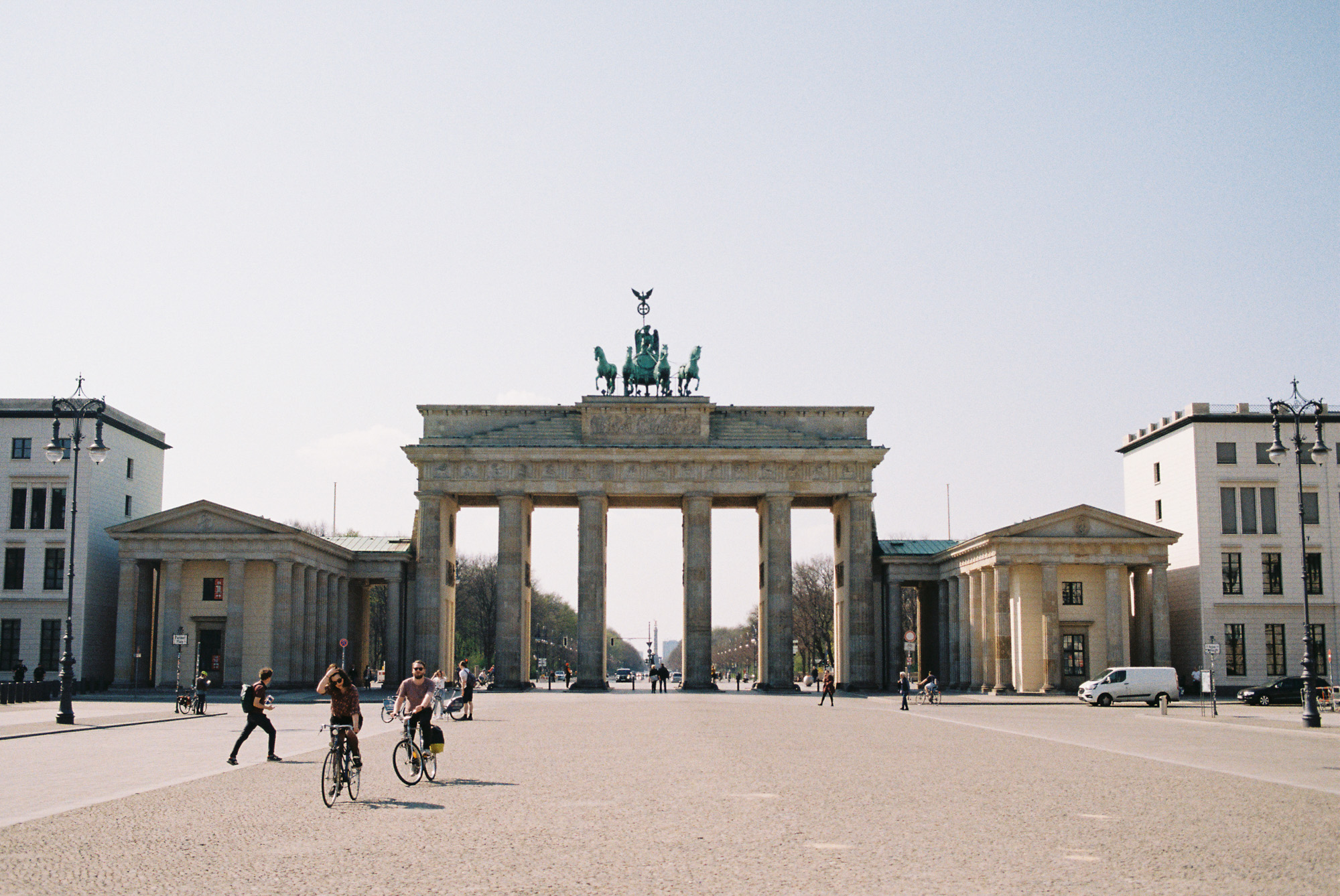
Austin Fassino | 35mm film
Brandenburg Gate: Iconic Symmetry, Best Shot at Sunrise
Brandenburg Gate earns its reputation as one of Berlin's most iconic landmarks and photography locations. The scale of it hits differently in person, and the light passing through the columns completely changes the mood depending on when you show up. Every Berlin photography list starts here, and for good reason.
What to photograph
Clean, symmetrical frames through the columns
Side and back angles most photographers skip
Close-ups of details like stone texture, shadow lines and repeating shapes
Passing cyclists or joggers to add scale and life to the frame
Tip
Shoot Brandenburg Gate early in the morning and walk around it rather than just photographing the front. That's when the crowds are thin, the light comes in low from the east, and the gate feels most like architecture and least like a tourist attraction.
Austin Fassino | Canon EOS 5D Mark III | Canon EF 24-70mm f/2.8 L USM | 31mm | f/9 | 1/250 sec | ISO 100
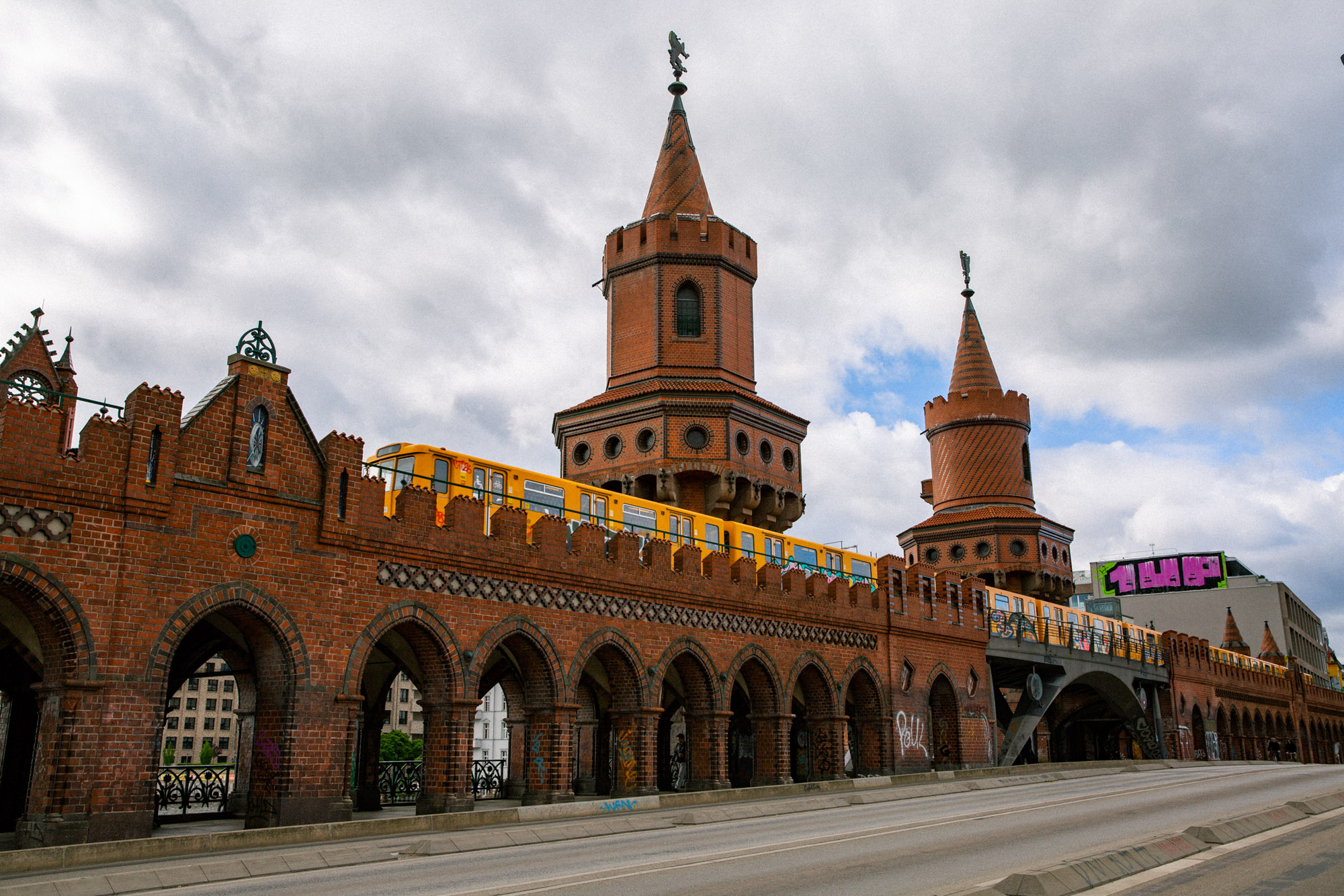
Oberbaum Bridge: Red-Brick Drama Over the River Spree
Oberbaum Bridge is one of Berlin's most photogenic structures. Its red brick towers and double-deck design give it a storybook quality, while the surrounding area keeps it grounded and real. It's one of those Berlin photo spots where the foreground and background tell different stories.
What to photograph
Wide frames from the riverbank, with water and sky as natural borders
Detail shots of the brickwork, arches and the graffiti on the embankments
Compositions including both banks: the bridge as a connector between the historically divided east and west
The U-Bahn crossing the bridge as a perfect example of Berlin's rhythm
Tip
Shoot Oberbaum Bridge in the late afternoon when the sun covers the bricks in beautiful warm light. When walking across, keep your camera ready for views in both directions: east towards the river bend and west towards the iconic TV Tower in the distance.
Austin Fassino | Canon EOS 5D Mark III | Canon EF24-70mm f/2.8L II USM | 24mm | f/11 | 1/500 sec | ISO 100
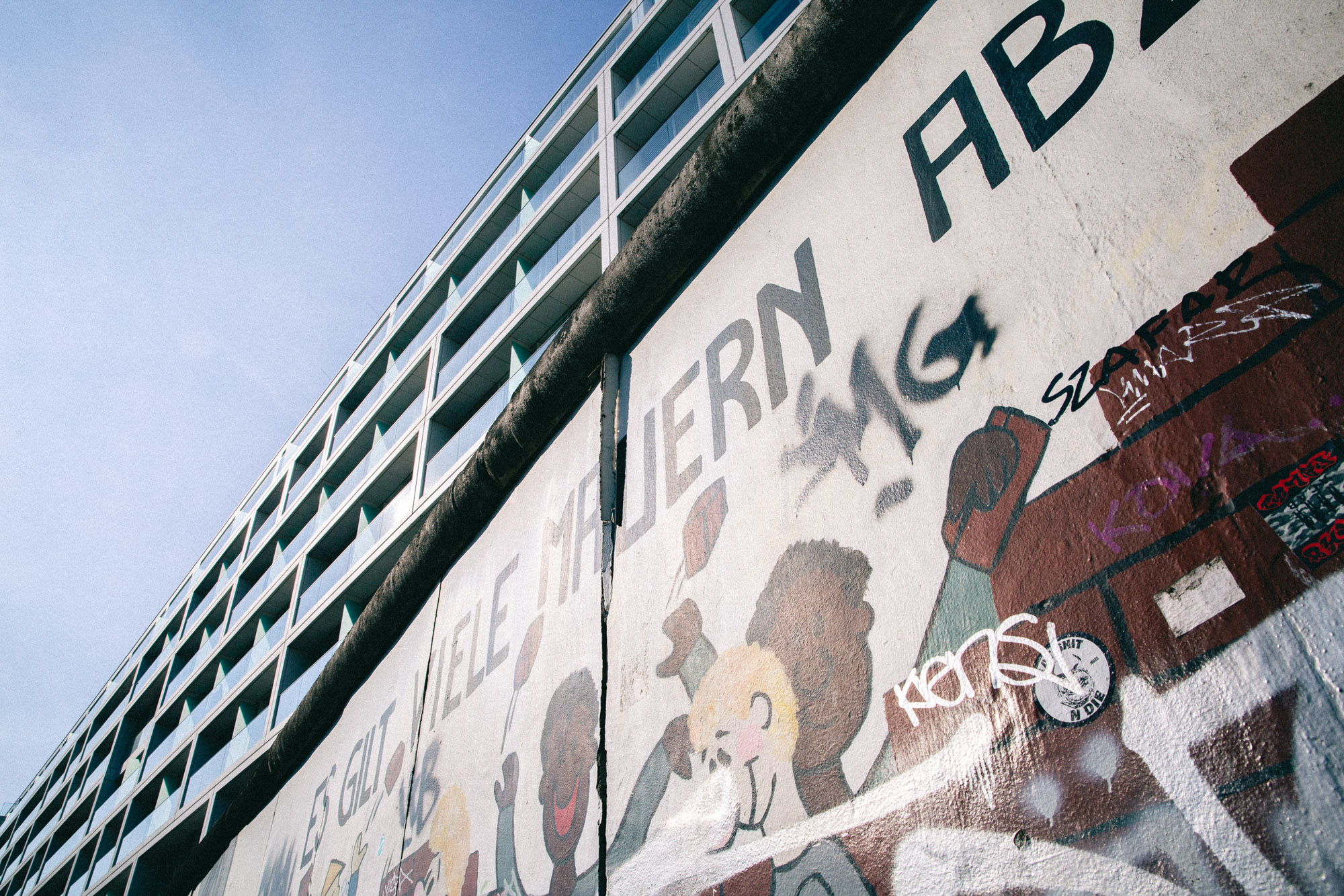
East Side Gallery: Where Street Art Meets History
The East Side Gallery is over a kilometer of murals painted on the longest remaining stretch of the Berlin Wall, where the best photographs often come from detail shots rather than the obvious wides. Some paintings are fading, others have been touched up and new layers keep appearing. It's much more than just street art on a wall, and its history adds weight to every image.
What to photograph
Cracks, paint drips, weathering and peel marks for detail and texture
Tight compositions that turn murals into abstract mixtures of colors and shapes
Hands, phones, tourists: not as a nuisance, but for context
Repeating patterns of people stopping, looking, moving
Tip
Walk the full length and circle back to the spots that stuck with you. The best time to visit is on overcast days as the flat light keeps colors even and prevents harsh shadows across the surface of the wall. And if you want to avoid the crowds, come early or late as this spot tends to get very busy during peak hours.
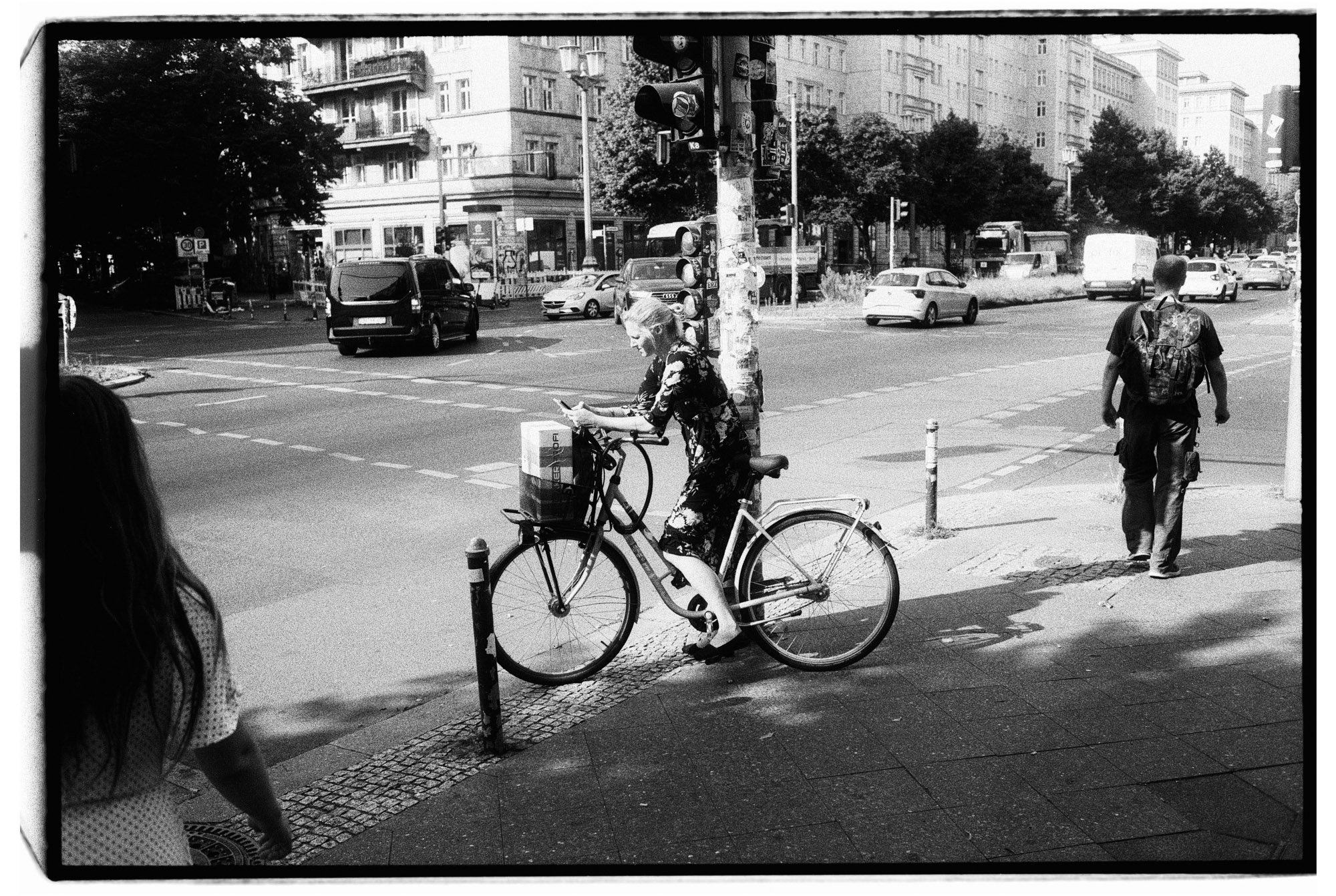
Wesley Verhoeve | 35mm film
Karl-Marx-Allee: Monumental Geometry and Soviet-Style Repetition
Karl-Marx-Allee is one of the most underrated Berlin street photography locations, and pure geometry if you ask me. The Soviet-era apartment buildings along this grand boulevard are massive, symmetrical and oddly beautiful. And the overwhelming scale of it all is exactly what makes this Berlin photo spot worth visiting.
What to photograph
Straight-on shots of the facades to capture the strong symmetry
Repeating windows or balconies as graphic patterns
Minimal frames that remove clutter and turn buildings into shapes
Individual pedestrians or cars to add scale without spoiling the composition
Tip
Go on a quiet morning, when the sidewalks are empty and the buildings become the only subject. A longer focal length helps compress the depth and emphasize the repetition.
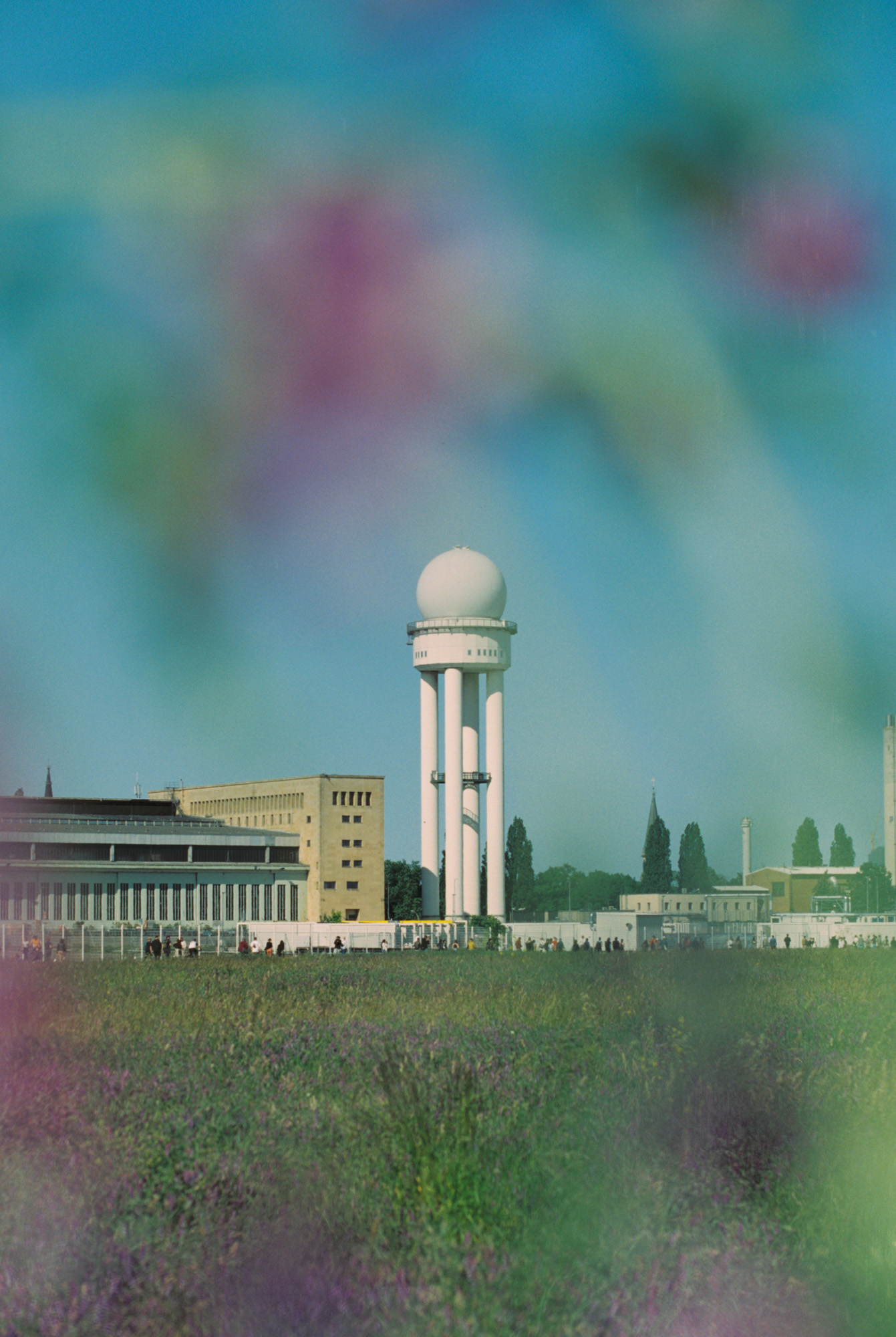
Austin Fassino | 35mm film
Tempelhofer Feld: A Decommissioned Airport Turned Berlin's Biggest Park
Tempelhofer Feld is a former airport turned into a massive public park, unlike anything else in Berlin or any other city I've photographed. The old infrastructure is still largely intact, and people skate, fly kites, cycle, do gardening work and have picnics or barbecues - all on what used to be a working airfield. The only place with a similar vibe is the High Line in New York City (though Tempelhofer Feld is about 130 times larger). The openness is both the challenge and the reward here: there's no obvious frame, so you'll have to find your own.
What to photograph
Lone figures against the wide sky, or groups of friends creating their own small world in all that open space
Old runways as strong leading lines
Close-up shots of historic aircraft
Former airport buildings, which are still among the largest structures in the world by floor space
Tip
Shoot Tempelhofer Feld at golden hour, when the flat terrain gives you uninterrupted light from horizon to horizon. Go wide, keep it simple and let the negative space do the work.
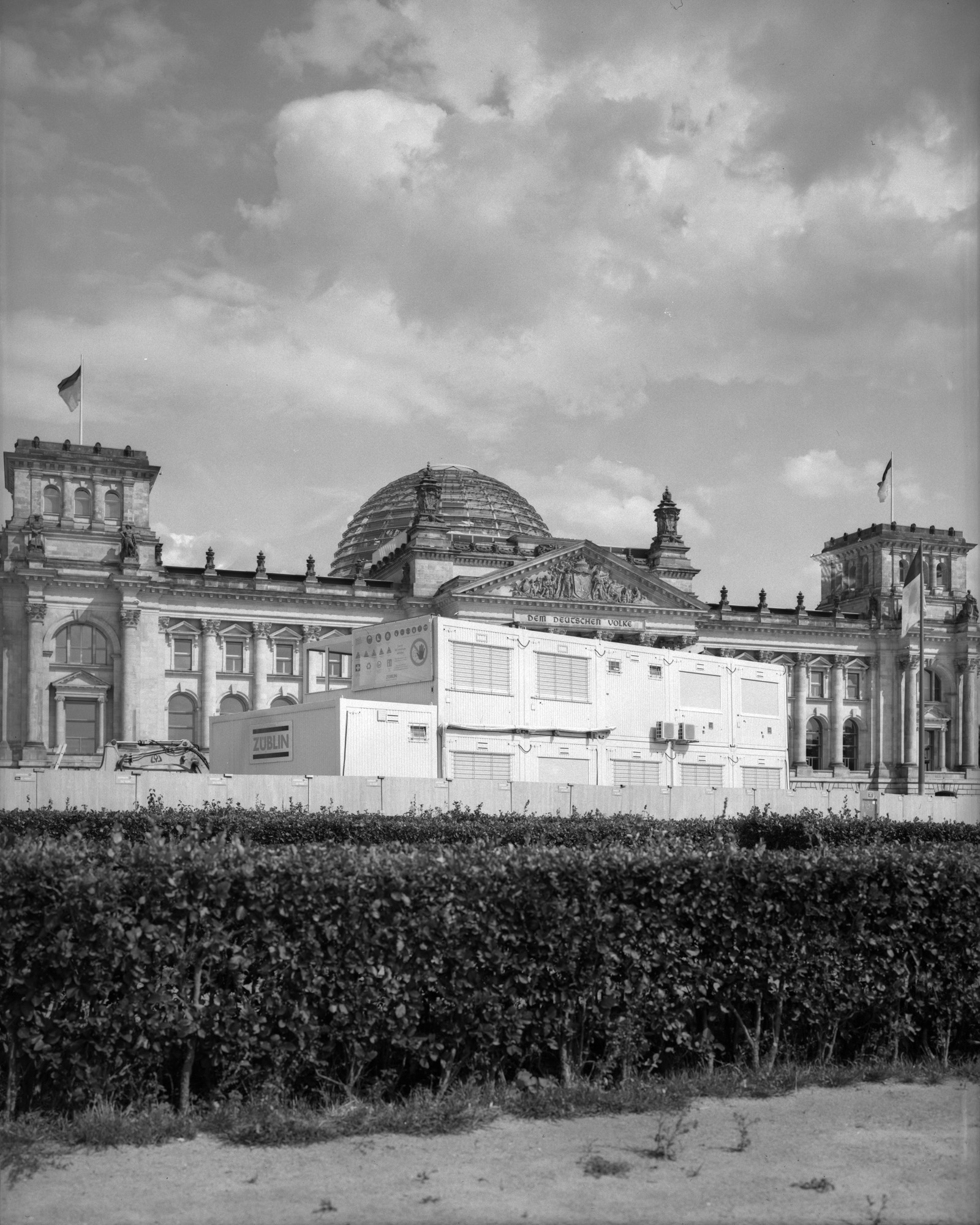
Austin Fassino | 35mm film
Reichstag and Government District: Modern Frames Around a Historic Icon
The Reichstag is dramatic from every angle, but the real photography magic often happens in the wider Government District around it. The contrast between the old stone base and the modern glass dome is Berlin in a nutshell, and along the River Spree, modern federal buildings offer clean lines, interesting reflections from their glass walls and a calm contrast to the city's noisier corners.
What to photograph
Old versus new: stone and glass in one frame
Reflections of the surrounding architecture in the River Spree
Minimal frames of the government buildings that feel almost too clean for Berlin (almost!)
Tip
Walk the riverbank and hunt for reflections when the water is calm. Early morning gives you softer light and fewer people, and if you can get inside the Reichstag dome, the views and the interior geometry are well worth the wait.
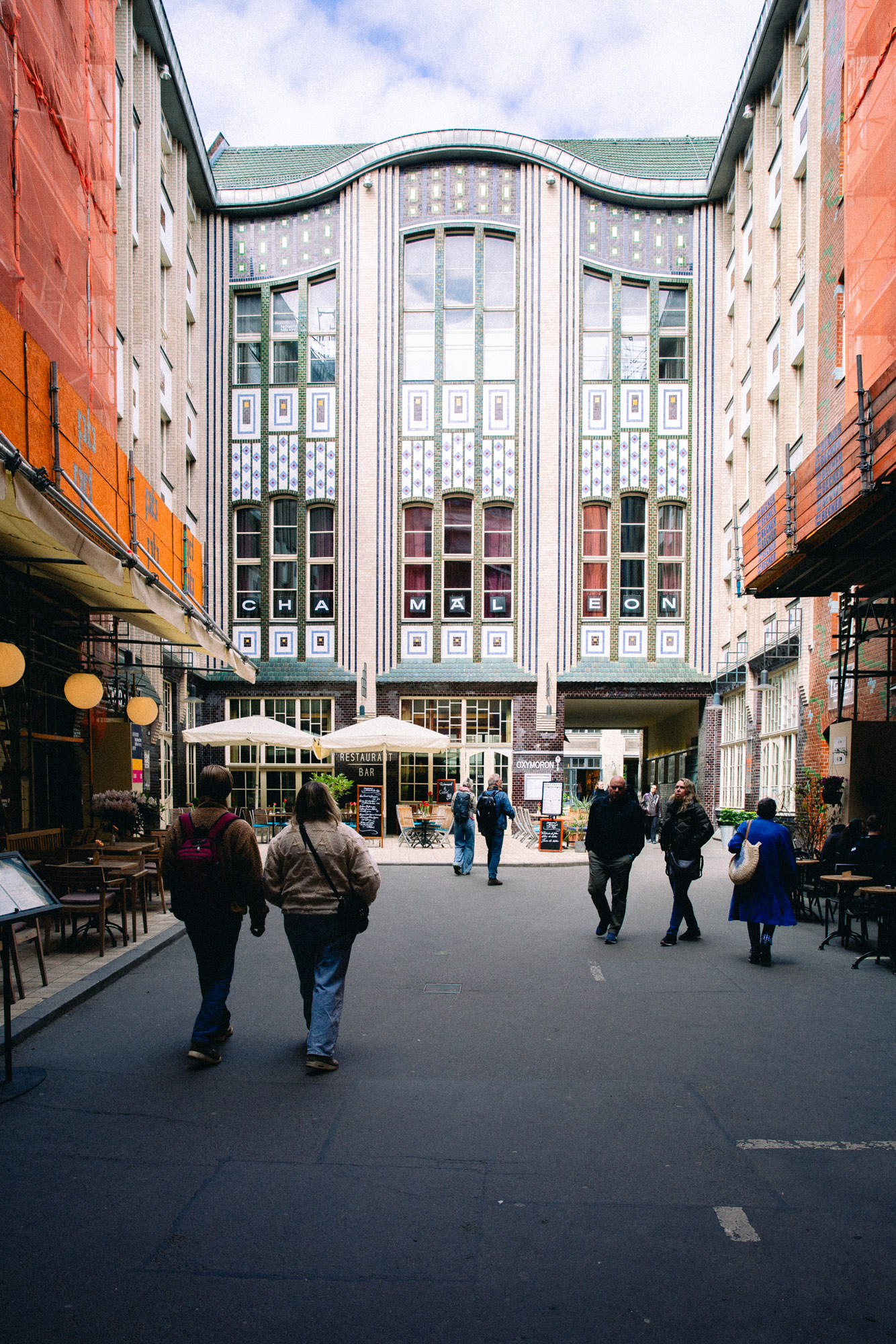
Austin Fassino | Canon EOS 5D Mark III | Canon EF24-70mm f/2.8L II USM | 24mm | f/7.1 | 1/250 sec | ISO 200
Hackesche Höfe: Courtyard Layers and Mixed-Light Storytelling
Hackesche Höfe is a series of connected courtyards in Berlin's Mitte district, each with its own special character. The first of them is the most photographed for good reason: Art Nouveau patterns, tiled facades, and light that drops in from above. But the deeper you go, the quieter it gets. And the compositions become more and more intimate.
What to photograph
Tiled facades offering special angles (not just postcard views)
Frames of doorways within doorways and layers of depth by using the passages between them
Reflections in windows and on glossy surfaces
Small human moments: people passing through, pausing, meeting
Tip
Hackesche Höfe is a great spot to practice shooting in mixed light. Some courtyards are bright and open, while others are dark and moody. Expose for the highlights in the brighter courtyards, then embrace mood and silhouette deeper inside.
Austin Fassino | Canon EOS 5D Mark III | Canon EF24-70mm f/2.8L II USM | 70mm | f/11 | 1/200 sec | ISO 100
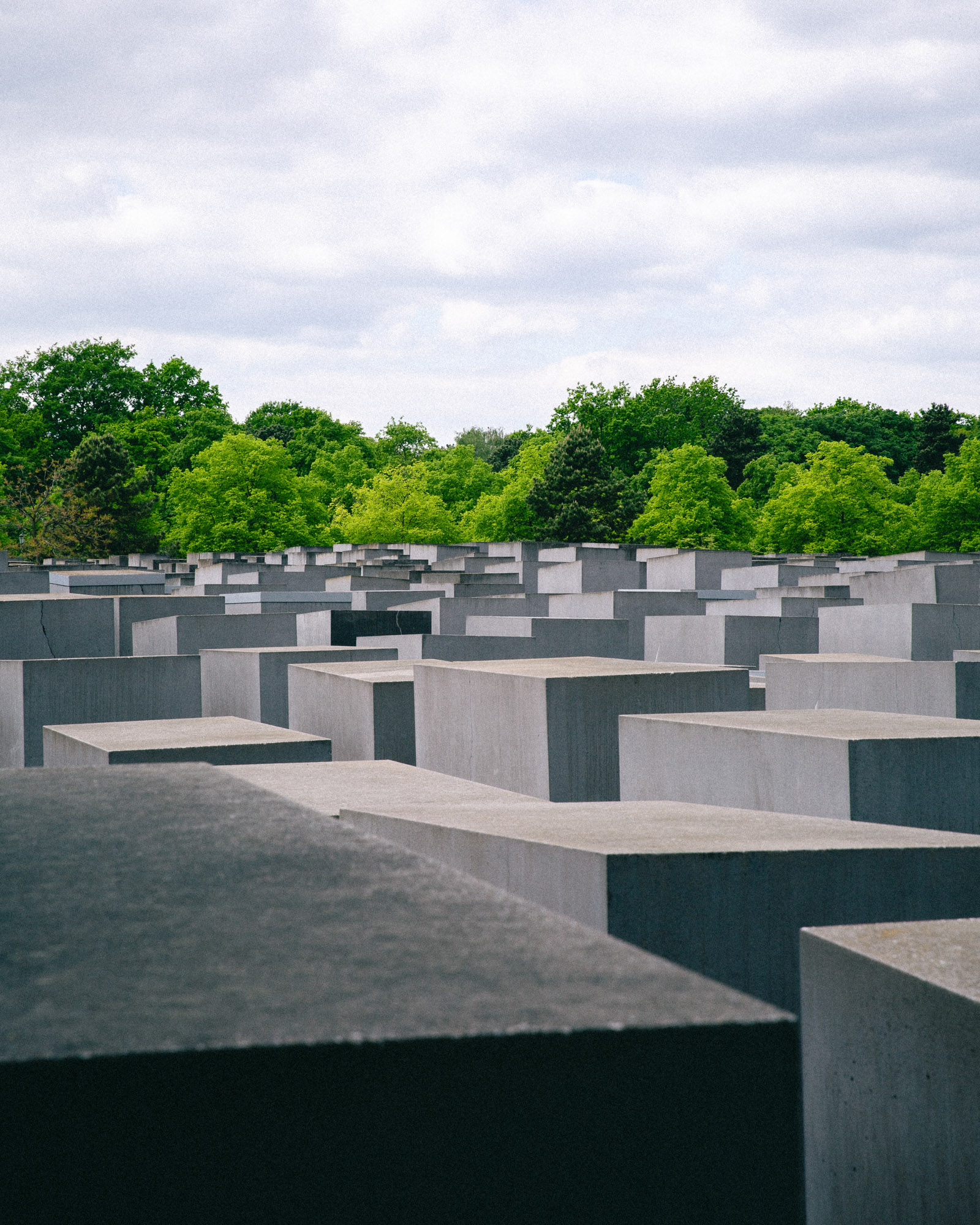
Holocaust Memorial: Disorienting Lines, Quiet Light and Deep Respect
The Memorial to the Murdered Jews of Europe is a powerful, disorienting space, and photographically, it's all about lines, light and shadow. The 2,711 concrete stelae vary in height and sit on uneven ground, so as you walk deeper into the grid, the world outside disappears.
What to photograph
Narrow corridors between the blocks for strong leading lines
Varying tones and textures at different times of day
Quiet, contemplative frames where the geometry does the talking
Abstract compositions that hint at the scale of the memorial without forcing drama
Tip
Approach this location with respect. It's a memorial first and a photo location second, so aim for quieter compositions and let the space be the story.
Austin Fassino | Canon EOS 5D Mark III | Canon EF24-70mm f/2.8L II USM | 65mm | f/8 | 1/250 sec | ISO 160
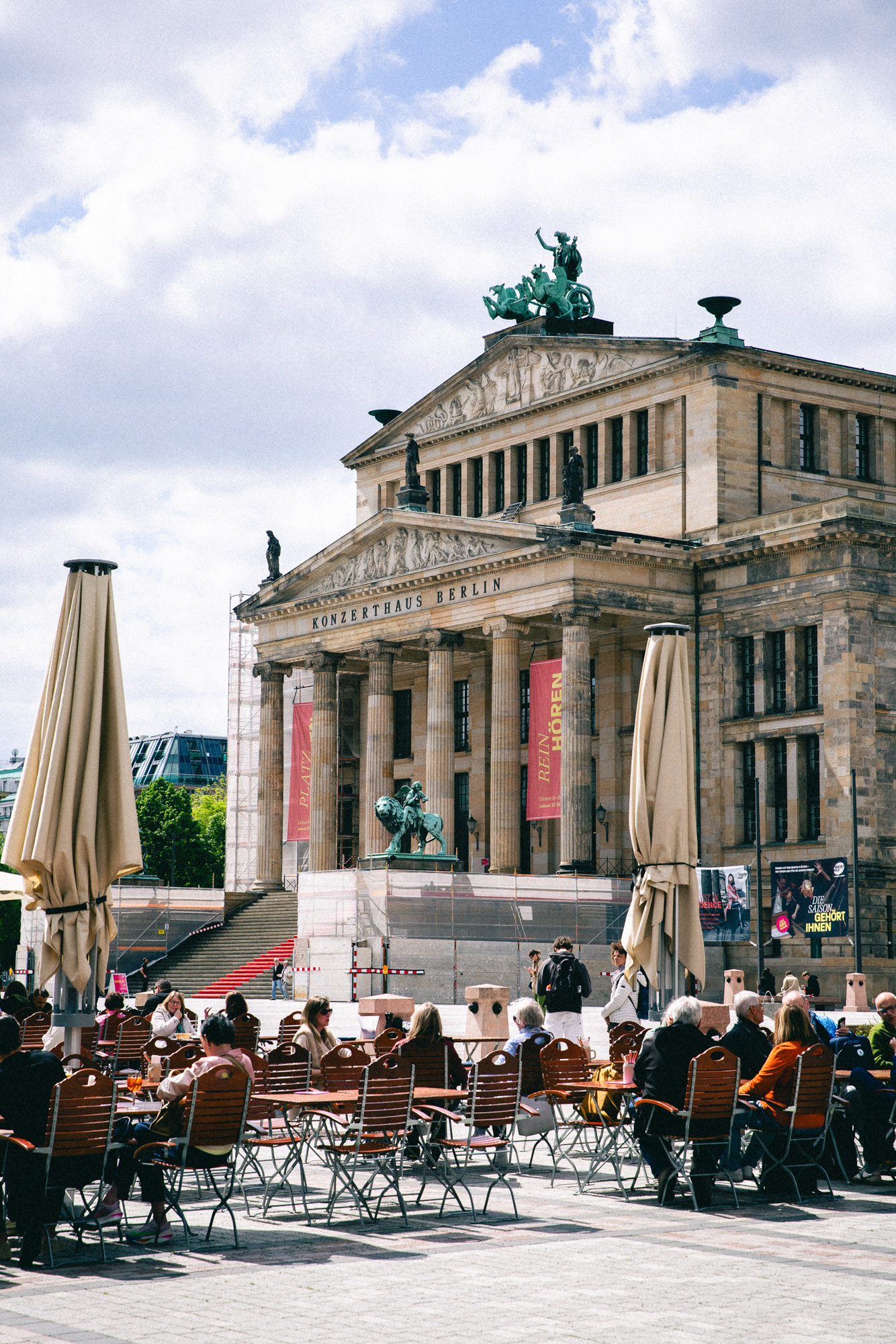
Gendarmenmarkt: The Composed Side of Berlin
Gendarmenmarkt is one of the most elegant squares in Berlin: classical, symmetrical and a welcome contrast to the city's grittier parts. The French and German cathedrals face each other across the square, with the Konzerthaus sitting between them.
What to photograph
Central symmetry with calm, deliberate framing
Architectural detail: columns, steps, stone textures
A lone figure crossing the square to break the symmetry
A flock of birds lifting off to add movement
Tip
Overcast mornings are ideal for soft, even tones and fewer people.
Austin Fassino | Canon EOS 5D Mark III | Canon EF24-70mm f/2.8L II USM | 38mm | f/11 | 1/250 sec | ISO 200
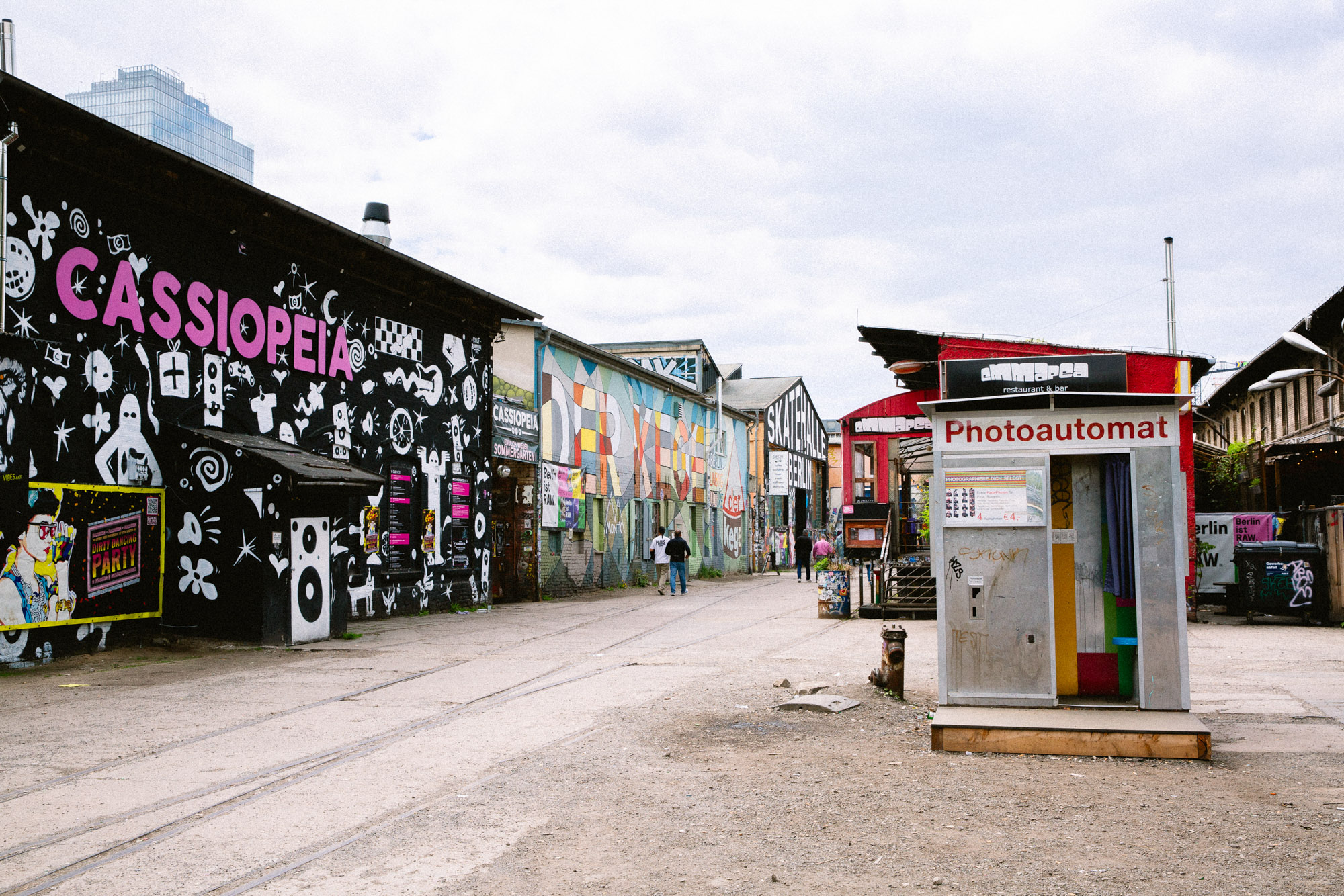
RAW-Gelände: Grit, Texture and Street Energy in Constant Motion
RAW-Gelände is Berlin at its most unpolished and Berlin street photography in the truest sense: rough, chaotic, and full of texture and visual surprises (the graffiti changes constantly). It's a former railway repair yard turned into a sprawling complex of bars, clubs, skate parks and street art – and if Berlin had a personality, this place would be a pretty good portrait of it.
What to photograph
Textures: metal, crumbling concrete, graffiti, layers of wheat-pasted posters
Skate action and fast street moments
Color clashes and visual noise
Tight details that feel like a collage
Tip
Save RAW-Gelände for your final stop. It's the perfect Berlin Instagram spot and antidote to anything clean and classical you may have photographed earlier in the day. Shoot handheld, move fast, react to whatever's in front of you, and keep your frames tighter than usual to avoid visual overload.
Wesley Verhoeve
Final Thoughts
Berlin photography rewards curiosity more than planning, so keep your gear light and simple. Commit to one camera body and one lens, because you're likely to stay out longer than originally planned. You can map out all ten of these photo spots and walk them in a day, but the best shots will probably happen on the streets between them: a reflection in a puddle on a side street in Kreuzberg, a child on a scooter cutting through the Government District, light falling through a courtyard you wandered into by accident… That's what this city does: it gives you what you came for, and then surprises you with something even better.
Find out more about the work of Wesley Verhoeve and Austin Fassino on Instagram.
Want to explore Europe with your camera?
Top Photography Locations in Amsterdam
Explore the best photography spots in Amsterdam along the canals, coffee shops and parks.
Top 5 iconic photography locations in London
Planning a weekend photography trip to London? Check out our five top locations and landmarks to capture while you're there.
Top Photography Locations in Porto
Discover 10 of the best places to shoot in Porto as well as practical tips and composition ideas to help you make the most of your time.
You can sell or trade your camera gear to MPB. Get a free instant quote, free insured shipping to MPB, and get paid within days.